Packaging fragile film components carries incredibly high stakes. A single error exposes sensitive materials to severe oxidation. Your products also risk rapid transit damage or immediate thermal degradation. Choosing the right machinery requires looking far beyond basic external dimensions. You must carefully align your heating tolerances and vacuum strength. Output capacity must match your specific production environment directly. Standard systems routinely fail under these strictly controlled industrial conditions. Conducting a rigorous evaluation of technical specifications prevents costly equipment mismatches. It minimizes material waste while guaranteeing adherence to rigid standards. This guide will help you navigate these critical evaluation parameters. We will explore vacuum dynamics, heating tolerances, and equipment scaling. You will learn exactly how to secure flawless protection for your components.
Key Takeaways
- Matching vacuum pump capacity to cycle time expectations is critical for preventing air pockets around low-profile film parts.
- Precise heating matrix controls are non-negotiable to avoid thermal damage or warping of sensitive film components during the sealing process.
- Verifying OEM material compatibility (Surlyn, PVC, PE) ensures optimal adhesion and prevents production bottlenecks.
Framing the Baseline: Success Criteria for Film Parts Packaging
Securing film-based components presents several unique challenges. You face incredibly thin margins for error during routine production. These parts remain highly susceptible to moisture, dust, and static discharge. Traditional packaging methods often leave them vulnerable to environmental damage. A loose fit allows harmful friction during physical transit. This friction rapidly degrades the delicate surface of the film. We must establish strict performance benchmarks to prevent these issues.
What defines a truly successful skin seal for these specific parts? You need a flawless result every single time. The industry recognizes several critical performance indicators. We consider these benchmarks mandatory for high-quality packaging lines.
- Zero internal movement: The part must remain completely immobilized within the sealed package.
- Absolute edge-to-edge adhesion: The film must bond seamlessly to the backing board without gaps.
- Zero thermal distortion: The active heating process cannot alter or warp the underlying product.
Under-specifying your equipment triggers massive operational risks. You will likely experience unusually high reject rates on the floor. Weak seals routinely void transit warranties. This failure leads to frustrated customers and damaged industry reputations. Material waste skyrockets when operators constantly adjust inadequate machinery. You end up throwing away ruined backing boards and expensive polymer films. These failures compound rapidly over time. They severely impact your overall production efficiency and output quality.
Core Technical Specifications: The Evaluation Framework
You must evaluate machinery based on rigorous technical parameters. We will break down the three most critical systems you need to assess.
Vacuum System Dynamics
A robust vacuum system serves as the heart of any packaging line. You should pay close attention to the ultimate vacuum pressure. Engineers measure this vital pressure in millibars (mbar) or kilopascals (kPa). Lower mbar ratings indicate a much stronger, deeper vacuum pull. You also need to verify the pump displacement capacity. We measure this specific capacity in cubic meters per hour (m³/h). It dictates how fast the machine evacuates air from the central chamber.
Pump quality directly dictates the final tightness of the skin film. Complex part geometries require exceptional suction to eliminate hidden air pockets. When evaluating a Film Parts Skin Seal Packing Machine, always demand high-grade rotary vane pumps. Cheaper alternatives struggle to maintain consistent pressure during continuous daily operation.
Chart: Vacuum Pump Displacement vs. Expected Cycle Speed | Pump Displacement (m³/h) | Ultimate Pressure (mbar) | Expected Cycle Speed | Best Use Case |
| 20 - 40 m³/h | < 2 mbar | 2 - 3 cycles / min | Small batches, prototyping |
| 60 - 100 m³/h | < 1 mbar | 4 - 6 cycles / min | Medium continuous runs |
| 160 - 300+ m³/h | < 0.5 mbar | 7+ cycles / min | High-volume automated lines |
Heating Matrix and Temperature Tolerances
The internal mechanics of the heating elements require your careful attention. Most modern machines utilize either infrared ceramic heaters or standard quartz tubes. Ceramic heaters provide excellent longevity and uniform energy distribution. Quartz tubes heat up very quickly but often create localized hot spots.
Multi-zone temperature controls remain absolutely essential here. They ensure uniform film softening across the entire platen surface. If the film heats unevenly, you risk burning the sensitive underlying parts. A high-quality matrix allows operators to adjust individual thermal zones. This precision prevents thermal damage to delicate edges and unusually thin materials.
Working Area and Dimensional Limits
You must calculate the required platen size very carefully. Match the working board dimensions against your daily production quotas. A larger platen holds more individual items per cycle. However, it also requires a much stronger vacuum pump to perform effectively.
Consider the maximum packaging height clearances carefully. Film parts usually serve as low-profile components. Even so, generous clearance greatly improves your overall tooling flexibility. It allows operators to swap out different product batches quickly. Measure your tallest expected component before finalizing any machine specification.
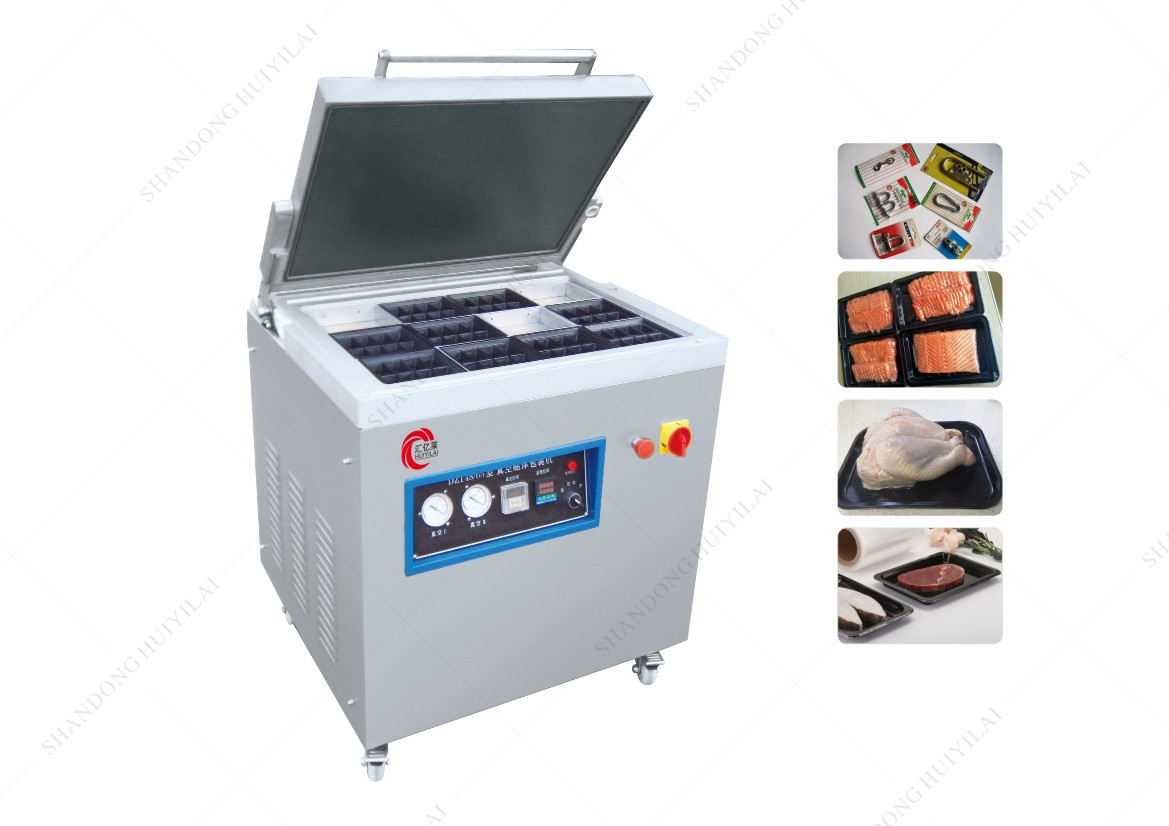
Equipment Tiers: Matching Capability to Production Scale
You must align machine capabilities exactly with your actual production volume. Choosing the wrong tier creates severe operational bottlenecks. Let us explore the three primary equipment classifications available today.
Manual and Low-Volume Machines
These compact machines work best for prototyping and research environments. They are also ideal for highly specialized, low-volume batch runs. The operator manually loads the substrate and activates the heating cycle.
They carry significant operational trade-offs. You rely heavily on operator skill to achieve consistent results. Cycle times remain inconsistent throughout a typical factory shift. Human fatigue easily impacts the final quality of the seal. These basic units lack the advanced sensors found in higher tiers.
Semi-Automatic Systems
These robust systems serve as the standard for mid-tier manufacturing facilities. They automate the critical heating and vacuum cycle entirely. This smart automation minimizes operator error and improves overall consistency. The user simply loads the tray and presses a start button.
Look carefully for programmable logic controllers (PLCs) during your evaluation. A robust PLC system must feature intuitive recipe saving capabilities. This allows you to store specific temperature and timer settings. Operators can switch between different product runs in mere seconds.
Fully Automatic and High-Output Lines
These advanced machines provide full inline integration. They connect seamlessly with automated cutting and conveyor systems. The equipment feeds, seals, and slices the boards without human intervention. They represent the absolute pinnacle of packaging technology.
You must justify this level of machinery carefully. It requires strict ROI modeling based on continuous labor savings. You also gain immense value from high-volume output consistency. They drastically reduce your dependence on manual labor forces.
Table: Equipment Tiers Overview | Equipment Tier | Automation Level | Operator Reliance | Consistency Rate |
| Manual Units | Low | Very High | Variable |
| Semi-Automatic | Medium | Moderate | High |
| Fully Automatic | Maximum | Minimal | Exceptional |
Material Compatibility and Industrial Compliance
Your machine must interact perfectly with your chosen packaging materials. Mismatches here cause immediate and severe production failures.
Skin Film Dynamics
You must rigorously assess how the machine handles different film composites. Surlyn remains highly popular for its incredible puncture resistance. Standard polyethylene (PE) and polyvinyl chloride (PVC) offer viable, cost-effective alternatives. Each unique material requires distinct heating profiles and specific vacuum parameters.
Thickness ranges typically span from 0.05mm to 0.20mm. Thicker films demand longer heating times and much stronger vacuum pulls. Your equipment must feature enough adjustability to accommodate these physical variations seamlessly.
Substrate Variables
You also need to understand complex substrate requirements. The backing board plays a massive role in overall seal quality. Porous boards allow the vacuum to pull air straight through the material. This action creates a very tight, fast seal around the product.
Non-porous boards require a radically different approach entirely. The machine must pull air out from the outer edges of the film instead. The vacuum system handles each type very differently. Ensure your chosen equipment strictly supports the exact substrate you plan to use.
Safety and Regulatory Standards
You cannot ignore strict industrial safety regulations. Non-compliance exposes your facility to severe legal and operational risks. Always verify these essential safety checks before making a final decision.
- CE and ISO Certifications: These guarantee the machine meets strict international manufacturing standards.
- Emergency Stop Protocols: Readily accessible kill switches must halt all pneumatic and electrical functions instantly.
- Thermal Guarding: Physical barriers must protect operators from accidental contact with the active heating matrix.
- Pneumatic Safety Valves: These prevent sudden pressure drops that could severely injure operators during routine maintenance.
Implementation Realities and Operational Risks
Deploying new machinery involves navigating difficult real-world constraints. You must plan for facility limitations and ongoing maintenance needs.
Facility Constraints
Evaluate your physical facility constraints immediately. Detail your precise power requirements before accepting delivery. Industrial machines usually demand standard 3-phase power setups. You will likely encounter 220V or 380V variations depending on your region. A mismatch requires extensive and highly disruptive electrical retrofitting.
You must also consider strict footprint limitations. Measure your available floor space accurately. Leave ample room around the machine for routine internal servicing. Operators need space to maneuver large rolls of packaging film safely.
Maintenance Bottlenecks
Identify all consumable components early in the procurement process. The heating elements degrade over time and require eventual replacement. Vacuum pump oil needs regular draining and refilling to maintain suction. The silicone sealing gaskets eventually lose their elasticity under constant pressure.
Assess the ease of sourcing these specific replacements locally. Delays in receiving spare parts bring production lines to a grinding halt. You must track the degradation of these heating elements closely. A failing ceramic heater causes uneven temperature zones. This forces you to throw away ruined batches. Work with suppliers who maintain robust, domestic inventories of critical components.
Operator Adoption
Address the learning curve associated with new equipment immediately. Setting optimal heating-time-to-vacuum ratios takes considerable practice. Operators must understand how different ambient temperatures affect the sealing process. Proper training prevents massive waves of defective packages during the first month.
The necessity of straightforward HMI (Human-Machine Interface) panels is absolute. Complex, unintuitive menus frustrate operators and cause costly input errors. A good touch screen provides clear visual feedback and easy recipe management.
Shortlisting Logic and Next Steps
Moving from technical research to procurement requires highly organized data. You must approach prospective suppliers with exact specifications.
Data Preparation
List the exact metrics buyers must prepare before requesting a quote. Having this data ready speeds up the entire consultation process.
- Precise maximum and minimum part dimensions.
- Your daily target cycles per minute.
- Detailed substrate material specifications.
- The exact thickness and chemical type of your chosen polymer film.
Supplier Vetting
We heavily recommend asking for comprehensive sample runs. Send your actual film parts directly to the supplier. Ask them to film the entire sealing process. This verifies critical thermal safety limits. It also proves the vacuum pull can handle your specific geometries. Never accept a machine without seeing a successful test run first.
Call to Action
Take direct action to secure your production line today. Download a comprehensive technical specification comparison checklist. Use it to evaluate different equipment models side-by-side. Alternatively, consult directly with an experienced engineering specialist. They can help you map out your exact facility requirements quickly.
Conclusion
Investing in high-quality sealing equipment drastically transforms your production capabilities. You must always prioritize precision specifications over basic initial metrics. Pay special attention to precise vacuum control and thermal uniformity. These elements completely dictate the final quality of every package you produce.
Proper specification upfront ensures exceptional operational longevity. It guarantees zero-defect packaging on your busy production floor. Take the time to evaluate pumps, heaters, and safety protocols thoroughly. Your careful planning today prevents massive operational headaches tomorrow. Follow these guidelines strictly, and you will secure the perfect system for your facility.
FAQ
Q: Can the heating process damage sensitive film parts?
A: Yes, excessive heat easily warps delicate components. You mitigate this thermal transfer by using adjustable pre-heating timers. Variable distance controls also keep the heating matrix at a safe height. High-quality machines utilize multi-zone sensors to prevent localized hot spots, ensuring the product remains perfectly safe.
Q: Do these machines require custom molds for flat parts?
A: No, skin packaging generally requires no dedicated molds whatsoever. The heated film naturally drapes over the product and conforms to its exact shape. This makes the process highly adaptable for varied components. You save valuable resources by eliminating expensive custom tooling from your workflow.
Q: What maintenance is required for the vacuum pump?
A: The vacuum pump requires strict routine maintenance to perform well. You must execute regular oil changes according to the manufacturer schedule. You also need to perform frequent exhaust filter cleanings. Neglecting these tasks causes severe pressure drops and completely ruins the tightness of your seals.
Q: Can I run standard poly bags on a skin packaging machine?
A: No, standard poly bags do not work on these specific machines. They lack the specialized adhesive coatings required for the process. Specialized skin films are absolutely necessary. They activate under heat and form a permanent bond with the backing substrate during the vacuum adhesion cycle.


