Standard packaging methods often compromise delicate film parts through friction, improper tension, or exposure to environmental contaminants during transit. You place a pristine component into a conventional poly bag or blister pack, only to discover micro-abrasions upon delivery. Vacuum skin packaging (VSP) solves this critical issue. It immobilizes components directly to a backing substrate, eliminating internal movement. However, highly sensitive film parts require specialized equipment to prevent heat distortion or pressure damage. You cannot rely on basic vacuum sealers for such fragile items. Instead, you need absolute control over the entire packaging environment. Evaluating a Film Parts Skin Seal Packing Machine requires looking beyond basic vacuum specs to assess tension control, heating uniformity, and material compatibility. This targeted approach ensures every component arrives exactly as it left your production line. We will explore the mechanics, evaluation criteria, and implementation risks to guide your decision-making process.
Key Takeaways
- Skin seal machines immobilize film parts to prevent transit friction, utilizing a precise combination of heat, vacuum, and specialized packaging film.
- The primary evaluation criteria for decision-makers are heating element uniformity, vacuum pull-down accuracy, and film tension adjustability.
- Implementation success depends heavily on substrate compatibility; mismatched backing boards and skin films lead to curling or weak seals.
- Procurement should balance upfront machine costs with cycle-time efficiency and material waste reduction when calculating ROI.
Why Standard Packaging Fails for Delicate Film Parts
Loose packaging configurations universally fail when transporting sensitive components. You often see facilities defaulting to standard poly bags, bubble wraps, or basic blister packs. These methods create a hidden hazard: the friction problem. During transit, vehicles generate continuous low-frequency vibrations. When you place a delicate film part inside a loose bag, this vibration forces the component to rub against the packaging material. Over hundreds of miles, this constant friction creates severe micro-abrasions. For optical film parts, sensor overlays, or specialized membranes, even microscopic scratches render the product entirely useless. Blister packs present a similar danger. They trap the component in a pre-formed cavity, but they rarely secure it tightly enough to prevent shifting and internal rattling.
Beyond physical friction, loose packaging introduces severe contamination risks. Facilities operating in clean or semi-clean environments must prevent particulate matter from reaching their finished goods. Inconsistent seals on traditional bags allow dust, debris, and moisture to breach the packaging barrier. When moisture enters, it degrades sensitive coatings on film parts. If your packaging line produces inconsistent seals, you face an immediate surge in rejected shipments and rework. The business impact of particulate damage extends far beyond the ruined part itself. You also lose production time, damage your reputation for quality, and incur heavy shipping penalties for returned goods.
The vacuum skin packaging (VSP) alternative completely eliminates these transit and contamination variables. Frame this technology as the optimal solution for complete part immobilization. A skin seal process anchors the delicate film part directly to a rigid backing board. The packaging film conforms exactly to the contours of the component, acting as a secondary skin. This locks the item in place, neutralizing all friction because the part physically cannot move against the packaging. Furthermore, VSP eliminates the need for custom tooling or expensive molds. You can package varying shapes and sizes on the same board without changing machine parts, offering immense flexibility for high-mix production lines.
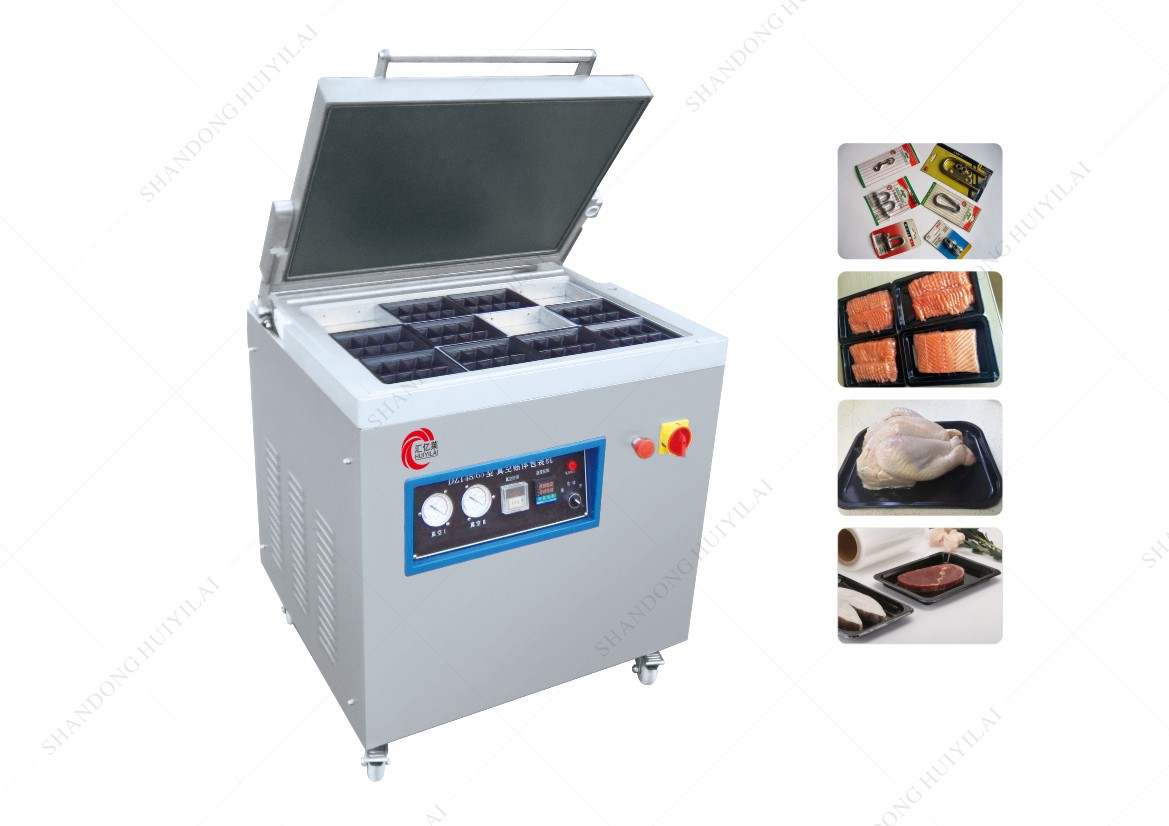
Core Mechanics: How a Film Parts Skin Seal Packing Machine Works
Understanding the internal operations of a Film Parts Skin Seal Packing Machine reveals why it outperforms traditional methods. The process relies on a tightly orchestrated sequence of thermal and atmospheric changes.
- Film Heating (Plasticization): The cycle begins by softening the top web film. Materials like Surlyn or Polyethylene (PE) move into a heating station. Here, infrared or tubular heating elements raise the film's temperature until it reaches a pliable, plasticized state. The machine must hold this temperature within a very narrow window to prevent the film from melting completely or remaining too rigid.
- Vacuum Drape & Seal: Once the film achieves the correct plasticity, the machine lowers it over the film parts. Simultaneously, a high-efficiency vacuum system activates. This vacuum draws air out from under the film, pulling down through the porous backing board. The atmospheric pressure forces the softened film to drape tightly over the components and bond securely to the board's primer layer.
- Tension & Cooling: This phase determines the final structural integrity of the package. As the film adheres to the board, it begins to cool. The machine must control the cooling rate to manage tension. Proper tension locks the part in place without exerting a crushing force. If the film shrinks too rapidly during cooling, it can crush fragile film parts or warp the backing board.
- Cutting/Trimming: The final mechanical stage separates the packaged units. Automated blades or die-cut presses trim the excess master board into individual, retail-ready or transport-ready packages. This step requires precise alignment to ensure clean edges without disturbing the vacuum seal.
Key Evaluation Dimensions for Skin Seal Equipment
Selecting the right equipment requires a structured evaluation of internal components. You cannot judge a machine solely by its exterior footprint or marketing claims. We must analyze how the hardware handles the physics of skin packaging.
Skin Seal Equipment Evaluation Chart | Evaluation Dimension | Ideal Machine Specification | Primary Business Outcome |
| Heating Uniformity & Controls | Modular, zoned infrared heating controls. | Prevents "hot spots" that melt or deform delicate packaged film parts. |
| Vacuum Pump Efficiency | High-quality pumps (e.g., Busch) with variable pull-down rates. | Ensures a tight seal without aggressive pressure spikes, reducing cycle times. |
| Tension Control Mechanisms | Adjustable film feeding and stretching systems. | Prevents the "curling effect" on backing boards during the cooling phase. |
| Footprint & Scalability | Modular inline integration or semi-auto configurations. | Matches production volume and floor space to current and future capacity demands. |
Heating element uniformity separates high-end equipment from entry-level options. When packaging delicate film parts, uneven heat distribution causes immediate failures. If one section of the heating array runs hotter than the rest, it creates a "hot spot" on the plasticized film. This overheated film can transfer excessive thermal energy directly to your sensitive component, causing warping or melting. You should prioritize machines featuring modular, zoned heating controls. These systems allow operators to fine-tune temperatures across different grid sections, ensuring uniform plasticization regardless of ambient factory conditions.
Vacuum pump efficiency directly dictates cycle speed and seal quality. You want a pump capable of rapid air evacuation without creating violent pressure spikes. High-quality industrial pumps, such as those manufactured by Busch, provide smooth, consistent pull-down curves. This precision ensures the softened film wraps gently around delicate edges rather than snapping down forcefully and snapping the part. Furthermore, reliable pumps reduce maintenance downtime and keep your production lines moving predictably.
Tension control mechanisms require close inspection during the procurement process. When the top film cools, it naturally attempts to shrink. If the machine feeds the film too tightly before the vacuum cycle, this shrinkage exerts massive force on the backing board. The result is the dreaded "curling effect," where the final package bows upward, ruining stackability and presentation. Advanced machines manage how the top film is fed, stretched, and released, neutralizing this tension.
Footprint and scalability must align with your operational roadmap. You must match the machine format—whether tabletop, semi-automatic, or fully inline—to your available floor space and projected production volumes. Purchasing an oversized inline system for a low-volume, high-mix facility wastes capital and floor space. Conversely, relying on a tabletop unit for mass production forces excessive labor costs.
Implementation Risks: Heat, Tension, and Material Compatibility
Even the most advanced equipment fails if you mismanage the implementation variables. Packaging delicate components involves a triad of dependencies: the machine settings, the top film, and the backing substrate. Ignoring the interplay between these elements introduces severe production risks.
- Common Mistake: Ignoring board porosity tests before ordering bulk materials.
- Common Mistake: Relying on manual temperature adjustments instead of programmable recipes.
- Common Mistake: Using standard corrugated boards instead of cross-grained, skin-specific alternatives.
Substrate porosity mismatches represent the most frequent failure point in skin packaging. The entire process relies on the vacuum pulling air completely through the backing board. If you select a corrugated or paperboard material lacking the correct porosity, the air gets trapped. The vacuum will fail to pull the film tightly against the board, resulting in a loose, temporary bond. Furthermore, the board must feature a specialized primer coating compatible with your specific top film. Without this chemical compatibility, the seal will easily peel apart during transit, exposing the film parts to friction and moisture.
Thermal damage to sensitive parts requires proactive mitigation. Many film parts contain micro-coatings, adhesives, or structural layers highly sensitive to temperature spikes. When the plasticized top film drapes over these components, it transfers heat. You must require machines equipped with adjustable drape times and highly precise temperature limits. By optimizing the distance between the heater and the film, and minimizing the time the hot film contacts the part before cooling, you protect the component's structural integrity.
Operator dependency introduces massive variability into the packaging process. Manual and semi-automatic machines often require operators to judge heating times or vacuum duration based on visual cues. This reliance on human judgment leads to wildly inconsistent seals across different shifts. A distracted operator might overheat the film, ruining a batch of expensive parts. To mitigate this risk, strongly advise your engineering team to select machines featuring programmable PLC (Programmable Logic Controller) recipes. These systems allow engineers to lock in the exact heating, vacuum, and tension parameters for specific parts, reducing the operator's role to simple loading and unloading.
Shortlisting Logic: Matching Machine Specs to Production Scale
Categorizing equipment by production scale simplifies the shortlisting process. Facilities have vastly different needs based on their throughput, product variety, and labor availability. You must map your operational reality to the correct tier of machinery.
Entry-level tabletop or manual machines serve perfectly for low-volume, high-mix facilities. If your operation focuses on prototyping, custom batches, or highly specialized low-run parts, these units make sense. They offer a significantly lower upfront cost and require minimal floor space. However, they remain highly dependent on operator skill. You trade capital expenditure for higher labor involvement and slower cycle times. They lack the automated feeding mechanisms found in larger units.
Mid-range semi-automatic machines strike a balance for steady manufacturing environments. These units feature automated heating and vacuum cycles, drastically reducing operator error. The PLC controls the critical thermal and pressure parameters. The operator simply loads the master board with parts, slides it into the chamber, and initiates the cycle. Once finished, they manually unload the board for trimming. This tier handles moderate to high volumes efficiently without the massive footprint of a fully integrated line.
Enterprise fully automated or inline systems dominate high-throughput environments. These machines remove nearly all manual touchpoints. They integrate automatic master board feeding, robotic part placement, continuous film unwinding, inline cutting, and conveyor offloading. They require significant floor space and represent a major capital investment. However, for continuous, high-volume production of identical or similar film parts, they deliver unmatched consistency and throughput speed.
Your next steps for procurement must involve rigorous real-world validation. Advise buyers to request a proof-of-concept (POC) test run from potential vendors. Send them your specific film parts and your preferred backing boards. Have them run these materials through their machines and return the packaged samples. Inspect these samples for curling, micro-abrasions, seal strength, and heat damage before ever finalizing a purchase order. This empirical testing guarantees the hardware aligns with your exact material needs.
Conclusion
A reliable film parts skin seal packing machine mitigates transit damage and drastically improves presentation. It achieves this by immobilizing fragile components against a rigid substrate, eliminating the friction and contamination inherent in loose packaging. However, this success only occurs if the hardware's thermal and vacuum controls align perfectly with the fragility of your specific product.
We strongly recommend prioritizing vendors who offer transparent equipment testing. The best partners demonstrate deep expertise in matching specific top skin films to corresponding board primers. They will guide you away from incompatible substrates and help you establish precise PLC recipes for your components.
Take immediate action by auditing your current packaging defect rates. Quantify how many film parts you lose to transit friction or moisture ingress each quarter. Then, contact an equipment engineer to schedule a sample packaging run, using your actual production parts to validate the VSP process firsthand.
FAQ
Q: What types of film are compatible with skin seal packing machines?
A: The primary materials used are Surlyn, Polyethylene (PE), and Polyvinyl Chloride (PVC). Surlyn remains highly favored for its exceptional clarity, rapid plasticization, and superior puncture resistance. The final choice depends heavily on the specific primer used on your backing board and the overall fragility of the enclosed part.
Q: Can a skin packaging machine handle varying sizes of film parts simultaneously?
A: Yes. One of the main advantages of skin packaging is that it does not require custom molds. This flexibility allows multiple differently shaped parts to be packed on the exact same master board in a single cycle, maximizing throughput for high-mix operations.
Q: How do you prevent the backing board from curling after the seal?
A: Curling is managed by optimizing the tension of the top film and ensuring correct heating temperatures during plasticization. Additionally, you must use high-quality, cross-grained corrugated materials or sufficiently rigid paperboard designed specifically for the thermal stress of skin packaging.
Q: What is the standard cycle time for packaging film parts?
A: Cycle times vary significantly based on machine automation levels and film thickness. Generally, the entire process ranges from 15 to 45 seconds per master board for semi-automatic models. Fully automated inline systems can achieve much faster per-unit rates through continuous feeding.


