
Views: 0 Author: Site Editor Publish Time: 2026-07-09 Origin: Site


Selecting the right equipment fundamentally shifts how you process proteins. A properly matched vacuum tumbler machine increases yield, reduces processing time, and improves product consistency. However, getting the specifications wrong carries heavy consequences. Over-speccing drains capital immediately. Under-speccing creates severe operational bottlenecks down the line.
You need to move past basic product descriptions. We designed this guide to provide a concrete framework for evaluating actual capacity. You will learn how to assess technical configurations and facility integration realities. We cover everything you must understand before you request a quote. Getting these details right ensures your new equipment integrates seamlessly into your daily operations.
Buyers often confuse total drum volume with actual working capacity. They are completely different metrics. Total drum capacity measures the physical space inside the cylinder. Working volume dictates how much product you can safely process. A 1,000-liter drum cannot process 1,000 liters of meat. You must target a 60–70% fill rate to achieve optimal results.
Ignoring this ratio creates immediate operational risks. Under-filling the drum causes severe product damage. Too much empty space creates an excessive drop height during rotation. The meat slams against the drum walls. This tears muscle fibers and degrades product texture. Over-filling poses equally harmful risks. If you pack the drum completely, the vacuum cannot penetrate the core of the batch. The mechanical massaging action fails. Marinade pools at the bottom instead of absorbing into the tissue.
You must accurately map your production needs before looking at machine models. We recommend using a formula approach to determine your exact capacity requirements. Follow these calculation steps to size your equipment correctly:
The growth buffer protects your investment. Processing demands rarely stay static. Adding a 20–30% capacity buffer ensures you can handle seasonal spikes or future contract expansions. However, you must apply this buffer carefully. The inflated capacity must not violate your minimum fill threshold during slower production days. If your daily volumes fluctuate wildly, you might need two smaller machines instead of one massive unit.
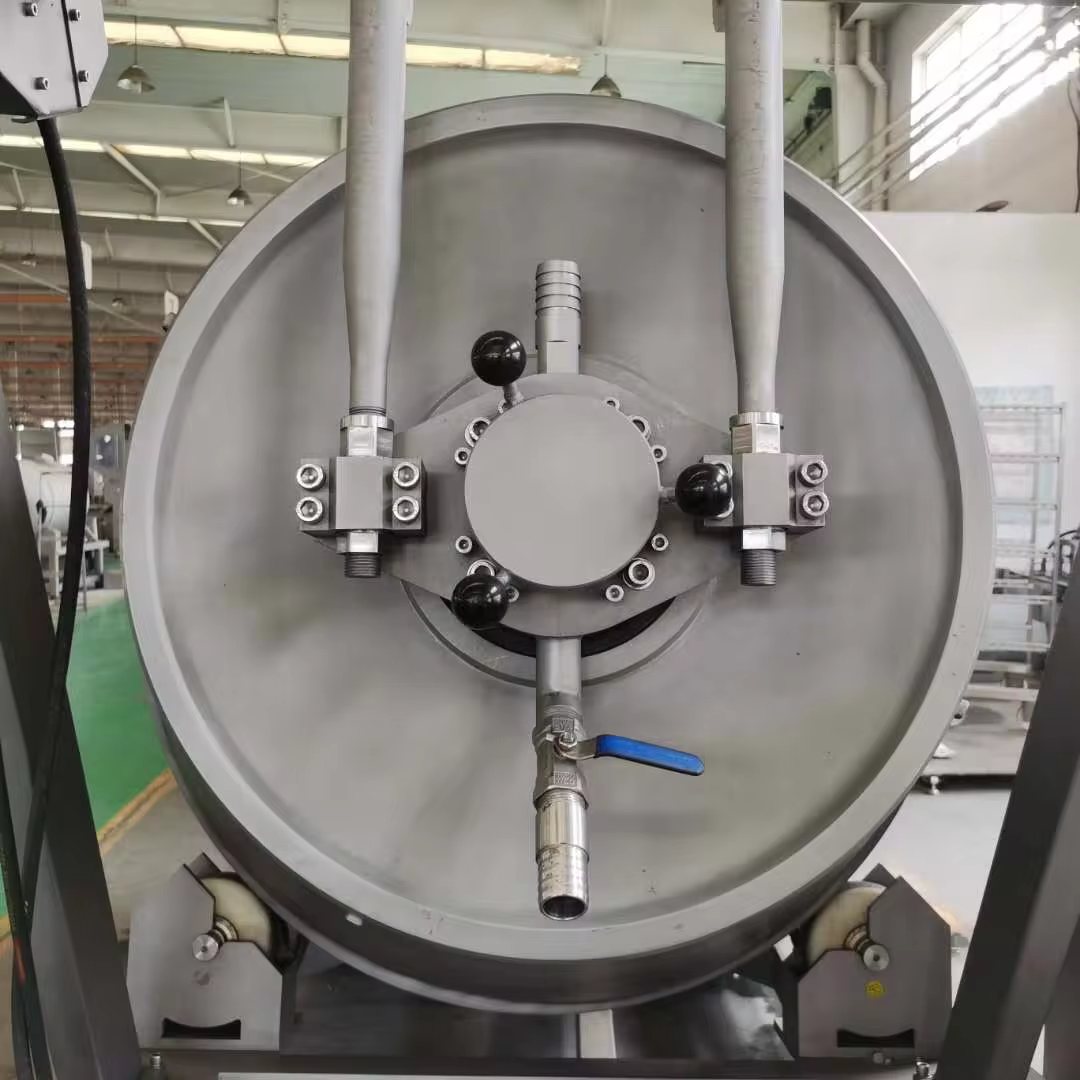
Your production style entirely dictates your machine configuration. Continuous processing models suit highly automated, low-mix operations. These machines process high volumes of a single product without stopping. They eliminate manual loading and unloading times. However, continuous systems come with clear trade-offs. They require a higher upfront investment. Sanitation protocols are much more complex. You cannot easily switch between different marinades or allergens.
Non-continuous or batch machines represent the industry standard for most processing facilities. They offer immense flexibility. High-mix, low-volume operations rely on batch machines for frequent recipe changeovers. Operators can sanitize the drum quickly between a teriyaki poultry batch and a spicy beef batch. Batch processing isolates different product lines safely.
Below is a quick comparison table outlining the core differences:
| Feature | Continuous Models | Batch (Non-Continuous) Models |
|---|---|---|
| Ideal Operation | High volume, single product lines | High mix, diverse recipe changeovers |
| Automation Level | High (Automated inline feeding) | Moderate to High (Manual or cart loading) |
| Sanitation Complexity | Complex (CIP systems often required) | Straightforward (Easy manual access) |
| Flexibility | Low | High |
Drum orientation impacts loading, unloading, and facility layout. Horizontal drum designs provide standard stability. They distribute heavy loads evenly across the frame. Horizontal machines perform exceptionally well for standard tumbling applications. They keep the footprint relatively simple.
Tilting drum designs offer distinct advantages for automated material handling. The drum tilts upward during loading to maximize fill efficiency. It tilts downward during unloading to discharge product directly into carts or conveyors. This eliminates manual scooping. Tilting mechanisms also drastically improve sanitation. Operators tilt the drum downward during washdown. This ensures faster liquid drainage. It provides maintenance teams with better access to the interior walls and baffles.
The vacuum system drives the entire protein extraction process. You must choose the right vacuum control mechanism for your specific products. Basic machines offer continuous vacuum only. The pump pulls a negative pressure and holds it throughout the cycle. This works well for dense proteins like beef or pork.
Advanced systems offer pulsating vacuum capabilities. The machine cycles the vacuum on and off at programmed intervals. Pulsating vacuum behaves like a sponge. It squeezes and releases the muscle fibers repeatedly. This feature benefits delicate tissues tremendously. Poultry and fish require pulsating options to prevent structural breakdown. A continuous deep vacuum can rupture delicate cells, resulting in a mushy final product.
Modern processing requires precise mechanical control. You must insist on Variable Frequency Drives (VFDs) for your tumbling equipment. VFDs allow operators to adjust the drum's RPMs dynamically. Rotation speed directly controls mechanical friction.
A heavy beef brisket batch requires a different RPM than delicate chicken breasts. Protein density and total batch weight dictate the ideal rotation speed. Single-speed motors force a one-size-fits-all approach on your recipes. VFDs protect your product from over-massaging. They also prevent motor burnout by ramping up the speed gradually rather than starting at full torque.
Temperature control is non-negotiable in meat processing. Friction generates heat during the tumbling cycle. Extended processing times amplify this thermal rise. You must decide whether to rely on a chilled facility room or invest in a machine jacket.
An integrated cooling jacket pumps glycol or chilled water around the drum exterior. This setup is mandatory under certain conditions. You need a cooling jacket if your recipes cause high friction. You also need it for tumbling cycles lasting longer than four hours. If your processing room lacks strict climate control, integrated cooling protects your yields. It keeps the product safely below danger-zone temperatures, preventing bacterial growth and protein denaturation.
Evaluating physical facility constraints prevents installation disasters. You must measure floor space meticulously. Machines require clearance on all sides for safe operation and cleaning. Do not forget to evaluate ceiling height. Tilting mechanisms lift the drum at steep angles. A facility with low ceilings cannot accommodate automated tilting models.
Power infrastructure also dictates your options. Industrial tumblers demand specific power phase requirements. Verify your facility panel can handle the startup amperage. Upgrading your electrical grid mid-installation causes costly delays.
Sanitation complexity directly impacts operational margins. Machines taking twice as long to clean erode any speed gains achieved during processing. You must evaluate the internal drum design carefully. Look at the baffles. Welded baffles offer incredible durability. However, they can create hard-to-clean corners if the welding seams are not perfectly smooth. Some manufacturers offer removable baffles to simplify deep cleaning.
Check the size and placement of all drainage ports. A small drainage port clogs easily with fat and protein trimmings. Rapid washdown requires oversized ports. Labor costs accumulate quickly when sanitation crews fight poorly designed equipment. Choose configurations optimized for fast, thorough washdowns.
Routine maintenance keeps production schedules intact. If technicians cannot reach crucial components, they will skip routine servicing. You must evaluate physical access points before purchasing.
Clogged vacuum lines present the biggest daily risk. Fat and marinade constantly try to pull into the vacuum system. Superior equipment utilizes inline moisture traps and secondary filtration to protect the expensive pump mechanism.
Never rely strictly on brochure specifications. You should demand a pilot test before signing any purchase order. Equipment reacts differently to various proteins and marinades. Send your actual product to the manufacturer's test facility. Use your exact marinade formulation.
A successful pilot test eliminates operational guesswork. It proves the equipment can achieve your specific yield targets. It also reveals how the machine handles your most challenging recipes. If a vendor refuses to accommodate a pilot run, consider that a major red flag.
Evaluating long-term reliability requires looking at vendor infrastructure. Equipment fails eventually. When it does, you need immediate solutions. Investigate the availability of local spare parts. Shipping a proprietary seal across the globe halts your production line for weeks. Vendors must stock common wear parts regionally.
Question their service technician response times. Determine if they offer remote diagnostic support. Review warranty terms with intense scrutiny. Manufacturers often exclude high-wear items from standard warranties. Clarify exactly how long they cover vacuum pumps, gaskets, and drive motors. Solid warranty coverage indicates manufacturer confidence.
Choosing the correct equipment relies on balancing multiple operational realities. We summarize this decision matrix into three core pillars: capacity match, configuration fit, and sanitation efficiency. You must size the drum using accurate buffer math to protect muscle integrity. You must align the machine configuration with your specific recipe mix and facility layout. Finally, you must scrutinize sanitation access to protect your daily margins.
Below is a quick decision chart summarizing these pillars:
| Evaluation Pillar | Key Question to Answer | Ideal Outcome |
|---|---|---|
| Capacity Match | Does the working volume support daily throughput plus a 20% buffer? | Optimal 60-70% drum fill rate achieved consistently. |
| Configuration Fit | Does our recipe mix demand batch flexibility or continuous speed? | Drum orientation and vacuum type perfectly match the protein type. |
| Sanitation Efficiency | Can our crew clean and drain the unit quickly between batches? | Minimized downtime and reduced labor costs during washdown. |
Before you contact manufacturers to schedule a trial run, compile your internal data. Map out your daily throughput numbers. List your specific product types and marinade viscosities. Measure your exact floor plan, including ceiling heights and door widths. Bringing this organized data to a vendor ensures you receive accurate quotes for a vacuum tumbler machine that genuinely improves your processing line.
A: Under-filling creates too much empty space inside the drum. This increases the drop impact as the drum rotates. The meat falls from a greater height, leading to torn muscle fibers and degraded product appearance. Instead of properly absorbing the marinade, the mechanical action destroys the tissue structure.
A: Yes, if your processing times exceed standard safe-temperature windows. Extended tumbling creates friction, which raises the meat's temperature. If your processing floor is not rigorously temperature-controlled, a built-in cooling jacket is necessary to prevent bacterial growth and protect product yield.
A: It depends heavily on usage and maintenance. You should check drum seals monthly for wear and cracks. A well-maintained vacuum pump requires servicing annually. However, failing to clean moisture traps daily allows liquid into the pump, which can destroy it in a matter of weeks.