
Views: 0 Author: Site Editor Publish Time: 2026-07-10 Origin: Site


Upgrading from static marination to dynamic processing represents a significant capital expenditure for food processing facilities. The shift fundamentally changes how proteins absorb flavors. It replaces outdated soaking methods entirely. Facility managers constantly balance expected gains against harsh realities. You want higher product yield and faster processing speed. Yet, you must also consider equipment footprint, maintenance overhead, and operational bottlenecks. Ignoring these constraints often leads to disrupted workflows and wasted resources. We understand this delicate balancing act. Our goal is to provide a balanced, operational-level analysis. We explore the distinct pros and cons of dynamic marination systems. Procurement and plant management teams will learn how to evaluate these units. We will help you determine if the return on investment justifies the integration. You will discover practical ways to assess capacity, maintenance demands, and sanitation protocols before finalizing your facility upgrades.
Traditional static marination relies entirely on osmotic pressure. The marinade slowly seeps into the muscle tissue over many hours. A vacuum tumbler machine changes this dynamic completely. It uses negative pressure to physically expand the meat fibers. This expansion creates internal voids. The marinade rushes in rapidly to fill these newly created spaces. The mechanical tumbling action further massages the liquid deep into the core.
This process transforms 24-hour static soaking cycles into 30-to-90-minute dynamic tumbling cycles. Production managers can process multiple batches in a single shift. Rapid turnaround frees up valuable floor space previously occupied by massive storage vats. It also allows facilities to respond swiftly to sudden order increases. You no longer need to prepare marinades a full day in advance. The acceleration streamlines the entire production schedule.
The core biochemical benefit lies in protein extraction. Mechanical massaging action combines effectively with vacuum pressure. This synergy draws salt-soluble proteins directly to the meat surface. These proteins act like a natural glue. They bind moisture internally and seal the exterior.
This biological reaction delivers immediate business outcomes. It significantly reduces purge inside retail packaging. Customers see less unsightly liquid pooling at the bottom of the tray. Furthermore, it increases the overall cooked yield. Retaining natural juices means the final product weighs more. Higher sellable weight directly impacts profit margins per batch. Processors capture more value from the exact same raw material input.
Manual mixing introduces inevitable human error. Workers may stir unevenly or miscalculate resting times. The resulting flavor profile varies wildly from one batch to the next. Programmable logic controllers completely eliminate this variable. Advanced PLCs ensure exact, repeatable cycles.
Operators input specific recipes into the interface. The system standardizes rotation speeds, vacuum depth, and scheduled resting intervals. The drum spins exactly as programmed every single time. It pauses precisely when required. This uniformity guarantees even flavor distribution across thousands of pounds of product. Consumers expect their favorite brand to taste identical every purchase. Automation secures this brand loyalty. You remove the guesswork and replace it with engineered precision.
Commercial-scale marination systems demand significant upfront capital. Advanced models feature integrated cooling jackets and complex PLC integrations. These premium components drive up the initial expenditure. Facility planners must look beyond just the unit itself. Integration often requires substantial infrastructure modifications.
Facility impact includes securing adequate floor space for a large footprint. The drum needs clearance to tilt and rotate safely. You must also account for overhead clearance. Loading and unloading mechanisms require vertical space. Buggy dumpers lift heavy carts high into the air. Vacuum loading systems require specialized piping networks overhead. Planners frequently underestimate these spatial demands. Ensure your facility blueprint accommodates both the machine and its necessary support equipment.
Dynamic systems contain numerous specialized moving parts. They operate under intense mechanical stress and negative pressure daily. Vacuum pumps, lid gaskets, and rotary seals require rigorous preventive maintenance. You cannot simply wipe them down and walk away. Maintenance teams must inspect these failure points constantly.
Neglecting maintenance creates severe consequences. A microscopic leak in the vacuum system ruins the entire batch. The drum loses pressure, and the meat fails to absorb the marinade. Moisture extraction stops entirely. This failure compromises yield percentages and disrupts tightly packed production schedules. Operations halt while technicians trace the leak. You must stock replacement gaskets locally. Waiting for OEM parts to ship causes unacceptable downtime.
Food processing increasingly moves toward continuous production lines. Tumblers remain inherently batch-oriented. You must pause upstream processes to load the drum. You must pause downstream packaging until the cycle finishes. This stop-and-start rhythm creates inevitable bottlenecks. Engineers must design buffering zones to hold product before and after the cycle.
Product limitations also pose strict challenges. Aggressive tumbling degrades highly delicate proteins. Fish fillets and plant-based alternatives break apart easily. Even specific whole-muscle cuts suffer texture degradation if operators mismanage parameters. A fast rotation speed shreds tender tissue. Managers must tailor recipes precisely to the protein type. Flexibility requires highly trained operators who understand these physical boundaries.
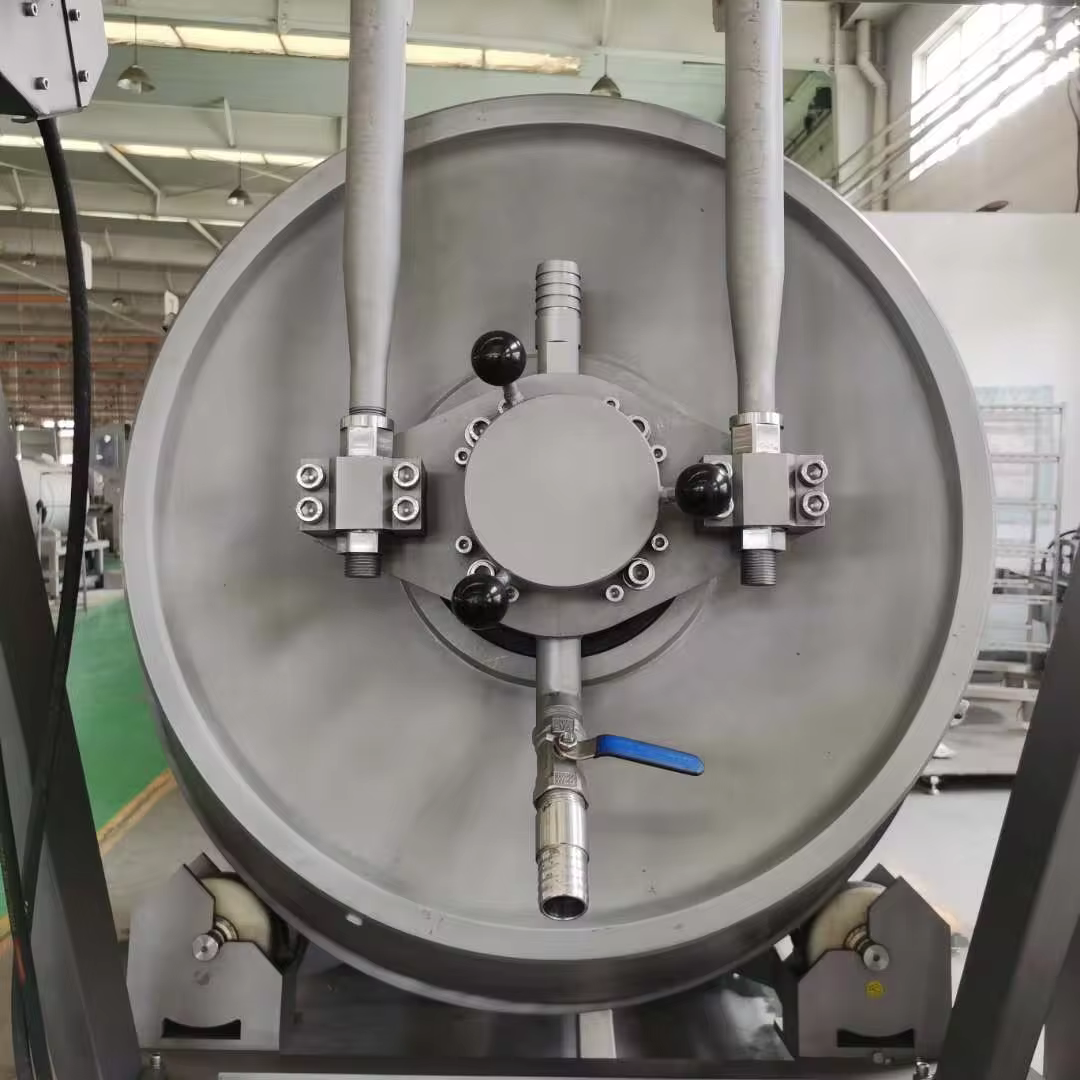
Buyers often confuse total drum volume with functional load capacity. The physical size of the drum does not equal the amount of meat you can process. Functional payload typically hovers between 50% and 60% of total volume. The remaining empty space allows for proper mechanical action. The protein needs room to lift, fall, and strike the internal baffles.
Under-sizing constricts throughput severely. You end up running constant mini-batches to meet daily quotas. Over-sizing creates an equally damaging scenario. An insufficiently loaded drum fails to generate the necessary impact force. The meat just slides along the bottom instead of tumbling. We recommend calculating exact daily throughput before sizing the drum.
| Total Drum Volume (Liters) | Max Functional Payload (kg) | Optimal Protein Application |
|---|---|---|
| 500 L | 250 - 300 kg | Specialty cuts, small-batch poultry |
| 1,000 L | 500 - 600 kg | Mid-scale pork, wholesale beef |
| 2,500 L | 1,250 - 1,500 kg | High-volume industrial poultry |
| 5,000 L | 2,500 - 3,000 kg | Mass continuous bulk processing |
Meat temperature dictates microbial safety and protein extraction efficiency. The mechanical friction of tumbling generates ambient heat inside the drum. You must control this temperature spike carefully. Facility designers choose between unjacketed and jacketed machines.
Unjacketed machines rely entirely on the surrounding environment. They require operation inside a fully climate-controlled cold room. The entire room must remain strictly refrigerated. Jacketed machines feature a specialized double wall. Plant cooling lines pump glycol or ammonia directly through this jacket. The drum itself acts as a refrigerator. Jacketed units can operate safely in ambient facility temperatures. This flexibility saves massive HVAC construction costs, despite the higher machine cost.
Sanitation teams evaluate the downtime required for daily cleaning. Complex internal structures trap protein residue and harbor bacteria. Inspectors look for machines featuring continuous, smooth welds. They reject designs containing dead zones where water cannot flow freely. Quick-release interior baffles drastically reduce manual scrubbing time.
Implementation requires strategic consideration regarding existing facility infrastructure. Modern plants prefer integrating new equipment into centralized Clean-In-Place systems. Automated CIP sequences flush the drum thoroughly. They apply caustic foams, rinse, and sanitize without human intervention. This automation minimizes labor hours significantly between allergen changeovers. Faster changeovers mean more production uptime. Always verify CIP compatibility during the procurement phase.
Vacuum systems pull oxygen out of the drum environment. This action impacts microbial growth patterns. While it slows aerobic bacteria, it requires vigilance regarding anaerobic pathogens. Strict temperature control remains your primary defense against contamination. You must log data accurately to satisfy federal inspectors.
Regulatory bodies demand rigorous proof of safety. The USDA and FDA scrutinize marination records during audits. Modern machines feature onboard data logging systems. They record precise temperature shifts and vacuum parameters minute by minute. You can export these reports instantly. This documented proof demonstrates compliance seamlessly. Hand-written logs fail to meet modern traceability standards. Digital verification protects the facility against massive recall liabilities.
Evaluating the investment requires a disciplined mathematical approach. Do not rely on vendor promises alone. Use a structured formula tailored to your exact production data. Calculate the baseline using your current static marination yield.
The standard formula structures around tangible metrics: (Increased Yield % × Volume) + (Labor Hours Saved) – (Energy + Maintenance + Depreciation). First, quantify the extra sellable weight gained per batch. Next, calculate the wages saved by eliminating manual vat handling. Finally, subtract the added utility demands and the strict maintenance schedule costs. If the resulting margin covers the depreciation schedule rapidly, the investment fundamentally justifies itself.
Vendor demonstrations often highlight flashy touchscreens. You must look past the interface and analyze the core mechanical architecture. Specific components dictate long-term reliability and product flexibility. Build a mandatory checklist before soliciting bids.
Upgrading processing equipment requires a clear understanding of the ultimate trade-off. A dynamic tumbling system serves as a massive yield multiplier for mid-to-large-scale processors. It shrinks processing days into minutes while significantly boosting moisture retention. However, your facility must fully support the rigorous maintenance and sanitation demands. You must possess the floor space, the technical staff, and the chilling infrastructure. Without these support pillars, the machine becomes an operational bottleneck.
We strongly recommend initiating a pilot test before committing capital. Advise your procurement team to run a small-batch trial directly with the vendor. Use your exact protein cuts and proprietary marinade formulations. Validate the specific yield increases under controlled conditions. Document the actual time saved. Real-world data ensures your capital expenditure delivers exactly what your production line needs.
A: These heavy-duty units generally last 10 to 15 years under heavy, daily use. Longevity remains entirely contingent on strict daily sanitation. You must adhere rigorously to scheduled preventative maintenance. Replacing worn pumps and drive belts promptly prevents catastrophic motor failure over the long term.
A: Break-even timelines are highly variable. However, high-volume poultry or pork processors often achieve break-even within 8 to 14 months. This rapid return stems purely from increased moisture retention, reduced purge, and the resulting daily yield gains across large batches.
A: Yes, processors can tumble delicate proteins successfully. It requires a specialized machine capable of dropping to very low RPMs. You also need a continuous high vacuum setting. Furthermore, the drum must feature specialized gentle-massage baffles to prevent rapid tissue degradation.