The term "tumbler machine" carries significant ambiguity across different commercial industries. You might immediately picture a small rotary barrel polishing rough rocks into smooth gems. Others envision massive vibratory tubs deburring heavy metal parts on a noisy manufacturing floor. These abrasive machines serve a clear purpose for surface finishing. However, the commercial food sector relies on an entirely different technology. For meat processors, poultry plants, and large kitchens, the true workhorse is the vacuum tumbler machine. This equipment acts as a critical decision point when you need to scale production. It allows operations to standardize product quality while dramatically improving overall yield. We will explore how these machines function under negative pressure to transform protein processing. You will learn the mechanical principles behind the process and discover exact criteria for evaluating the right equipment for your facility.
Key Takeaways
- Dual Definition: "Tumbler machines" serve two main industries: surface finishing (metal/jewelry) and food processing (vacuum tumbling).
- Core Business Value: A commercial vacuum tumbler machine reduces marination time from days to minutes while increasing product yield by 10% to 20% through cellular expansion.
- Key Evaluation Metrics: Buyers should evaluate machines based on volume capacity, cooling capabilities (jacketed vs. non-jacketed), and sanitary compliance (USDA/FDA standards).
- Implementation Reality: Facility requirements—such as specialized drainage, vacuum pump maintenance, and climate control—must be factored into equipment planning.
The Core Purpose: Bridging the Gap Between Finishing and Processing
Begin by mapping the technological landscape. This helps orient you before diving into specialized food equipment. You must understand what sets these technologies apart to avoid costly procurement mistakes.
Industrial abrasive tumblers use friction to change material shapes. They rely on tumbling media like ceramic triangles, plastic cones, or even walnut shells. You see them heavily utilized for smoothing metals, rocks, and jewelry. They slowly remove exterior material to create a highly polished surface.
Conversely, commercial food production utilizes the vacuum tumbler machine. These specialized units do not remove material. Instead, they massage proteins, extract sticky myosin, and force liquid absorption under negative pressure.
We can clearly separate these applications using a structured comparison:
| Application Type | Primary Action | Core Objective | Typical Materials |
| Abrasive Tumbling | Friction and mechanical grinding | Surface smoothing and sharp edge deburring | Metals, plastics, jewelry, rough stones |
| Vacuum Tumbling | Negative pressure and gentle massaging | Yield optimization and rapid marinade absorption | Beef, poultry, pork, delicate seafood |
For commercial food processors, a vacuum tumbler machine serves a highly strategic financial purpose. It goes far beyond basic ingredient mixing or flavor coating. The primary objective is absolute yield optimization. Every drop of marinade absorbed translates directly to margin protection. When you scale protein production, surface-level mixing simply cannot compete. You need mechanical intervention. This ensures marinades penetrate deeply and stay locked tightly inside the muscle tissue during the final cooking phases.
How a Vacuum Tumbler Machine Drives Business Outcomes
Food processors face constant operational pressure. You must maximize daily output without compromising sensory quality. A vacuum tumbler machine directly addresses this ongoing challenge through three highly measurable outcomes.
First, it fundamentally changes yield improvement and protein extraction. Negative pressure effectively opens up dense meat fibers. This allows marinades to penetrate deeply into the muscle core. Without a vacuum, liquids just pool on the product surface. By expanding the cellular structure, processors routinely see up to a 20% weight gain retention. The mechanical action also extracts myosin. This naturally occurring sticky protein binds individual meat pieces together. It heavily improves the final texture of formed deli logs.
Beyond weight retention, the sensory improvements remain undeniable. Because the marinade reaches the absolute center of the cut, the flavor profile stays perfectly consistent. Consumers experience a juicy, flavorful bite every single time. This deep penetration also protects the meat from drying out during harsh commercial oven roasting or high-heat grilling.
Second, the technology revolutionizes time and labor efficiency across the plant floor. We can contrast this against traditional preparation methods.
- Traditional Static Marination: Requires 12 to 24 hours of undisturbed soaking. It demands significant cooler footprint space. Workers perform multiple manual handling steps. Batch-to-batch inconsistency runs notoriously high.
- Vacuum Tumbling: Reduces the entire absorption process to just 20 to 45 minutes. It minimizes dangerous manual handling. It ensures mathematically identical treatment for every single batch.
Finally, you gain tremendous operational advantages regarding shelf-life and product consistency. Standardized mechanical massaging creates a highly uniform internal texture. It enhances color distribution across the entire batch matrix. For deli meats, this uniform protein extraction heavily improves sliceability. You eliminate dry spots inside the roast. You drastically reduce expensive slicing waste at the deli counter.
The Mechanics: How Vacuum Tumbling Actually Works
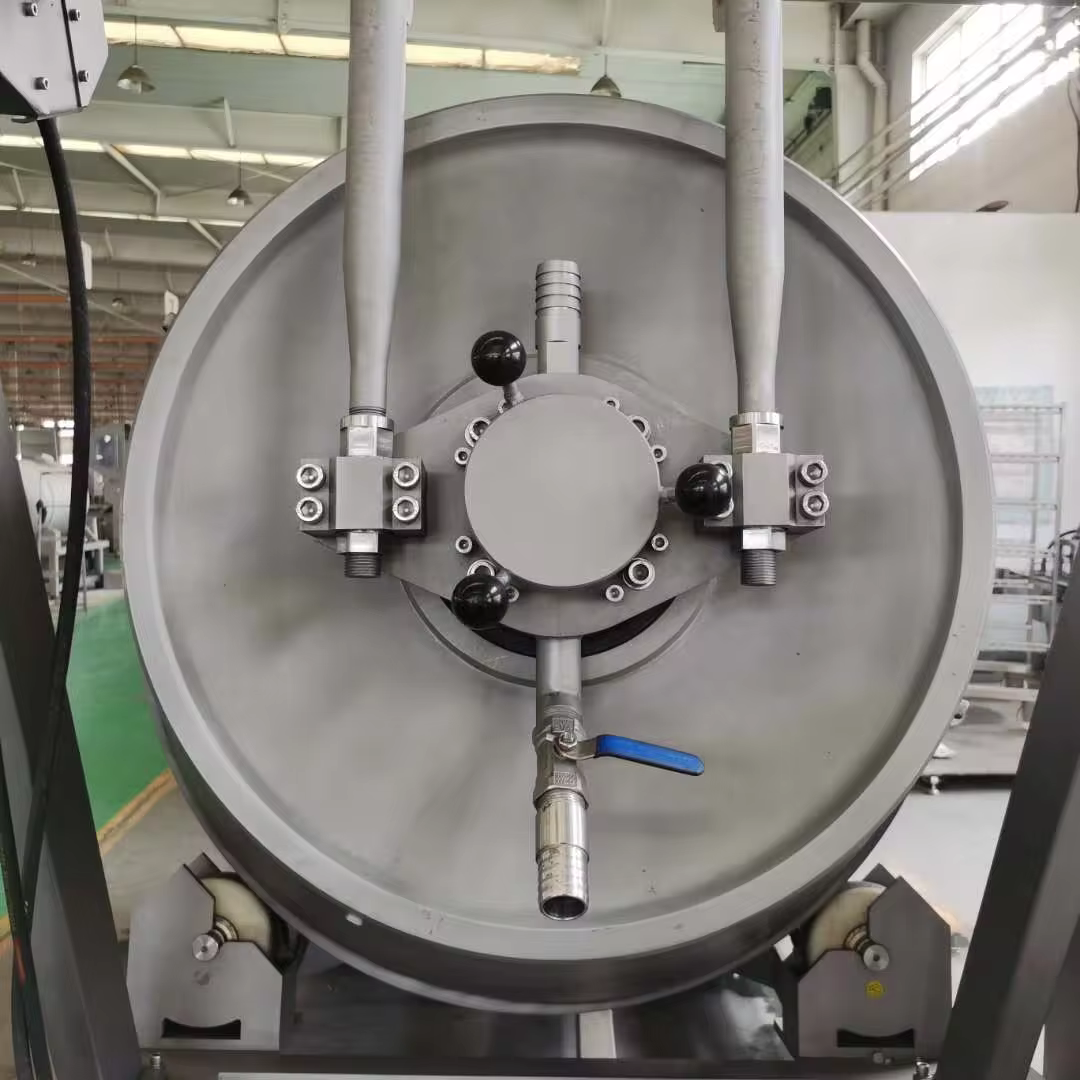
Understanding the physical process requires looking past standard equipment marketing claims. The core science revolves entirely around negative atmospheric pressure. A heavy-duty pump physically removes air from inside the sealed stainless steel drum. More importantly, it pulls microscopic air pockets directly out of the product itself.
This continuous action causes cellular structures within the meat to expand rapidly. They begin to act exactly like dry sponges. When the drum rotates, the meat eagerly absorbs the surrounding liquid. It pulls moisture in to fill those newly emptied cellular spaces.
When myosin comes to the surface, it forms a tacky exterior on the meat pieces. During the cooking or smoking phase, this sticky protein acts as a natural glue. It binds separate muscle pieces together into a solid, sliceable deli log. Without this mechanical extraction, the final product would crumble entirely upon hitting a commercial meat slicer.
Internal drum design heavily dictates the mechanical massaging action. You will notice specific baffle shapes welded inside the rotating drum. These baffles meticulously control how the product moves.
- Gentle Massaging: Uses rounded, asymmetrical internal baffles. They slowly lift and fold delicate products like poultry or whole-muscle hams. This prevents tissue tearing and muscle degradation.
- Aggressive Tumbling: Employs sharper, steeper baffle designs. These create higher-impact drops inside the drum. They work best for tough cuts of beef or rapid myosin protein extraction.
Temperature control constraints remain equally crucial during this process. Rotating thousands of pounds of meat generates significant internal friction. Friction naturally produces ambient heat. Maintaining internal drum temperatures below 40°F (4°C) is absolutely critical for regulatory compliance. If the meat gets too warm, hazardous bacteria multiply rapidly. Furthermore, heat breaks down the delicate protein structures. This ruins the myosin binding process and turns the meat unpleasantly mushy.
Evaluation Criteria: Selecting the Right Vacuum Tumbler Machine
Choosing the proper equipment requires matching machine capabilities to your exact daily production needs. Start by thoroughly analyzing your capacity versus actual throughput requirements. You must provide a logical framework for accurate sizing.
Many buyers forget a critical physics rule. Drums cannot be filled to the absolute top. A commercial vacuum tumbler machine typically requires a maximum fill level of roughly 60% to 70% of its total volume. The empty head-space remains strictly necessary. It provides the physical room needed for the meat to drop, fold, and massage against the internal baffles.
Next, logically compare available cooling systems. You generally choose between jacketed and standard drum configurations.
Jacketed machines feature built-in glycol chilling lines wrapping the exterior drum. They perform best for continuous high-volume runs. They allow strict climate control even in warm ambient processing rooms. Standard, non-jacketed drums lack internal liquid cooling. You must operate them inside dedicated refrigerated rooms to maintain strict food safety protocols.
Sanitary design compliance represents a non-negotiable equipment evaluation factor. You must meet or exceed strict FDA and USDA hygiene standards. Look closely for these specific design features:
- Continuous TIG welds using 304 or 316 stainless steel to eliminate bacterial hiding spots.
- IP65+ rated washdown control panels designed to survive high-pressure chemical sanitation.
- Trap-free drainage valves for rapid, complete liquid removal during cleaning cycles.
- Toolless baffle removal mechanisms to simplify daily deep cleaning procedures.
Common Mistakes to Avoid During Selection:
- Ignoring facility doorway dimensions before ordering a massive jacketed drum.
- Failing to account for future product line expansion when calculating optimal drum volume.
- Choosing a standard ambient drum for a facility that lacks adequate cold-room floor space.
Implementation Realities and Common Pitfalls
Purchasing the equipment only solves half the production equation. You must carefully navigate several harsh implementation realities to ensure success.
The over-tumbling risk presents a major quality control challenge for new operators. Tumbling product for too long turns high-quality whole-muscle proteins into an unusable, gluey paste. Tumbling too fast creates the exact same structural problem. You need recipe-specific programming to prevent this. Variable speed drives allow operators to smoothly adjust RPM based on the exact protein type. You must fine-tune the time, speed, and vacuum depth for every new recipe you introduce.
Maintenance overhead requires realistic daily expectations. The vacuum pump serves as the literal heart of the system. It demands strict, scheduled care. You must schedule regular oil changes. You must perform frequent inline filter replacements. Moisture pulled from the wet drum constantly threatens the pump internals. Additionally, the heavy-duty loading door gaskets experience severe daily wear and tear. They require routine visual inspection to maintain a proper negative pressure seal.
Finally, evaluate your overall facility readiness. Many buyers completely overlook basic physical installation factors. A fully loaded vacuum tumbler machine exerts massive static weight. Your concrete floor must possess the appropriate engineering load-bearing capacity. The large drive motors require specific high-voltage industrial power drops. Furthermore, you need immediate proximity to high-capacity floor drains. This handles the massive water volume generated during mandatory sanitation shifts.
Conclusion
The true purpose of a vacuum tumbler machine extends far beyond basic ingredient mixing. It operates as a highly verifiable tool for margin expansion within commercial food processing. By smartly leveraging negative pressure and mechanical massage, you fundamentally change how proteins absorb and retain value.
Your immediate next steps should focus heavily on accurate data collection. Audit your current daily throughput to understand your true production bottlenecks. Determine your required batch size while firmly factoring in the 60% fill-rate physics rule. Finally, request rigorous sample testing from equipment manufacturers. Validate their specific yield claims using your exact recipes before finalizing any capital equipment purchase.
FAQ
Q: What is the difference between a vacuum tumbler machine and a vacuum massager?
A: The industry frequently uses these terms interchangeably. However, massagers typically imply significantly larger, slower-moving drums. They feature highly specialized, rounded, and gentle baffles. These specific designs cater exclusively to delicate whole-muscle products. They prevent structural tissue tearing in bone-in hams or fragile poultry breast pieces.
Q: Do vacuum tumblers require a refrigerated room?
A: It depends entirely on the machine's specific build configuration. If the unit does not have a built-in glycol cooling jacket, you must operate it in a climate-controlled room. This ensures the meat stays strictly below 40°F (4°C) to meet mandatory food safety temperature standards during friction-heavy processing.
Q: Can a vacuum tumbler process frozen meat?
A: No. The product must be properly slacked, meaning fully thawed or semi-thawed. Tumbling deeply frozen blocks introduces severe physical risks. The hard ice can permanently damage the internal baffles. It can easily burn out the drive motor. Furthermore, frozen cellular structures physically cannot absorb any liquid marinade.
Q: How do I calculate the ROI of a vacuum tumbler?
A: You can use a highly straightforward calculation model. Take your directly increased yield weight and multiply it by your wholesale price per pound. Add your total labor hours saved multiplied by your standard hourly rate. Finally, subtract your annualized equipment cost and routine scheduled maintenance expenses.


