Onions possess naturally high water and sugar content. This characteristic makes them notoriously difficult to fry at scale. Rapid oil degradation and inconsistent caramelization plague many commercial kitchens. Operators face an uphill battle every day. They must maintain strict product quality while simultaneously managing consumable costs. Choosing the right equipment dictates whether your operation thrives or struggles.
Poorly matched fryers lead directly to soggy textures. They burn sugars rapidly and skyrocket your operational expenses. Facility engineers and production managers need an objective framework. You must evaluate your options based on facts, not sales pitches. Finding a reliable onion frying machine requires a deep understanding of thermal dynamics.
This guide explores how the right investment balances yield and operational expenses. It also covers strict safety compliance. You will learn to assess thermal recovery, filtration systems, and heating mechanisms objectively. We will help you select an equipment solution tailored to your exact facility constraints. Proper planning guarantees long-term production success.
Key Takeaways
- Choosing between batch and continuous systems depends strictly on your hourly throughput requirements and labor availability.
- Advanced oil management and filtration systems are the primary drivers of ROI, directly reducing consumable costs.
- Precise thermal recovery is non-negotiable for onions to prevent moisture-logging and ensure a crispy finish.
- Vendor selection should prioritize transparent performance testing and localized after-sales support over baseline sticker price.
Defining Your Production Needs and Success Criteria
Evaluating commercial equipment begins long before reviewing technical specification sheets. You must define your exact production parameters first. A thorough internal audit prevents costly misalignments later. Operators frequently underestimate the complexity of large-scale vegetable processing.
Throughput vs. Footprint
Calculating your required output against available facility space requires precision. You cannot simply look at raw input numbers. Onions lose significant moisture during the cooking process. Facility space isn't just about the machine dimensions. You need adequate clearance for daily cleaning, routine maintenance, and operator movement. Follow these steps to determine your true capacity requirements:
- Determine your target raw input volume per hour.
- Account for the average moisture loss percentage during frying.
- Calculate the final expected output yield in kilograms.
- Map these final dimensions against your active floor plan.
The Onion Variable
Specific product types dictate specific machine requirements. Battered onion rings behave differently than crispy shallots or fried onion flakes. Battered products constantly shed debris into the oil. This debris requires aggressive, continuous filtration. Shallots release pure water and natural sugars. These sugars burn quickly if left unmanaged. A high-quality onion frying machine adapts seamlessly to these specific demands. Different cuts require distinct retention times and temperature profiles.
Establishing ROI Baselines
You must shift focus from initial capital expenditure to long-term efficiency. Look closely at oil preservation capabilities. Energy efficiency plays a massive role in monthly overhead. Reduced labor costs drive long-term profitability. Oil degradation costs operators thousands annually. An efficient system pays for itself by extending oil life. Automated cleaning mechanisms reduce required labor hours drastically.
Best Practice: Always map out a three-year operational expense projection. Focus heavily on projected oil consumption and energy usage.
Common Mistake: Sizing a fryer based strictly on raw input capacity. You must account for the volumetric expansion of battered products.
Continuous vs. Batch Onion Frying Machines: Assessing the Approaches
Selecting the core operating mechanism defines your entire production workflow. Each approach serves distinctly different operational scales. You must match the machine style to your labor availability. Throughput targets also dictate this fundamental choice.
Commercial Batch Frying Machines
Batch systems process set amounts of product simultaneously. Operators load, fry, and remove products in distinct cycles. This method provides high control over individual batches. Operators adjust parameters instantly if issues arise.
- Target Scenario: Mid-sized catering companies and restaurant chains. Low-volume specialty producers benefit highly from this approach.
- Pros: Lower initial facility footprint. High versatility for mixed daily menus. Operators troubleshoot issues immediately during the cycle.
- Limitations: Higher daily labor dependency. Batch-to-batch consistency varies depending on operator skill. Heat loss occurs between loading cycles.
Automated Continuous Onion Frying Lines
Continuous lines move product through hot oil via submerged conveyors. Product enters one end and exits the other fully cooked. These systems maintain strict, unvarying cooking environments. They eliminate the human error associated with manual timing.
- Target Scenario: Industrial food processing plants. Facilities prioritizing high-volume, standardized output require these systems.
- Pros: Minimal manual labor requirements. Oil circulates and filters continuously. Exact retention times guarantee uniform color and moisture removal.
- Limitations: Substantial initial investment required. They demand dedicated, permanent floor space. Rigid maintenance and cleaning schedules are absolutely necessary.
Comparison Overview
| Feature | Batch Systems | Continuous Lines |
| Labor Requirement | High (Manual loading/unloading) | Low (Automated feed) |
| Product Consistency | Variable (Operator dependent) | Extremely High (Standardized) |
| Space Footprint | Compact | Expansive |
| Menu Flexibility | Excellent for rapid changes | Best for single-product runs |
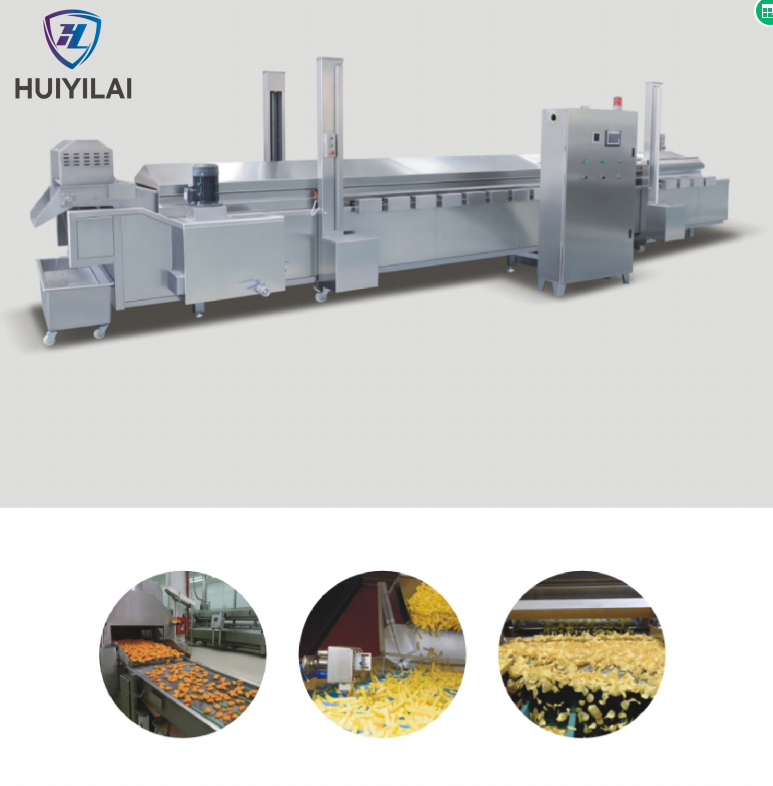
Core Evaluation Dimensions for an Onion Frying Machine
Evaluating commercial fryers requires looking beyond basic output numbers. You must analyze the internal engineering deeply. Thermal dynamics and material choices dictate equipment lifespan. Substandard engineering leads to frequent breakdowns and ruined products.
Thermal Recovery and Temperature Precision
Dropping high-moisture onions into hot oil causes severe temperature drops. Rapid heat recovery prevents greasy, undesirable products. Undercooked onions absorb excess oil and ruin entire batches. Sensor placement strictly determines system reaction time. Multi-zone temperature control capabilities adjust heat precisely across different sections. An advanced onion frying machine measures temperature drops instantly. It applies exact heat to recover the optimal cooking environment.
Oil Filtration and Management Systems
Burnt sugars and stray batter increase Free Fatty Acids (FFA). High FFA degrades cooking oil rapidly. It lowers the smoke point and creates bitter flavors. Continuous scraper systems physically remove bottom sediment actively. Integrated fine-mesh filtration captures microscopic carbonized particles. Automated oil top-off mechanisms maintain stable fluid volumes seamlessly. Superior filtration extends oil life by hundreds of hours. This single feature transforms your operating margins.
Build Quality and Compliance Standards
Industrial kitchen equipment must withstand harsh, continuous use. Heat, moisture, and salt create highly corrosive environments. Food-grade 304 stainless steel forms the absolute minimum requirement. High-salinity applications demand superior 316 stainless steel components. You must verify international safety certifications. Look for CE, UL, or NSF markings on the equipment. Regional food safety equivalents also apply depending on your location. Proper welding prevents microscopic bacterial growth inside the vat.
Gas vs. Electric: Choosing the Right Heating Mechanism
The heating mechanism impacts your facility infrastructure directly. It also changes how heat transfers into the cooking oil. Your local utility rates heavily influence this decision. Facility constraints often dictate the final choice regardless of preference.
Gas-Heated Frying Machines
Gas-powered units dominate high-volume industrial processing facilities. Combustible fuels generate immense thermal energy quickly. These systems utilize internal heat exchanger tubes to transfer energy.
- Performance: Gas generally offers faster thermal recovery. Industrial settings rely heavily on this rapid heat capacity. High-capacity loads require intense, immediate thermal energy.
- Facility Needs: Robust exhaust ventilation remains strictly mandatory. You need dedicated, high-capacity gas line infrastructure. Fire-suppression compliance becomes significantly stricter for gas units. Make-up air systems must balance facility air pressure.
Electrically-Heated Frying Machines
Electric units utilize submerged heating elements directly in the oil. This provides a highly efficient energy transfer method. Electric systems often operate in areas lacking gas infrastructure.
- Performance: Heating elements deliver highly precise temperature control. Heat applies localized power directly to the surrounding oil. Point-of-use energy efficiency scores higher than gas equivalents.
- Facility Needs: Industrial electrical capacity must handle the immense voltage load. These units emit significantly lower ambient heat into the facility. This improves operator comfort and reduces HVAC cooling requirements.
Implementation Realities and Maintenance Risks
Integrating heavy machinery disrupts daily facility operations initially. You must plan for installation realities and ongoing maintenance. Ignored maintenance schedules lead to catastrophic equipment failures. Proper planning mitigates unexpected downtime effectively.
Cleaning and Sanitation Downtime
Daily cleaning requires significant labor hours if poorly managed. Evaluate systems offering Clean-in-Place (CIP) technology. Automated hood lifting mechanisms speed up interior access safely. Accessible drainage points prevent clogs from heavy batter sediment. Avoid machines housing structural blind spots entirely. Blind spots harbor bacteria and degraded oil residues. A well-designed onion frying machine prioritizes internal accessibility. Sanitation crews must reach every internal surface easily.
Operator Training Requirements
Modern equipment relies heavily on digital interfaces. PLC touch-screen controls offer incredible precision and recipe programming. However, they demand specific technical training for floor staff. Analog backups provide critical failsafes during software glitches. Ensure your team understands the emergency shutdown procedures thoroughly. Complex interfaces can confuse operators during high-stress production runs. Simple, intuitive dashboard designs prevent costly operator errors.
Spare Parts Ecosystem
Equipment breakdowns halt production lines immediately. Proprietary internal components introduce severe operational risk. You cannot afford to wait weeks for specialized international shipping. Standardized electronic parts reduce unexpected downtime drastically. Off-the-shelf mechanical parts keep lines running smoothly. Ask your vendor about their regional parts distribution network. Readily available components ensure rapid, local repairs.
Shortlisting Vendors and Next-Step Actions
Selecting a manufacturing partner requires intense due diligence. A machine looks perfect on paper but fails during production. You must validate performance claims through rigorous testing. Never rely solely on marketing brochures for procurement decisions.
The Testing Phase
Insist on a formal Factory Acceptance Test (FAT). Run a physical pilot using your exact onion varietal. Bring your specific batter recipe to the testing facility. General demonstrations do not replicate your exact production challenges. Observe the thermal recovery speed during the heaviest load phase. Inspect the final product for consistent color and texture.
Evaluating Vendor Trustworthiness
Discard vendors promising absolute "zero oil waste." Cooking physics makes such claims impossible. Look for realistic, verified data on thermal efficiency. Demand honest filtration yield reports based on actual usage. Trustworthy manufacturers provide case studies from similar processing facilities. They openly discuss the limitations of their own equipment.
Warranty and SLA Validation
Thoroughly inspect the fine print of every warranty document. Check coverage terms specifically for submerged heating elements. Inspect conveyor belt warranties for continuous processing lines. Guarantee technical support response times explicitly in your contract. A Service Level Agreement (SLA) protects your daily operations. Clarify who handles local installation and initial calibration procedures.
Conclusion
The optimal equipment aligns throughput targets safely with sustainable operating costs. Engineering precision dictates final product quality and long-term profitability. Upfront planning eliminates severe operational headaches down the road. Map your facility constraints accurately before making any decisions. Check available power, floor space, and ventilation limits first. Request vendor quotes only after finalizing your internal mapping. Outline your exact specifications clearly and confidently. Detail your hourly output goals, product type, and fuel preferences. Initiate informed discussions armed with accurate, objective data. Taking these deliberate steps ensures a highly successful equipment integration.
FAQ
Q: How do you calculate the required capacity for a commercial onion fryer?
A: You calculate capacity by measuring your raw input weight per hour. Subtract the expected moisture loss percentage caused by frying. This provides your desired finished output yield per hour. Match this final yield number against the manufacturer's rated equipment capacity.
Q: What is the standard lifespan of the frying oil in a continuous onion frying line?
A: Oil lifespan varies heavily by product type. Battered onions degrade oil faster than raw onions. However, continuous fine-mesh filtration systems can extend usable oil life by 50-70% compared to traditional static fryers. Constant circulation prevents sediment from carbonizing.
Q: Can an onion frying machine process other vegetables?
A: Yes, these units handle multi-product capabilities easily. They process garlic, potatoes, and peanuts effectively. The machine must feature variable conveyor speeds. Adjustable temperature profiling allows operators to match different vegetable cooking requirements accurately.
Q: What are the ventilation requirements for industrial fryers?
A: Industrial units strictly require commercial exhaust hoods. You must install heavy-duty grease extractors. Make-up air systems are mandatory to maintain facility air pressure. These ventilation components ensure fire safety and maintain strict occupational compliance standards.


