Transitioning from entry-level frying setups to advanced commercial equipment requires careful strategy. You must balance output volume alongside strict product consistency every single day. Choosing the wrong machine model introduces severe operational headaches. You risk rapid oil degradation, bottlenecked throughput, and inconsistent textures like soggy onion rings or burnt crispy shallots. The stakes remain incredibly high when scaling your food manufacturing process. Poor equipment selection directly impacts your final product quality and operational efficiency. We aim to provide an objective framework for evaluating different equipment configurations based on actual production data. You will learn how production capacity and specific product types dictate your machinery choices. We will explore how to align heating systems, oil management protocols, and facility requirements. This ensures you find the ideal solution to streamline your daily operations and maintain strict quality control.
Key Takeaways
- Batch vs. Continuous: The primary dividing line in equipment is capacity. Batch fryers suit operations under 200kg/h, while continuous fryers are required for standardized, high-volume production.
- Product-Specific Engineering: Batter-coated onion rings require dual-belt (hold-down) systems, whereas crispy diced onions or shallots require continuous stirring mechanisms to prevent clumping.
- Oil Management is the True Cost Driver: Advanced continuous models with integrated scraping and filtration systems drastically reduce operational costs by extending oil lifespan.
Establishing Your Production Baseline and Success Criteria
You must understand your current manufacturing baseline before evaluating new equipment. Accurate production data prevents you from selecting under-sized or over-sized machinery. You should calculate your current hourly output first. Then, project your anticipated growth over the next three years. This projection ensures your chosen onion frying machine can handle future demand spikes without requiring immediate replacement.
Your specific end-product dictates the required engineering features. Onion products vary wildly in their physical characteristics during the frying process. You cannot use a generalized approach for all variations.
Table 1: Product Variations and Engineering Requirements | Product Type | Frying Characteristic | Primary Engineering Requirement |
| Thick-Battered Onion Rings | Highly buoyant, prone to floating | Dual-belt hold-down systems |
| Thin-Sliced Crispy Onions | Rapid moisture evaporation | Precise multi-zone temperature control |
| Dehydrated Shallot Flakes | Tendency to clump together | Continuous mechanical stirring |
You must define success metrics beyond the initial purchase. True operational success relies on measurable daily improvements. Evaluate your potential equipment based on oil turnover rates. A good machine extends oil life significantly. Consider labor reduction as another key metric. Automated systems free your staff for other vital facility tasks. Finally, assess yield consistency. Your machinery should produce identical textures and colors across every single shift.
Batch Onion Frying Machines: Flexibility for Mid-Volume Operations
Batch machines typically feature round or rectangular semi-automatic vats. They process limited quantities of product at one time. Operators manually load the raw ingredients into the heating zone. The equipment then utilizes either manual basket extraction or an automatic discharge mechanism to remove the finished product. These systems remain relatively simple in their overall mechanical design.
These units serve a highly specific operational purpose. They provide the ideal use case for facilities processing under 200kg to 300kg per hour. You will also find them highly beneficial if you run multiple different product lines daily. The batch design allows you to isolate different recipes easily without contaminating a massive continuous system.
You gain several distinct advantages with batch configurations. They require a lower initial capital expenditure (CapEx). This makes them highly accessible for growing operations. They also occupy a much smaller facility footprint. You can fit them into kitchens with tight space constraints. Furthermore, they offer faster changeover times. You can drain, clean, and prep the vat for a completely different recipe rapidly.
However, you must acknowledge their inherent limitations. These units carry a high dependency on operator skill. Your staff must monitor frying times closely to maintain consistency. This dynamic naturally increases your daily labor requirements. Additionally, batch vats struggle with heat recovery. The oil temperature drops significantly when operators add fresh, cold product. The heating elements take time to rebound, which slows down your overall production cycle compared to continuous models.
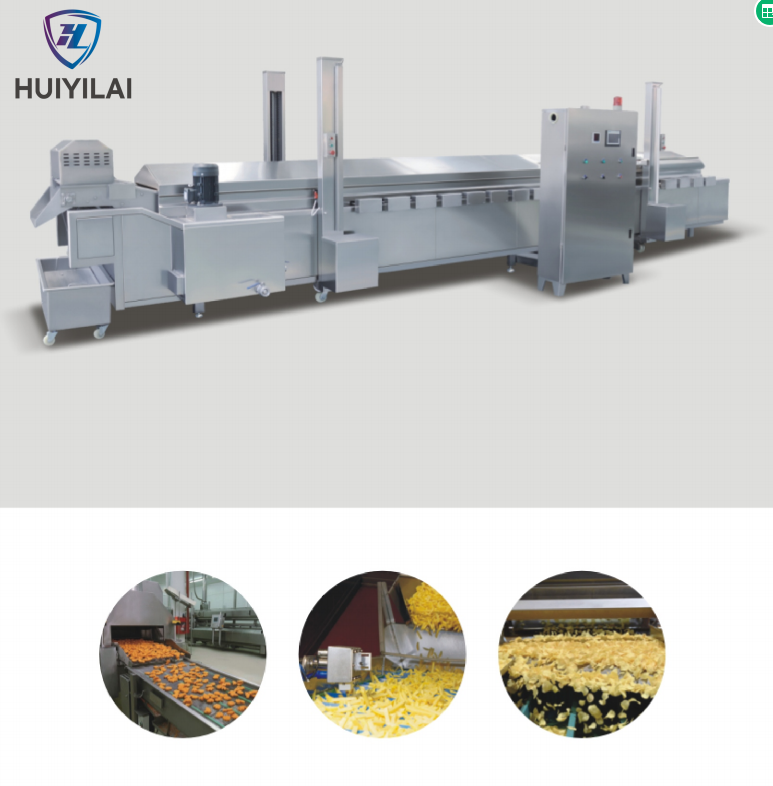
Continuous Onion Frying Machines: Scaling for High-Volume Output
Continuous machines represent the pinnacle of high-volume processing. They utilize complex conveyor-driven systems. Raw product enters one end and moves continuously through a precisely heated oil bath. The equipment discharges perfectly fried food at the opposite end. This design standardizes the entire cooking cycle.
You must select the correct belt configuration for your specific product. Belt choices directly impact your final yield and quality.
- Single Belt Systems: These provide standard conveying capabilities. They work well for heavy products that naturally sink and require minimal guidance.
- Double Belt (Hold-Down) Systems: These are absolutely essential for buoyant products. Batter-coated onion rings float aggressively. A hold-down belt forces them beneath the oil surface. This ensures even submersion and prevents raw, uncooked patches on the batter.
Continuous models deliver tremendous operational benefits. They drive a drastic reduction in manual labor. You only need staff to manage the feeding and offloading stages. They guarantee absolute consistency in fry times and temperatures. The conveyor speed dictates the exact cooking duration. You also unlock massive throughput capabilities. These machines easily handle anywhere from 500kg/h to over 2000kg/h.
Despite these advantages, continuous setups present distinct challenges. They demand a significant initial investment. You must allocate substantial budget resources to acquire them. They also require massive floor space. Your facility must accommodate a long, linear footprint. Furthermore, they demand strict cleaning protocols. You must maintain the complex belt systems meticulously to prevent carbon buildup and mechanical jamming.
Critical Evaluation Dimension: Heating Systems and Oil Management
Your choice of heating source dictates your utility consumption and recovery speed. You must align the heating method with your local infrastructure and volume needs. We have provided a comparison chart below to clarify these distinctions.
Heating System Comparison Chart | Heating Source | Operational Strengths | Ideal Application |
| Electric Heating | Highly precise temperature control; clean daily operation. | Smaller equipment models; regions with low electricity rates. |
| Gas (Direct/Indirect) | Faster heat recovery times; robust thermal output. | High-volume commercial scale; facilities with existing gas lines. |
| Thermal Oil Heating | Extremely even heat distribution; prevents oil scorching. | Massive industrial scales requiring continuous, 24/7 operation. |
Oil management represents the true core of equipment evaluation. You must prioritize models based on their continuous filtration capabilities. Frying processes generate heavy debris. Carbonized batter and loose onion skins fall to the bottom of the vat. If left unchecked, this debris burns continuously.
Your machine must effectively remove this particulate matter. Advanced units feature continuous bottom scraping systems. They sweep debris out of the heating zone automatically. This action is critical to prevent free fatty acid (FFA) buildup. High FFA levels ruin the flavor profile of your product and force you to discard expensive frying oil prematurely. Proper filtration stabilizes your product quality and drastically reduces your daily resource waste.
Implementation Realities: Installation, Footprint, and Compliance
You cannot install commercial frying equipment in a vacuum. Your facility must support the secondary infrastructure required for safe operation. Evaluate your current floor plan carefully.
- Ventilation Hoods: You must install industrial-grade exhaust systems to handle massive steam and vapor output.
- Fire Suppression Systems: Large volumes of heated oil present significant fire risks. You need integrated suppression technology directly above the vat.
- Specialized Floor Drainage: Daily sanitation requires massive water usage. Your floors must slope toward high-capacity, grease-trapping drains.
Sanitation and maintenance dictate your daily downtime. You should assess the machine's Clean-In-Place (CIP) capabilities. A good CIP system automates the boiling and chemical flushing process. Look specifically for motorized hood-lifting systems. These mechanisms raise the heavy top covers automatically. They allow your workers safe, easy access to internal belts and heating tubes. Without motorized lifts, deep cleaning becomes a dangerous, labor-intensive chore.
You must also verify food-grade compliance regarding construction materials. Do not compromise on metallurgy. The standard baseline is full SUS304 stainless steel construction. It resists standard corrosion and withstands heavy chemical cleaning. However, you might require SUS316 stainless steel for specific environments. If you process highly acidic marinades or operate in high-salinity coastal facilities, SUS316 provides the necessary upgraded corrosion resistance.
Shortlisting Logic: How to Vet Machinery Manufacturers
You must test equipment before making a final commitment. Requesting a Factory Acceptance Test (FAT) is a non-negotiable step. Buyers should demand a documented test run using their specific product type. If shipping your exact product is impossible, use an exact proxy. You need to see how the belts handle your batter. You must verify that the scrapers effectively remove your specific debris. Taking delivery without a successful FAT exposes you to massive operational risk.
Assessing vendor support is equally critical. Machines experience wear and tear. You must evaluate the availability of high-wear spare parts. Ask the manufacturer about their inventory of replacement belts, heating elements, and thermal sensors. Demand guaranteed lead times for these components in writing. Extended downtime while waiting for a single sensor will cripple your production schedule.
Finally, look past the standard warranty terms. A basic 1-year warranty covers obvious defects, but you need long-term operational security. Understand the manufacturer's diagnostic support capabilities. Modern equipment relies heavily on complex electrical panels. Ask if they offer remote PLC troubleshooting. Engineers can often log into your machine's interface remotely to diagnose sensor failures or software faults. This capability eliminates the need for expensive, time-consuming technician visits for minor electrical issues.
Conclusion
Your final equipment selection determines your manufacturing success. You must align the machine choice strictly with your capacity constraints and your specific onion product. Never purchase a continuous hold-down fryer for simple shallot flakes, and never rely on a batch vat for massive onion ring volumes. Match the engineering to your exact daily reality.
Your next action step requires careful internal data gathering. Audit your current oil consumption rates immediately. Track your manual labor hours dedicated to frying and cleaning. Use these concrete metrics to build a realistic timeline for implementing your short-listed equipment. This structured approach ensures you integrate the right technology with minimal operational disruption.
FAQ
Q: At what production volume should we switch from a batch to a continuous onion frying machine?
A: You should generally transition to a continuous system when your output consistently exceeds 300kg per hour. Batch systems struggle to maintain heat recovery at higher volumes. A continuous system handles larger capacities effortlessly while standardizing your frying times and reducing operator dependency.
Q: How do different models prevent batter from sticking to the conveyor belt?
A: Advanced continuous units utilize Teflon-coated belts to minimize surface sticking. They also employ precise double-belt hold-down systems. These submerge battered products immediately into the hot oil. This allows the exterior crust to set rapidly before it can adhere to the internal metal components.
Q: What is the expected oil saving percentage when upgrading to a machine with continuous filtration?
A: Upgrading to continuous filtration can reduce your oil waste by up to 40 percent. The system constantly removes carbonized particles and debris from the heat zone. This prevents rapid free fatty acid buildup, extending your oil lifespan significantly compared to manual skimming methods.
Q: Can the same machine be used for both battered onion rings and crispy shallots?
A: It is possible, but not optimal. Battered rings need a hold-down belt to stay submerged. Crispy shallots require continuous stirring to prevent clumping. Processing both on one unit requires extensive physical modifications or modular belt inserts, which complicates your daily operational flow.


