Preserving large volumes of food demands highly reliable technology. Many people start their journey using basic consumer equipment. You might process heavy meat loads from hunting trips or backyard barbecues. You might package liquid-heavy soups or prep retail-ready cuts for a small farm. Eventually, standard machines hit a hard performance ceiling. You face a choice between upgrading to heavy-duty suction models or investing in a chamber system. We evaluate the high initial capital expenditure (CapEx) of a chamber machine against the high long-term operational expenditure (OpEx) and limits of external suction models. This article provides a clear, evidence-based framework. We will help commercial kitchens, small farms, and heavy-duty home users choose the right technology. You will learn how mechanics dictate capability, evaluate return on investment, and match footprints to your specific throughput needs.
Key Takeaways
- Mechanics dictate capability: External sealers pull air from the bag, making liquid handling nearly impossible; chamber sealers remove air from the entire environment, allowing for effortless liquid sealing and advanced Vacuum Skin Packaging (VSP).
- The ROI crossover point: While a chamber vacuum skin sealer requires a higher upfront investment, the cost per bag is significantly lower (smooth vs. textured bags), usually paying for itself after moderate to heavy long-term use.
- Footprint vs. Output: External sealers win on portability and storage, whereas chamber sealers require dedicated counter space but offer continuous, commercial-grade operational cycles without overheating.
The Core Mechanical Difference: Pressure Equalization vs. Suction
Understanding machine mechanics helps you avoid expensive packaging failures. Two distinct physical principles govern how these machines remove oxygen. These mechanisms dictate what types of foods you can successfully package.
External (Suction) Sealers
External machines rely on a straightforward mechanical process. You place the open end of a textured plastic pouch across a narrow Teflon tape bar. The lid clamps down over this open end.
- The machine activates a small internal vacuum pump.
- The pump physically sucks ambient air directly out of the pouch opening.
- The heated bar melts the plastic together to form a seal.
This localized suction creates a severe operational limitation. The pump pulls everything toward the opening. It inevitably pulls liquids, wet marinades, and raw meat blood right up the neck of the bag. Moisture hits the heating element. It causes instant seal failure. In worst-case scenarios, liquid enters the internal pump mechanism. This directly causes permanent machine damage.
Chamber Vacuum Skin Sealers
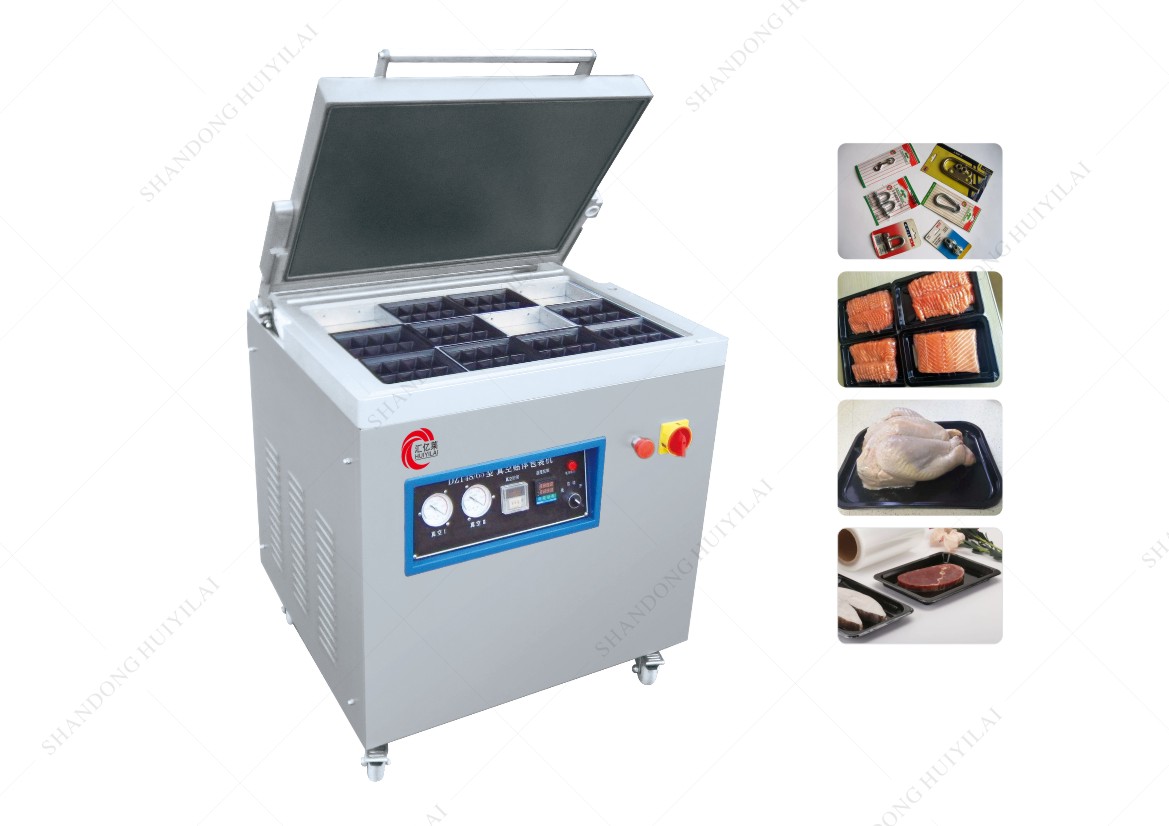
A Chamber Vacuum Skin Sealer operates on a completely different scientific principle. You place the entire pouch inside an enclosed box. You then close a heavy acrylic lid. For skin packaging, you place a rigid tray inside instead.
- The powerful rotary pump activates.
- It evacuates air from the entire internal chamber simultaneously.
- Pressure equalizes inside and outside the packaging.
- The seal bar activates while the environment lacks oxygen.
- Air rushes back into the chamber, tightly shrinking the plastic around the product.
This equalized pressure represents a massive advantage. Liquids stay perfectly put because there is no localized suction dragging them toward the opening. This identical principle enables advanced Vacuum Skin Packaging (VSP). A heated top film drapes tightly over a product. It seals down to a rigid bottom tray. This application provides retail-ready presentation and drastically extends shelf life.
Chamber Vacuum Skin Sealer: Pros, Cons, and Real-World Implementation
Heavy-duty users often transition to chamber systems to solve specific operational bottlenecks. These machines bring commercial-grade power directly to your countertop. They completely change how you handle food preservation.
Pros
Zero Liquid Restrictions: You can flawlessly seal massive batches of soups, rich stews, and wet BBQ marinades. High-moisture meats pose no challenge. You just pour liquid directly into the pouch and run the cycle. The pressure equalizes flawlessly. Nothing spills over the edge.
Advanced Retail Presentation (VSP): Skin packaging capability fundamentally changes retail displays. It locks meat firmly in place on a rigid board. This rigid tray prevents purge. Purge is the unappetizing liquid weeping you often see in traditional grocery store meat trays. Eliminating purge offers a premium, pristine look for farm-to-table sales. Customers easily perceive a higher product value.
Drastically Lower Consumable Costs: Chamber systems utilize flat, smooth pouches. Manufacturers produce these easily. They cost a tiny fraction of the textured pouches required by external models. Over hundreds of cycles, these savings compound rapidly.
High-Volume Reliability: Manufacturers typically equip these machines with heavy-duty rotary pumps. They use oil baths for internal cooling. They can run continuously for hours. You will rarely trigger a thermal overload switch during a massive harvest.
Cons & Implementation Risks
High Initial CapEx: Entry-level chamber models require a hefty upfront investment. Their starting price point sits much higher than premium external models.
Size and Weight Constraints: These units utilize dense metal components and heavy motors. They often weigh upwards of 50 to over 80 pounds. They require dedicated, reinforced counter space. You cannot easily move them around a busy kitchen.
Maintenance Requirements: Oil-pump models require scheduled upkeep. You must perform regular oil changes. You also need to run routine warm-up cycles. These warm-up runs boil off accumulated moisture inside the oil bath. Neglecting this leads to lost vacuum power.
Size Limitations: You are strictly restricted by the internal dimensions of the box. You cannot easily process a whole, uncut large salmon. The item must physically fit beneath the closed lid.
External Suction Sealers: Pros, Cons, and Real-World Implementation
Many occasional users rely entirely on external suction machines. They provide excellent utility for straightforward, dry applications. They fit seamlessly into standard domestic workflows without demanding structural changes to your kitchen.
Pros
Low Barrier to Entry: These devices feature highly accessible pricing. Occasional users can adopt vacuum preservation without a painful initial financial commitment.
Form Factor: Manufacturers design these models for maximum convenience. They remain compact and lightweight. You can easily store them in a standard kitchen drawer or pantry shelf. They take up virtually no permanent space.
Infinite Length Sealing: The pouch rests outside the machine body. You can process exceptionally long items. You can easily seal entire racks of ribs, large whole fish, or massive uncut briskets. You simply cut a longer section from a continuous roll.
Cons & Implementation Risks
Liquid Failure: External units face a notoriously high failure rate when packaging raw meats. High blood content, residual water, or wet marinades will sabotage the process. The moisture creeps up the plastic channels. It hits the heat bar and prevents a true fusion.
High OpEx (Consumables): You must purchase specialized embossed bags. These pouches feature proprietary micro-channels. The machine needs these channels to extract air while the lid clamps shut. Manufacturing these textures drives up the cost per seal significantly.
Overheating: These devices utilize small, dry piston pumps. Their duty cycles remain extremely short. Processing a whole hunted deer or bulk farm harvest stresses the motor. It often requires mandatory, frustrating cool-down periods between individual seals.
Cost of Ownership & ROI Analysis
Savvy operators do not make equipment decisions based solely on the sticker price. True financial analysis requires looking at the return on investment over a multi-year period. Daily operational costs rapidly outpace the initial hardware purchase.
The Tipping Point Equation
You can calculate the exact moment a chamber system pays for itself. You use a straightforward formula: Calculate the upfront machine cost. Add the annual bag volume multiplied by the cost per bag. Compare this total across both machine types over a three-year span.
Textured vs. Smooth Bags
The consumable price discrepancy drives the entire ROI argument. Embossed suction bags require complex manufacturing. Smooth chamber pouches remain incredibly cheap to produce. You often see a massive price difference per unit. Smooth pouches consistently cost a fraction of their embossed counterparts. If you process hundreds of items monthly, this multiplier dictates your true operational budget.
Wastage & Spoilage
You must factor in the hidden cost of freezer burn. External machines frequently suffer from failed seals. Moisture compromises the heat bar during the suction phase. Air slowly leaks back into the package over time. You lose valuable meat, delicate fish, and expensive seasonal harvests. Reliable chamber systems drastically reduce this costly food spoilage.
Business ROI
Small farms and commercial kitchens rely on presentation. The VSP capability justifies the heavier CapEx. VSP increases product shelf life significantly. It creates a stunning visual display. Consumers willingly pay premium prices for purge-free cuts. This enhanced perceived retail value directly boosts your overall profit margins.
ROI Crossover Analysis Chart
This simple HTML chart illustrates the financial dynamic between the two technologies over time.
| System Type | Initial Machine Investment | Consumable Unit Cost | Spoilage Risk Factor | Long-Term ROI Potential |
| External Suction | Low | High (Embossed required) | High (Moisture failures) | Poor for high volume |
| Chamber Vacuum | High | Low (Smooth accepted) | Low (Perfect seals) | Excellent for high volume |
Decision Framework: Which System Fits Your Operation?
Choosing the right equipment depends entirely on your specific workflow. You must align the machine's mechanical limits with your daily production demands. Buying too much machine wastes capital. Buying too little machine causes operational misery.
Choose an External Sealer if:
- You seal fewer than 50 bags a year. The low volume makes consumable costs irrelevant.
- You primarily process dry goods. Dehydrated items, bulk grains, or occasionally prepped dry-rubbed meats work perfectly.
- Kitchen real estate is strictly limited. You need a device you can hide away immediately after use.
- You frequently process unusually long items that exceed standard box dimensions.
Choose a Chamber Vacuum Skin Sealer if:
Hunters & BBQ Enthusiasts: You process hundreds of pounds of meat at once. You rely heavily on wet marinades. You handle sharp, bone-in cuts. Chamber machines accommodate thicker mil pouches. These heavy-duty plastics resist painful bone punctures much better than standard embossed rolls.
Small Farms & Retailers: You require Vacuum Skin Packaging. You need to sell premium, purge-free cuts at competitive farmers' markets. The professional presentation builds instant consumer trust. The extended shelf life protects your valuable inventory.
Commercial Kitchens: You require continuous, daily operation. You handle rigorous Sous Vide prep routines. You manage large-scale liquid storage. You cannot afford machine downtime or mandatory cooling periods during a busy dinner service.
Conclusion
Upgrading your preservation equipment transforms how you manage inventory. Your choice rarely comes down to absolute quality. It involves aligning the underlying mechanics with your specific volume and packaging complexity. Suction models serve dry, occasional needs perfectly. Chamber models deliver unmatched power for heavy, wet, and continuous operations.
- Assess your true annual bag volume before making a purchase.
- Audit your daily liquid handling requirements.
- Calculate the long-term consumable savings against the initial sticker shock.
- Measure your available counter space to ensure proper fitment.
We encourage you to closely examine your workflow. Determine if the rapid operational savings of a chamber unit outweigh its heavier upfront investment. Proper alignment ensures years of reliable, profitable food preservation.
FAQ
Q: Can I use regular (smooth) bags in an external vacuum sealer?
A: No. Without the embossed channels, the machine will clamp shut and trap the air inside. The textured micro-channels provide the necessary pathways for the pump to extract oxygen.
Q: Do chamber vacuum sealers require a lot of maintenance?
A: Oil-pump models require periodic oil changes to maintain optimal vacuum pressure. You must also run warm-up cycles. Dry-pump models are maintenance-free but typically have shorter lifespans under heavy commercial use.
Q: What is Vacuum Skin Packaging (VSP) and why do small farms use it?
A: VSP uses a specialized chamber sealer to drape a heated, highly transparent film over a product and seal it to a rigid tray. It eliminates oxygen, extends shelf life, and prevents liquids from pooling, creating a premium retail display.
Q: Can a chamber sealer handle oversized items like whole briskets?
A: Only if the chamber's internal dimensions are large enough. Otherwise, external sealers are better suited for items that exceed standard chamber box sizes because the pouch remains outside the machine body.


