Scaling meat and poultry production frequently exposes a major commercial bottleneck. Facility operators struggle constantly to maintain batch-to-batch flavor consistency while simultaneously minimizing costly liquid marinade waste. Consumer expectations demand identical flavor profiles in every single package. Traditional static soaking techniques simply cannot keep pace in modern, high-volume production environments. Enter the vacuum tumbler machine. It stands proudly as the accepted industrial standard for accelerating the complex curing process. These highly specialized units dramatically improve cellular moisture retention and aggressively maximize salt-soluble protein extraction.
We will move well beyond basic equipment definitions in this comprehensive guide. Production managers will gain a highly technical understanding of the machinery and its internal operational mechanics. You will also discover a clear, actionable framework for evaluating critical equipment upgrades. Mastering this technology empowers facilities to scale profitably without sacrificing final product quality.
Key Takeaways
- Definition: A vacuum tumbler machine is industrial food processing equipment that uses a rotating drum and negative pressure to accelerate the absorption of marinades and cures into meat, poultry, and seafood.
- Mechanism: The combination of a vacuum environment (which expands muscle fibers) and physical impact (tumbling) draws out salt-soluble proteins, creating a highly retentive sponge-like cellular structure.
- ROI Drivers: Upgrading to automated tumbling significantly reduces curing times (from days to hours), increases final product yield, and ensures uniform flavor distribution.
- Selection Criteria: Purchasing decisions should be based on functional capacity (adhering to the 60% drum fill rule), cooling capabilities, pump reliability, and sanitation compliance (e.g., 304 stainless steel construction).
Framing the Production Bottleneck: What is a Vacuum Tumbler Machine?
The Core Function
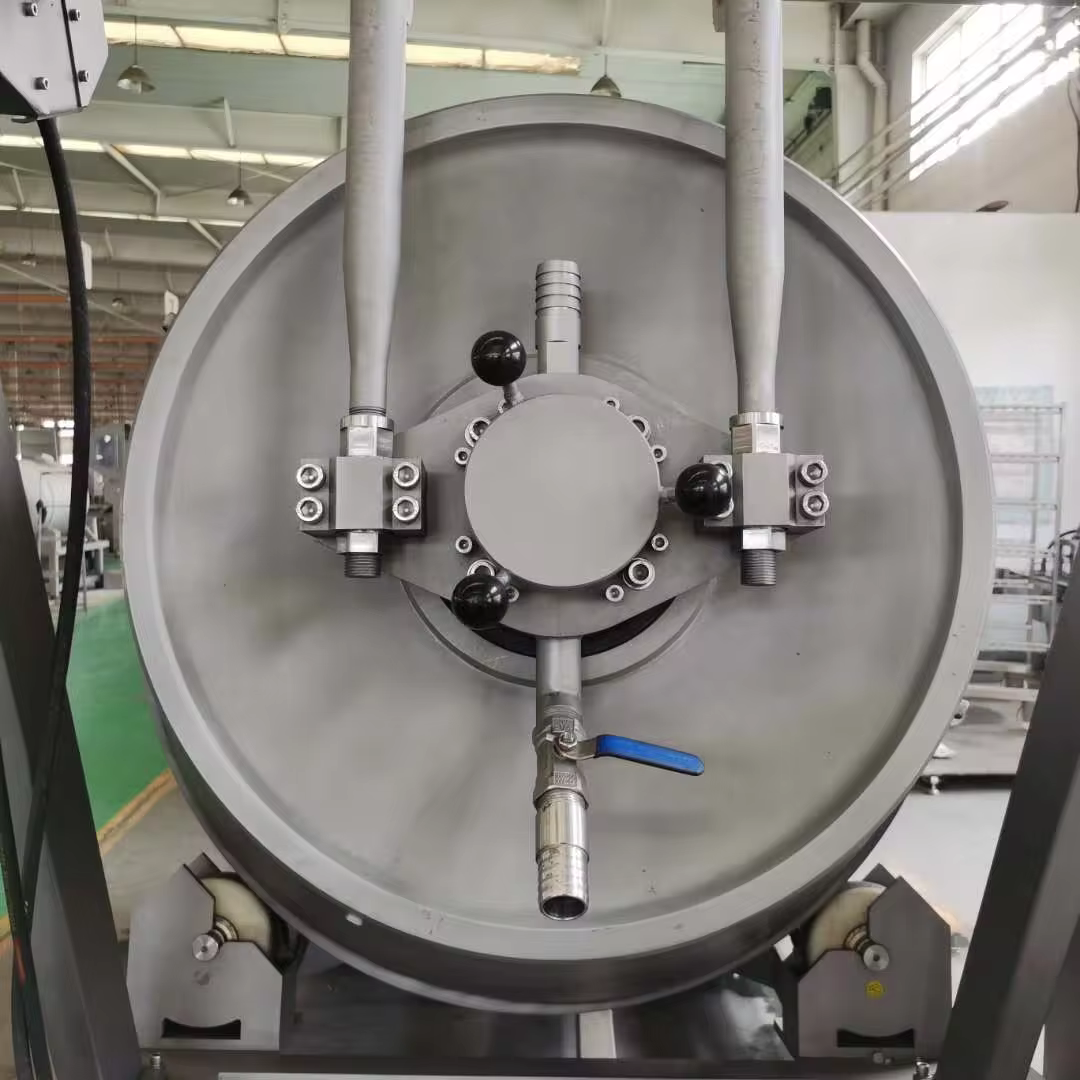
A commercial tumbler is essentially a massive, sealed, motorized drum integrated directly with a high-capacity vacuum pump. Engineers designed it specifically to automate and standardize the entire marination and curing workflow. You place raw proteins inside the stainless steel drum along with a precise liquid marinade formulation. The machine then draws a strong vacuum and rotates the heavy payload at specific automated intervals.
Replacing Static Methods
Traditional static soaking relies heavily on gravity and passive time. You often wait days for flavor to penetrate dense muscle blocks. Injection alone frequently results in localized brine pockets, leaving dry areas inside the muscle. Both traditional methods suffer from highly inconsistent flavor penetration, excessively long lead times, and massive marinade runoff. This runoff translates directly to expensive ingredient waste washing down the floor drains. Vacuum tumbling completely eliminates these frustrating manual limitations.
Industrial Applications
We see these machines operating continuously across diverse industrial applications. Beef jerky processors rely heavily on them for rapid, even flavoring across thin meat strips. Poultry plants use them extensively to maximize marinade retention in boneless chicken breasts, improving juiciness after cooking. Operators process heavy whole hams and delicate value-added seafood items seamlessly within the exact same shift. This versatile technology shifts facilities completely away from unreliable manual labor. You transition immediately to programmable, scalable processing. You gain total, measurable control over your daily factory output.
The Mechanics of Processing: How Does a Vacuum Tumbler Work?
Phase 1: Creating Negative Pressure (The Vacuum Effect)
The operation begins the moment you seal the heavy drum hatch. The attached industrial vacuum pump actively removes atmospheric air from the internal chamber. This action forces the atmospheric pressure inside the drum to drop rapidly. A profound cellular response occurs deep within the meat structure. Muscle tissues naturally expand under sustained negative pressure. This physical expansion causes the tight meat fibers to stretch and open wide. The opened cellular structure acts like a dry sponge. It draws the liquid marinade aggressively deep into its core. The liquid no longer pools passively on the exterior surface. It penetrates uniformly throughout the entire muscle block, ensuring flavor reaches the very center of the cut.
Phase 2: Mechanical Agitation and Protein Extraction
Rotation introduces the crucial element of physical kinetic energy. Internal drum baffles, or specially designed fins, guide the heavy meat block as it turns. Operators carefully control the rotational speed to ensure optimal physical impact. The baffles create a continuous, methodical lift-and-drop action inside the cylinder. This movement gently tenderizes the dense muscle tissue. Crucially, it achieves this deep tenderization without destroying the vital structural integrity of the meat.
This gentle, repetitive impact triggers a vital biochemical result. The mechanical energy forces the meat fibers to exude myosin. Myosin is a highly reactive salt-soluble protein found naturally in animal muscle fibers. Extracted myosin acts as a highly effective, natural biological binder. It coats the exterior of the meat pieces and aggressively traps moisture inside the cellular matrix. You essentially create a biological seal that holds onto every single drop of added liquid, preventing purge during retail display.
Phase 3: Programmed Rest Cycles
You might naturally assume continuous tumbling yields the absolute fastest production results. However, non-stop rotation remains fundamentally flawed. Constant physical friction generates excessive heat and irreparably damages delicate meat proteins. To prevent this destruction, modern facilities rely entirely on programmed rest cycles.
Here is a standard three-step sequence used commonly in industrial programming:
- Active Tumbling: The drum rotates steadily under deep vacuum to stretch fibers and extract valuable proteins.
- Static Resting: The mechanical rotation stops completely while the vacuum remains fully engaged. Muscle fibers relax and deeply absorb the suspended liquid marinade.
- Vacuum Release: Atmospheric pressure is slowly restored into the chamber to lock the liquid inside the cells permanently.
These intermittent rest periods are absolutely necessary for quality control. They allow the aggressively expanded fibers to relax naturally. The tissue permanently encapsulates the absorbed marinade long before operators open the discharge hatch.
Measurable Success Criteria: The Business Case for Vacuum Tumbling
Every major equipment upgrade requires strong, verifiable operational justification. Let us carefully examine how an automated tumbling system fundamentally transforms modern facility economics.
Yield Optimization vs. Input Costs
Meat processing profit margins rely heavily on strict moisture retention. Raw proteins naturally lose valuable moisture during chilled storage and thermal processing. An industrial vacuum tumbler machine reverses this natural loss by maximizing marinade absorption rates. You physically convert relatively inexpensive liquid ingredients into highly profitable, sellable structural weight. This immediate, measurable increase in final product yield directly offsets the initial capital expenditure of the machinery. Many high-volume operators observe a complete financial return on investment within a single busy production quarter.
Throughput and Cycle Time Reduction
Time represents a critical, unforgiving constraint on the active factory floor. Traditional static curing requires massive amounts of expensive refrigerated floor space. A standard static soak often takes between 24 to 48 hours to complete fully. Automated tumbling physically reduces this massive timeline down to a mere 45 to 90 minutes per batch. You completely eliminate the ongoing need for hundreds of bulky overnight storage vats.
Consider this standard operational processing comparison:
| Processing Metric | Traditional Static Soaking | Vacuum Tumbling Automation |
| Average Curing Time | 24 to 48 Hours | 45 to 90 Minutes |
| Floor Space Required | Excessive (Multiple Vats) | Minimal (Single Machine Footprint) |
| Labor Involvement | High (Manual Flipping) | Low (Automated Cycles) |
| Final Yield Improvement | Highly Variable | Exceptionally High and Consistent |
Product Consistency and Quality Control
Manual mixing introduces severe, unavoidable human error into your daily workflow. One tired employee might agitate a batch entirely differently than another fresh employee. Programmable logic controllers (PLCs) completely eliminate these dangerous human variables. You digitally lock your exact recipe parameters directly into the machine interface. The internal PLC precisely controls the RPM, vacuum depth, and exact minute-by-minute rest intervals. This strict, uncompromising automation ensures complete batch uniformity. Batch 1 and batch 100 will display absolutely identical tenderness. They will feature the exact same internal flavor profiles and generate identical slicing yields.
Evaluation Framework: Choosing the Right Vacuum Tumbler for Your Process
Not all commercial tumbling systems deliver the exact same operational results. You must evaluate heavy machinery based on strict, unforgiving functional parameters to protect your investment.
Calculating True Capacity (The 60% Rule)
Many eager buyers make a highly critical error during initial machine sizing. They attempt to match machine drum volume directly to their raw production volume. We strongly warn buyers against this dangerous 1:1 matching approach. Optimal tumbling physics require highly specific spatial dynamics to function correctly. You must strictly adhere to the universal 60% rule. You fill the inner drum to only 60% of its total measured capacity. The remaining 40% must remain entirely empty. This crucial void space permits the necessary physical lift-and-fall action. If you overfill the drum, the heavy meat merely slides along the smooth bottom. It will never achieve the mechanical kinetic impact required for optimal protein extraction.
Temperature Control and Chilling Jackets
Physical friction naturally generates significant heat inside a rotating metal drum. This unavoidable temperature increase poses severe microbiological risks for temperature-sensitive proteins. Raw poultry and delicate seafood degrade rapidly in warm processing environments. Upgraded, premium machines utilize specialized external cooling jackets. These thick jackets circulate freezing glycol or ammonia continuously around the exterior drum shell. The integrated cooling system extracts internal friction heat immediately. This strict thermal control aggressively prevents dangerous bacterial growth during long cycles. It also successfully stops delicate animal fat from melting and smearing unappealingly across the meat surface during processing.
Component Quality and Automation Levels
The heavy-duty vacuum pump serves as the literal beating heart of the entire system. You must prioritize reputable pump manufacturers, such as Busch, when reviewing specifications. A cheap, low-quality pump simply cannot hold consistent negative pressure throughout a demanding 12-hour production shift. Micro-pressure fluctuations immediately ruin batch consistency and flavor penetration.
You should also deeply scrutinize the electronic control panel specifications. Look carefully for these essential automated features:
- Variable Frequency Drives (VFDs): These powerful drives allow extremely precise control over rotational speed, protecting delicate products from tearing.
- Storable Recipe Programming: Floor operators can safely select complex, multi-stage pre-set cycles with a single button press.
- Automated Tilt-Discharge Systems: Heavy hydraulic lifting mechanisms safely empty massive meat payloads directly into standard buggies, preventing severe worker back injuries.
Operational Realities: Implementation Risks and Best Practices
Acquiring the proper equipment only solves half of the complex production equation. Strict, proper daily execution ultimately determines your long-term operational success.
Sanitation and Compliance Standards
Raw meat processing presents severe, relentless sanitation challenges. Sticky blood, corrosive salt, and raw proteins easily become trapped in poorly designed machinery joints. You must demand uncompromising hygienic design standards from your chosen manufacturer. Look specifically for continuous, fully polished bead welds inside the massive drum. Inspect the external control panels carefully to ensure they feature IP65-rated waterproof enclosures. These tight seals protect highly sensitive internal electronics during intense, high-pressure daily washdowns. Additionally, the system must utilize easily accessible trap filters. These external filters actively stop small meat particles from entering the complex vacuum lines, preventing hazardous, hidden bacterial harborage.
Mitigating Protein Breakdown (Over-Tumbling)
More physical rotation does not magically equal a better end product. A major operational risk involves accidentally over-tumbling expensive premium cuts. If an untrained operator runs excessive RPMs, the meat suffers severe internal damage. Ignoring programmed resting cycles aggressively accelerates this physical destruction. The relentless mechanical friction actually emulsifies the complex muscle structure completely. You can easily turn an expensive, whole-muscle premium cut into an unappealing, unstructured meat paste. Facilities often make the mistake of skipping pilot tests and guessing cycle times based on competitor hearsay. You must validate your specific cycle times carefully through small batch testing.
Preventative Maintenance Requirements
Industrial food machinery demands highly disciplined upkeep to prevent catastrophic, expensive downtime. You should implement a strict preventative maintenance schedule immediately upon initial installation.
- Inspect all rubber vacuum seals and thick hatch gaskets daily for microscopic cracks or physical wear.
- Monitor the clear inline moisture traps closely throughout the shift. You must absolutely prevent corrosive salt liquids from entering the primary vacuum pump housing.
- Apply specialized food-grade lubrication routinely to the main heavy drive chain and the load-bearing trunnion wheels.
Following these relatively simple daily steps strictly ensures decades of uninterrupted commercial service.
Conclusion
An industrial vacuum tumbler is clearly not just a simple mixing drum. It operates as a highly precise biochemical processing tool. Mastering its mechanics remains absolutely critical for highly competitive meat manufacturing. The unique combination of negative pressure and mechanical kinetic energy safely unlocks unparalleled product yields. It standardizes quality while aggressively driving down expensive processing times.
We highly recommend establishing precise baseline metrics before engaging any equipment manufacturers. Document your current raw yields carefully. Record your exact current marination times and calculate your average marinade waste percentages. You need these concrete numbers to prove the operational viability of a new machine.
Your clear next step involves practical validation. Contact a reputable equipment manufacturer and request a controlled pilot test. Supply them with your specific raw product and proprietary marinade formulas. Run a sample batch through their test facility. This hands-on approach allows you to validate their yield claims definitively before you finalize any major purchase.
FAQ
Q: Do I still need a brine injector if I have a vacuum tumbler?
A: It depends entirely on your product size. You absolutely need an injector for large, thick whole-muscle cuts like whole hams or beef briskets. Deep tissue requires initial injection followed by vacuum tumbling to achieve the best flavor distribution. However, tumbling alone is completely sufficient for smaller cuts like chicken breasts or fajita strips.
Q: What is the standard vacuum pressure setting for marinating meat?
A: Standard operational settings typically range between 0.06 to 0.08 MPa for beef, pork, and poultry. Operators must adjust this metric based on the specific protein density. Softer proteins, such as delicate fish fillets or shrimp, require significantly lower pressure. Too much vacuum will cause severe cellular rupture in delicate seafood.
Q: How often do the vacuum pump filters need to be cleaned?
A: You must clean the trap filters daily. In high-volume facilities, operators should inspect and clear them between major recipe batch changes. Meat proteins and salty marinades easily slip into the vacuum lines. Neglecting this simple cleaning task will quickly lead to catastrophic, irreversible vacuum pump failure.


