Packaging delicate or irregularly shaped film parts requires a careful balance. You need absolute immobilization to protect sensitive items like automotive films and electronic membranes. Maintaining strict control over production efficiency is equally crucial. Traditional blister packaging demands heavy upfront tooling investments. It also requires massive warehouse space for storing empty blisters. Standard vacuum bagging often creates uniform crushing pressure. This pressure bends thin materials. It leads to edge deformation, friction damage, or static build-up on sensitive components.
We will explore a highly effective industrial alternative. A Film Parts Skin Seal Packing Machine uses the product itself as the mold. It bonds a heated polymer film directly to a porous backing board. This guide provides production engineers and procurement managers with a practical, evidence-based framework. You will learn how to evaluate skin packaging for your exact operational requirements.
Key Takeaways
- Zero-Tooling Flexibility: Skin seal packing eliminates the need for custom blister molds, allowing multiple different film part SKUs to be packed on the same master board simultaneously.
- Absolute Immobilization: The process creates a tight, vacuum-sealed polymer skin that prevents part migration, friction, and transit damage, crucial for sensitive film edges.
- Inventory Reduction: Replaces bulky pre-formed packaging inventory with flat backing boards and rolls of flexible film.
- Implementation Caveat: Success heavily depends on matching the correct film chemistry (e.g., Surlyn vs. Polyethylene) with the correct backing board porosity; mismatched consumables lead to seal failure.
Skin Packaging vs. Vacuum Sealing vs. Blister Packs for Film Parts
Clarifying the technical distinctions between overlapping packaging methodologies ensures correct technology alignment. Operations often confuse these three methods. Each method applies very different physical forces to the packaged component.
Standard Vacuum Packaging
Evacuating air from a pre-made pouch defines this method. An operator places the component into a flexible polymer bag. A specialized nozzle or chamber removes the ambient air. The equipment then applies a heat seal to close the pouch.
This method presents a severe drawback for film parts. The atmosphere applies uniform crushing pressure from all directions. This crushing force can warp, bend, or crease thin, flexible parts. The part floats freely inside the pouch before the vacuum cycle. It does not fix the part to a rigid substrate. This lack of anchoring permits damaging friction during transit.
Blister Packaging
This method drops the part into a pre-thermoformed plastic cavity. A secondary process seals a backing card over the open cavity. The rigid plastic shell provides excellent puncture resistance.
The drawback for film parts relates to logistics and flexibility. It requires massive initial capital for custom molds per SKU. Every unique component geometry demands a dedicated thermoforming tool. High-mix production lines suffer severe bottlenecks during tool changeovers. Empty plastic blisters command a massive storage footprint. Warehouses essentially store empty air before the packaging phase.
Skin Packaging (The Baseline)
This mechanism heats a flexible film until it softens. The machine drapes this heated film over the product. It uses vacuum suction drawn directly through a porous backing board. This suction pulls the film tight against the product geometry. The film bonds securely to the board.
The primary advantage for film parts is structural support. The process anchors the part firmly to a rigid, flat board. This absolute immobilization prevents bending and flexural fatigue. You bypass custom tooling entirely. You do not need new molds regardless of the part shape.
| Packaging Method | Tooling Requirement | Force Distribution | Substrate Rigidity |
| Standard Vacuum | None | Uniform crushing pressure | Flexible (None) |
| Blister Packaging | High (Custom molds) | No pressure on part | Rigid cavity |
| Skin Packaging | None | Top-down draping tension | Rigid backing board |
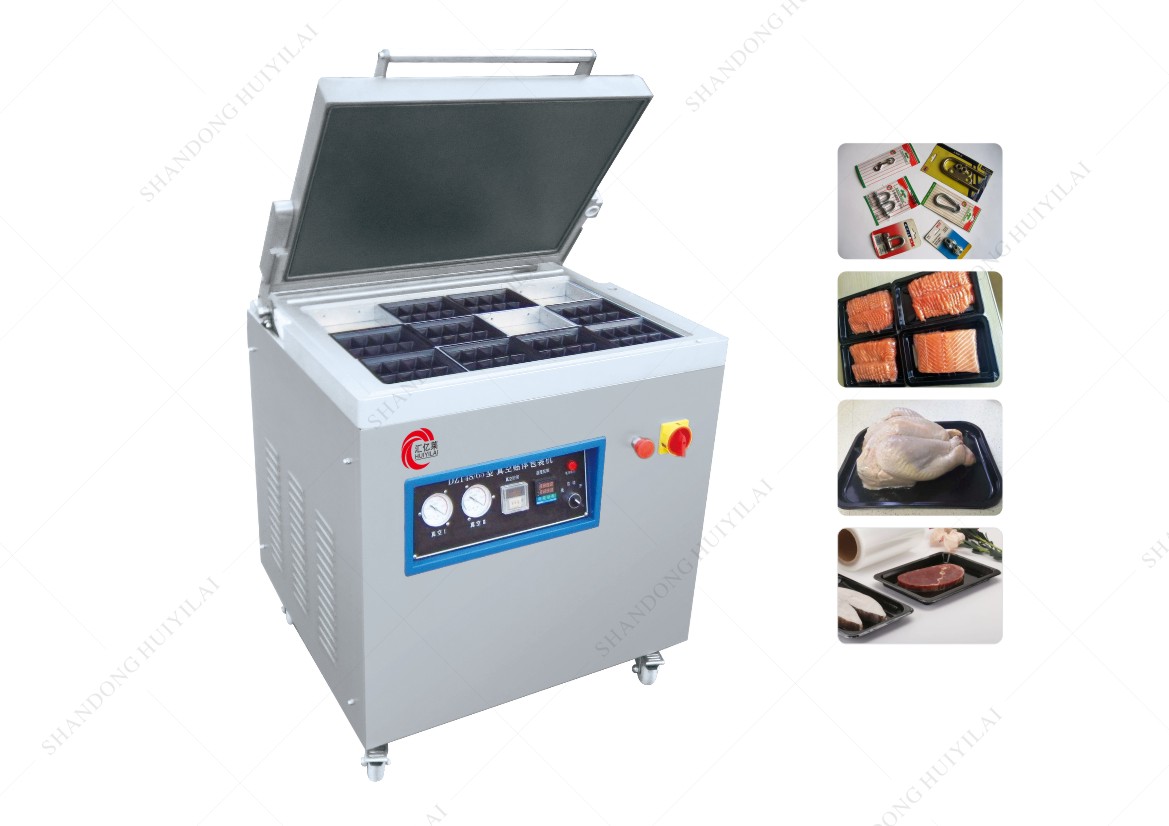
Core Evaluation Dimensions for a Film Parts Skin Seal Packing Machine
You must understand what specific features correlate to operational success. Certain mechanical attributes directly reduce defect rates. Evaluate these technical dimensions closely.
Heating System Precision (Infrared vs. Quartz)
Film parts are often incredibly heat-sensitive. They warp or degrade under excessive thermal loads. The machine must offer zoned, highly controlled heating. It needs to soften the packaging film adequately. It must do this without transferring damaging thermal energy to the part itself.
- Infrared Ceramic Heaters: Provide consistent, even wavelengths. They excel at penetrating thicker polymer films uniformly.
- Quartz Tubular Heaters: Deliver extremely rapid heat-up times. They allow faster cycling but require precise distance calibration.
Proper heating zones prevent cold spots near the edges. They ensure the film stretches uniformly over the delicate component.
Vacuum Cycle Control and Board Porosity
Industrial skin packaging relies heavily on the backing board being micro-porous. Evaluate machines based on their internal vacuum pump capacity. Look for high Cubic Feet per Minute (CFM) ratings.
The machine must pull a vacuum rapidly. It must accomplish this before the draped film cools and solidifies. Slow vacuum cycles cause a defect called "tenting." Tenting leaves vulnerable air pockets around thin component edges. You must also select boards with optimal porosity. Dense boards restrict airflow and ruin the vacuum seal.
Slitting and Die-Cutting Integration
After the machine seals the master board, processing continues. You must cut this large board into individual units. Look for machines with inline slitting capabilities. Consider compatible outfeed die-cutting presses to calculate true throughput accurately.
Manual cutting introduces critical workflow bottlenecks. Automated slitting guarantees clean edges. It prevents board delamination during the separation phase. Integrating a roller press die-cutter speeds up secondary processing immensely.
Implementation Risks and Engineering Constraints
Demonstrating trustworthiness means highlighting what goes wrong during deployment. Understanding common failure modes helps you mitigate them before installation.
Board Curling
If the film tension is too high, problems emerge immediately. If the board is too thin, the structure fails. The cooling polymer film shrinks significantly. This shrinkage will bow the backing board into a U-shape.
Specify the appropriate board caliper to prevent this. Use heavy-duty chipboard for high-tension resin formulations. Check the cross-directional grain orientation of the paperboard. Align the grain to resist the primary tension axis of the cooling film.
Static Electricity (ESD)
Unwinding plastic film from a roll generates severe static. The triboelectric effect creates massive surface charges. This static can attract airborne dust onto optical components. It can instantly destroy delicate electronic film parts.
Require vendors to include active anti-static bars. Mount ionizing air blowers directly on the machine frame. Specify ESD-safe, static-dissipative packaging films. Ensure your porous backing boards feature anti-static surface treatments.
Profile Height Limitations
Skin packing is optimal for flat, low-profile parts. Parts taller than three or four inches risk severe film thinning. As the film stretches over a tall object, its thickness decreases.
This thinning leaves the top corners vulnerable to puncture. Deep draws require thicker, more robust master rolls. Keep component profiles low to maintain uniform protective barriers.
Review this quick engineering checklist before implementation:
- Verify board thickness against the proposed film shrink rates.
- Audit the facility for ambient humidity to help control static build-up.
- Measure the maximum height of all nested components to prevent film puncture.
- Test the porosity of all proposed backing substrates thoroughly.
Vendor Shortlisting Logic and Next Steps
Procurement teams need actionable advice on how to vet manufacturers thoroughly. Avoid selecting equipment partners based on initial hardware specifications alone.
Proof of Concept (PoC)
Never purchase equipment without sending sample film parts to the original equipment manufacturer. Provide your exact proposed backing boards. Demand a comprehensive test run at their facility. Inspect the returned samples rigorously. Look for microscopic edge tenting. Test the adhesion peel strength. Verify the component survived the thermal exposure unscathed.
Standardization Compliance
Ensure the machine uses non-proprietary programmable logic controls. Specify universally recognized logic controllers like Allen-Bradley or Siemens. Demand off-the-shelf pneumatic components from trusted industry brands.
Proprietary circuit boards cause disastrous vendor lock-in. Standardized components prevent prolonged maintenance downtime. They guarantee your local maintenance team can source replacement parts quickly.
Action Plan
Draft a formal Requirement Document before requesting quotes. Detail the maximum part dimensions you plan to package. Specify the required cycle time to meet throughput goals. Outline all ESD mitigation requirements clearly. Define your facility's power supply availability. Present this unified document to all prospective vendors to ensure standardized bidding.
A skin seal packaging solution remains highly strategic for operations struggling with high SKU variability. It perfectly protects delicate low-profile parts from transit friction. It eliminates the logistical nightmare of storing empty blister molds. Prioritize vendors who offer comprehensive material testing. They must prove they can match the film, board, and part perfectly. Consumable compatibility ultimately dictates the long-term success of the process.
FAQ
Q: Can skin packaging machines handle anti-static (ESD) requirements for electronic film parts?
A: Yes, but it requires specific configurations. You must specify ESD-safe packaging films and static-dissipative backing boards. Ensure the machine is fitted with ionizing bars. These bars neutralize static generated during film unwinding. This prevents damage to sensitive electronic pathways.
Q: Do I need specially coated backing boards for skin packing?
A: It depends on your chosen film. High-end Surlyn films can adhere perfectly to uncoated, porous corrugated or chipboard. Standard PE films generally require boards treated with a heat-activated dispersion coating. This coating ensures a proper bond during the vacuum cycle.
Q: What is the average cycle time for an industrial skin packaging machine?
A: A single cycle typically takes 15 to 40 seconds. This includes heating, draping, vacuuming, and cooling phases. The exact duration depends on film thickness and heating elements. Throughput scales dramatically by nesting multiple small parts on a single large master board.
Q: Does the heat from the machine damage sensitive film parts?
A: Generally, no. The heating elements apply thermal energy to the packaging film above the part. They do not heat the part itself. However, you must rigorously test extremely heat-labile materials. Adjust cycle times and platen distance during the evaluation phase to ensure total safety.


