Transitioning from traditional overnight soaking to mechanical tumbling fundamentally changes jerky production workflows. Finding the exact timing requires balancing efficiency against meat integrity. While manual marination takes 12 to 24 hours, utilizing mechanical tumbling drastically reduces this wait. However, treating tumbling as a "set it and forget it" process risks ruining the entire batch. You cannot simply turn on the equipment and walk away.
This guide establishes baseline processing times for commercial operations. We will identify the key variables altering those times. You will also get an evaluation framework for selecting commercial equipment based on production realities. We aim to help you scale output while maintaining perfect texture and flavor. Read on to master the exact timing protocols needed for superior product consistency.
Key Takeaways
- Standard Timeframe: Most beef jerky requires only 10 to 30 minutes in a commercial vacuum tumbler machine, compared to 12-24 hours of static soaking.
- Primary Risk: Over-tumbling extracts excess myosin, breaking down muscle fibers and resulting in a "mushy" or spongy final texture.
- Evaluation Focus: When evaluating machines, prioritize variable speed control, baffle design, and consistent vacuum pressure over sheer drum capacity.
- ROI Driver: The primary business value is predictable flavor penetration and labor reduction, not just speed.
The Core Answer: Standard Processing Times for Jerky
Shifting from static marinating to vacuum tumbling transforms your production timeline. Static soaking relies on passive diffusion. Osmosis slowly pulls flavors into the meat over 12 to 24 hours. A vacuum tumbler machine accelerates this mechanically. Most beef jerky requires only 10 to 30 minutes inside the drum.
Understanding the "sponge" effect explains this immense speed difference. The equipment actively pulls atmospheric pressure out of the sealed drum. This vacuum environment forces cellular meat pores to expand rapidly. Muscle fibers open up just like a dry sponge. The drum rotation then creates a gentle massaging action. When you release the vacuum pressure, the meat behaves like a squeezed sponge returning to its original shape. It violently sucks the surrounding liquid marinade deep into its core.
We highly recommend utilizing a phase-based tumbling approach. Continuous rotation generates excessive physical friction. Friction creates localized heat, degrading raw meat quality before dehydration even begins. Try a pulsed interval method instead. Run the drum for five minutes, then pause for five minutes. This rest period allows deeper marinade absorption. It achieves full flavor penetration without causing structural degradation to delicate slices.
| Process Metric | Static Marination | Phase-Based Tumbling |
| Average Duration | 12 to 24 Hours | 10 to 30 Minutes |
| Flavor Penetration | Surface-heavy, fades in center | Uniform throughout muscle fiber |
| Labor Requirement | High (manual stirring/flipping) | Low (automated cycling) |
| Space Needed | Extensive walk-in cooler shelving | Single footprint on production floor |
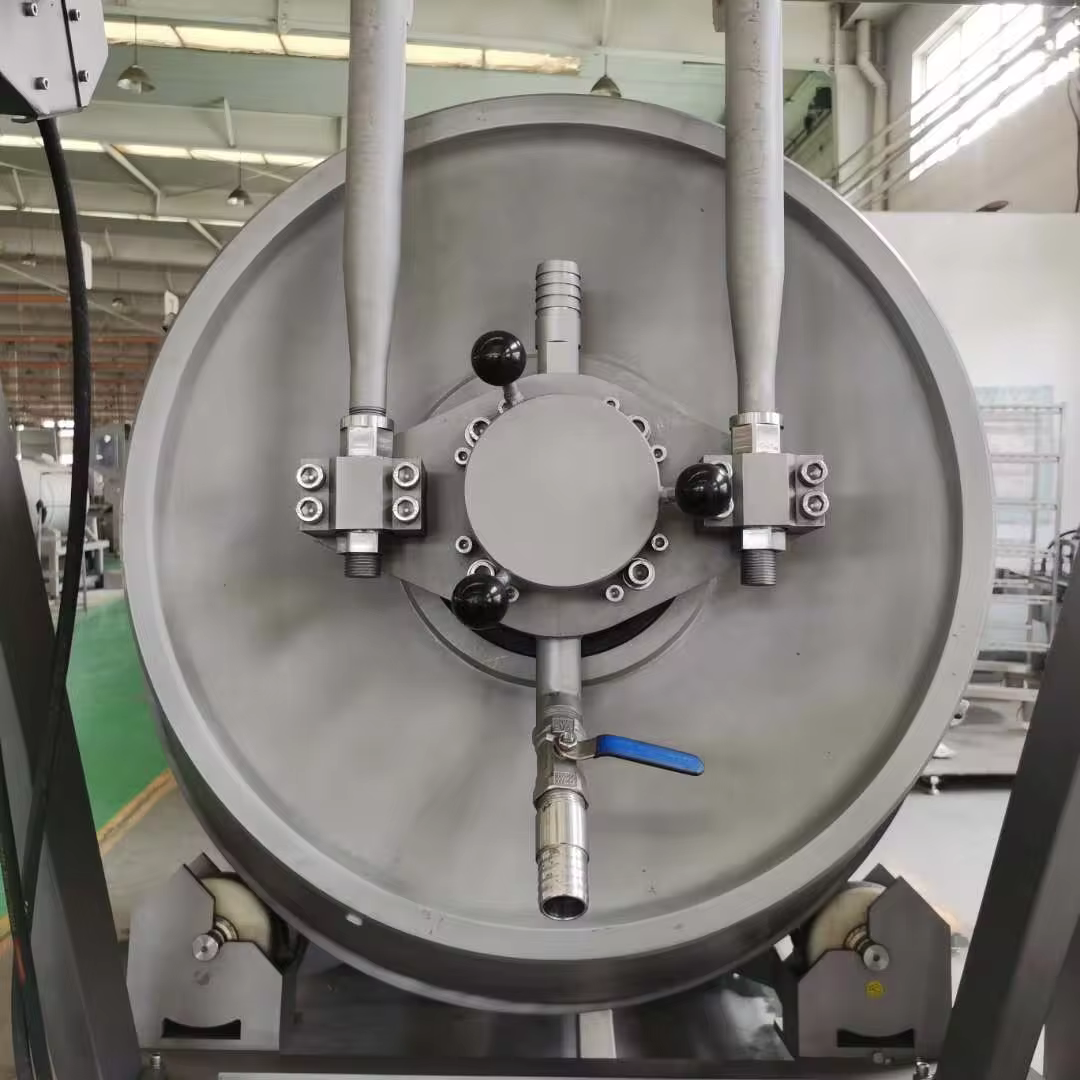
Key Variables That Alter Your Tumbling Time
Perfect timing depends on your specific product formulation. Three main variables dictate your exact cycle duration. Recognizing how these elements interact allows you to dial in your standard operating procedures.
Meat Cut and Thickness
Whole muscle cuts behave differently than restructured products. The physical density of the protein determines absorption resistance.
- Standard Slices: Slicing an eye of round at 1/4-inch thickness requires standard 15 to 20-minute cycles.
- Thick or Dense Game: Thicker cuts demand more mechanical action. Denser game meats like venison or elk possess tighter muscle fibers. They require longer overall tumbling times. You must often utilize multiple rest intervals to penetrate these dense proteins fully.
- Poultry: Turkey or chicken jerky requires shorter times. Their loose fiber structures absorb liquids rapidly within 10 to 12 minutes.
Marinade Viscosity and Composition
Liquid dynamics fundamentally change absorption rates. You must adjust your times based on your recipe ingredients.
- Thin Liquids: Water-based or soy-based liquids absorb rapidly. These mixtures usually finish processing in 10 to 15 minutes.
- Thick Liquids: Sugar-heavy syrups, honey-based glazes, or fruit purees move sluggishly. They require 20 to 30 minutes to coat the meat evenly. You must lower your rotation speeds to prevent heavy foaming.
- High Acidity: Vinegar or citrus-heavy marinades denature exterior proteins quickly. Limit tumbling times to prevent a mushy surface texture.
Load Capacity (The 60% Rule)
Operators must respect the physical space inside the drum. Industry standards dictate the 60% rule. Filling the drum beyond 60 to 70% capacity severely hampers performance. Meat needs physical space to fall. This "drop" distance inside the drum drives the massaging kinetic energy. Overfilling eliminates the drop entirely. The meat simply slides along the walls instead of folding. This extends your required tumbling time drastically to achieve full penetration.
Chart: Processing Time Adjustments | Scenario | Base Time Adjuster | Recommended Action |
| Drum filled to 85% capacity | + 15 minutes | Split into two smaller batches |
| Thick molasses-based marinade | + 10 minutes | Decrease RPM, add extra rest phase |
| Thin soy-sauce marinade | - 5 minutes | Run standard 15-minute cycle |
| Fragile turkey breast slices | - 8 minutes | Run gentle 4 RPM cycle |
Evaluating a Vacuum Tumbler Machine for Jerky Production
Scaling your operations requires careful equipment selection. Do not just look at total drum volume. Focus on specific mechanical features driving final product quality. Choosing the wrong specifications will damage your product.
Baffle Design (Features-to-Outcomes)
Baffle design represents a critical feature-to-outcome metric. The interior flights of the drum dictate physical impact. You need baffles designed to gently massage the meat. Rounded, asymmetric edges prove ideal for delicate jerky slices. Avoid machines featuring sharp, aggressive flights. These designs exist to tenderize tough roasts. They will rapidly tear thin jerky slices into unsellable scraps.
Variable Speed Control (RPMs)
Variable speed control serves as another mandatory requirement. Jerky processing demands a gentle cycle. You should target 4 to 8 RPM for optimal results. Some entry-level machines lock into fixed high speeds. High RPMs generate excessive kinetic energy. This centrifugal force pins the meat against the drum walls, eliminating the massaging action entirely.
Vacuum System Reliability
Vacuum system reliability impacts batch consistency heavily. You must choose between continuous and static vacuum designs. Static systems pull pressure before rotation begins. If a seal leaks slightly, you lose vacuum pressure mid-cycle. Continuous systems actively maintain pressure during the entire rotation cycle via a rotary joint. Continuous setups offer superior uniformity for commercial scaling.
Sanitation and Compliance
Sanitation directly affects your regulatory compliance. Health departments strictly regulate meat processing equipment. Look for seamless stainless steel drum construction. Avoid drums containing hard-to-reach corners or visible weld seams. Ensure all vacuum traps and moisture filters remain easily accessible. You must meet USDA and FDA cleaning standards daily. Complex, hidden plumbing creates dangerous bacterial harbor points.
Implementation Realities & Processing Risks
Processing at scale introduces unique operational risks. Recognizing these pitfalls protects your product yield. A high-capacity vacuum tumbler machine amplifies mistakes just as efficiently as it accelerates production.
The "Mushy Jerky" Phenomenon
The "mushy jerky" phenomenon represents your primary threat. Raw meat contains a soluble protein called myosin. Mechanical tumbling extracts myosin to the surface, creating a sticky coating known as a pellicle. A thin pellicle helps dry seasoning adhere properly. Over-tumbling extracts excess myosin. It turns distinct muscle fibers into a homogenized paste. Your final dried product will feel spongy instead of possessing a classic chew. It loses the visual grain structure consumers expect from premium jerky.
Temperature Creep
Temperature creep ruins fresh meat rapidly. Mechanical tumbling generates internal friction. This friction causes the drum temperature to rise steadily during long processing days. You must counteract this heat generation to prevent bacterial bloom. Start your process using near-freezing meat (around 34°F to 36°F). High-volume operations often utilize specialized cooling jackets around the drum. These jackets circulate chilled glycol, keeping meat safely below 40°F during continuous production runs.
Foaming and Pump Damage
Foaming creates expensive maintenance downtime. Thick marinades trap air easily. If you pull your vacuum too rapidly, the liquid will foam violently inside the drum. Overfilling the drum causes similar volatile reactions. This expanding foam can travel up the internal hose lines. Drawing sticky, sugary marinade directly into your vacuum pump will cause catastrophic mechanical failure. Rebuilding a seized pump halts production entirely.
Best Practices for Risk Mitigation:
- Verify raw meat core temperatures before loading the drum.
- Pull vacuum pressure slowly over 60 seconds to prevent flash foaming.
- Monitor the first test batch of any new recipe closely, checking texture every five minutes.
- Clean inline vacuum moisture filters between every single production shift.
- Log ambient room temperatures, as warm rooms accelerate drum heat generation.
Shortlisting Logic: Is a Commercial Vacuum Tumbler Worth It?
Moving away from hand-mixing requires a careful facility evaluation. Focus strictly on throughput efficiency versus labor allocation. Determining your exact tipping point clarifies the decision.
Throughput vs. Labor
Calculate your specific crossover point accurately. Track the manual labor hours spent hand-mixing vats of jerky. Measure the physical floor space consumed by dozens of refrigeration buckets sitting overnight. You will eventually reach a production volume where these manual burdens throttle your growth. A mechanical tumbler reclaims your walk-in cooler space instantly. It also redirects your employees. Instead of spending hours stirring cold meat, they can focus on packaging, labeling, and fulfilling orders.
Yield Consistency
Yield consistency drives long-term brand loyalty. Hand-mixing inherently produces variations between batches. Human fatigue changes how thoroughly meat gets massaged at the end of a shift. Mechanical processing removes human error entirely. Frame your equipment evaluation around strict product standardization. You want ensuring your 100th bag of jerky tastes identical to your very first bag. Predictable flavor profiles keep retail buyers reordering.
Next-Step Actions
Take practical next-step actions before finalizing any equipment decisions. Request sample runs from equipment manufacturers. Ask them for video demonstrations using your exact cut thickness. Send them your specific marinade viscosity parameters. Review their warranty protocols regarding pump failures. This diligent testing guarantees the equipment handles your unique formulation correctly before it ever arrives on your loading dock.
Conclusion
A timeframe of 10 to 30 minutes stands as the industry standard for jerky inside a vacuum tumbler. However, achieving precise timing remains a byproduct of your specific meat thickness, machine RPM, and marinade type. You must treat the machine as a precision instrument rather than a basic storage vat. Remember to respect the 60% capacity rule and utilize phase-based resting intervals to protect meat integrity.
Successful scaling requires selecting equipment featuring variable controls rather than just maximizing raw drum volume. Baffle shape and continuous vacuum capabilities matter far more than sheer size. Evaluate your current production bottlenecks today. Review your labor hours, product consistency issues, and cooler space constraints. Use these metrics to determine the optimal machine capacity for your growing facility.
FAQ
Q: Can you over-tumble beef jerky?
A: Yes. Over-tumbling extracts excessive myosin from the meat. This breaks down the distinct muscle fibers entirely. Instead of a traditional firm chew, the meat structure collapses into a homogenized state. The resulting dried jerky develops an undesirable mushy or spongy texture that consumers often reject.
Q: Do I need a continuous vacuum or is pulling a vacuum once enough?
A: Pulling a vacuum once works adequately for artisan or small-batch processing. However, commercial scaling demands precision. A continuous vacuum system actively maintains optimal pressure throughout the entire tumbling cycle. This prevents pressure drops, ensuring large-scale flavor uniformity across massive batches.
Q: How much vacuum pressure (Hg) is ideal for jerky?
A: The standard commercial range lands between 15 and 20 inches of mercury (Hg). You must avoid maximizing the pressure settings. Pulling a vacuum beyond this optimal range stresses delicate muscle fibers. Maximum pressure can rupture and destroy thin jerky slices during rotation.
Q: Can I use a vacuum tumbler for ground or restructured jerky?
A: Yes, but the timing differs drastically from whole muscle cuts. Ground meat requires very short mixing cycles, often just 3 to 5 minutes. Extended tumbling of ground meat rapidly creates a dense, sausage-like bind. Always use minimum RPMs for restructured products to avoid over-mixing.


