Standard external vacuum sealers struggle heavily with liquids. They easily crush delicate ingredients and often fail to provide a proper retail-ready presentation. For high-volume kitchens, artisan producers, or serious preservationists, these persistent limitations lead directly to food waste. You lose valuable ingredients and compromise your overall product quality. You need a more reliable preservation method.
Transitioning to a Chamber Vacuum Skin Sealer shifts your entire methodology. Instead of suctioning air out of a small bag opening, you evacuate air from an enclosed chamber. This physical shift allows you to preserve wet liquids effortlessly. It also allows you to apply tight, freezer-burn-resistant skin packaging directly over your products.
This guide breaks down the operational physics behind these systems. We will share standard operating procedures to help you run them efficiently. We will also detail strict evaluation criteria for implementing chamber vacuum technology. You will learn how to master these machines without falling for exaggerated shelf-life marketing claims.
Key Takeaways
- Physics over Suction: Chamber sealers equalize pressure, meaning liquids stay in the pouch or tray during the vacuum cycle—eliminating the mess and seal-failure common with edge sealers.
- Operational Requirements: Success depends on matching the pump type (oil vs. dry piston) to your production volume and strictly managing food temperature prior to sealing.
- Compliance: Commercial implementation requires evaluating NSF/ETL certifications and establishing rigorous maintenance schedules for oil-based pumps.
Understanding the Mechanics: Chamber Vacuum vs. Standard Sealing
Most operators misunderstand how a vacuum chamber actually works. They assume the machine pulls air strictly out of the pouch. Understanding the true mechanics prevents operational errors and helps you maximize the machine’s capabilities.
The Pressure Differential (Science 101)
The machine removes air from the entire internal chamber, not just the bag. When you close the lid and start the cycle, the pump extracts the atmosphere from the whole enclosed space. Because the pressure inside the bag and outside the bag drops equally, no physical force pushes on your ingredients. Liquids are never forced out of the pouch. They stay completely still.
Air is pushed back into the chamber only after the heat seal applies. Once the internal seal bar melts the plastic together, a valve opens. Atmospheric pressure rushes back inside. This returning pressure slams the bag tightly around your food. This exact sequence prevents the mess associated with edge sealers.
Skin Packaging (VSP) Distinction
You must differentiate between standard pouch sealing and Vacuum Skin Packaging. Standard sealing uses flexible plastic pouches. You slide the food inside, lay the open end flat, and extract the air. It works perfectly for basic storage and sous-vide prep.
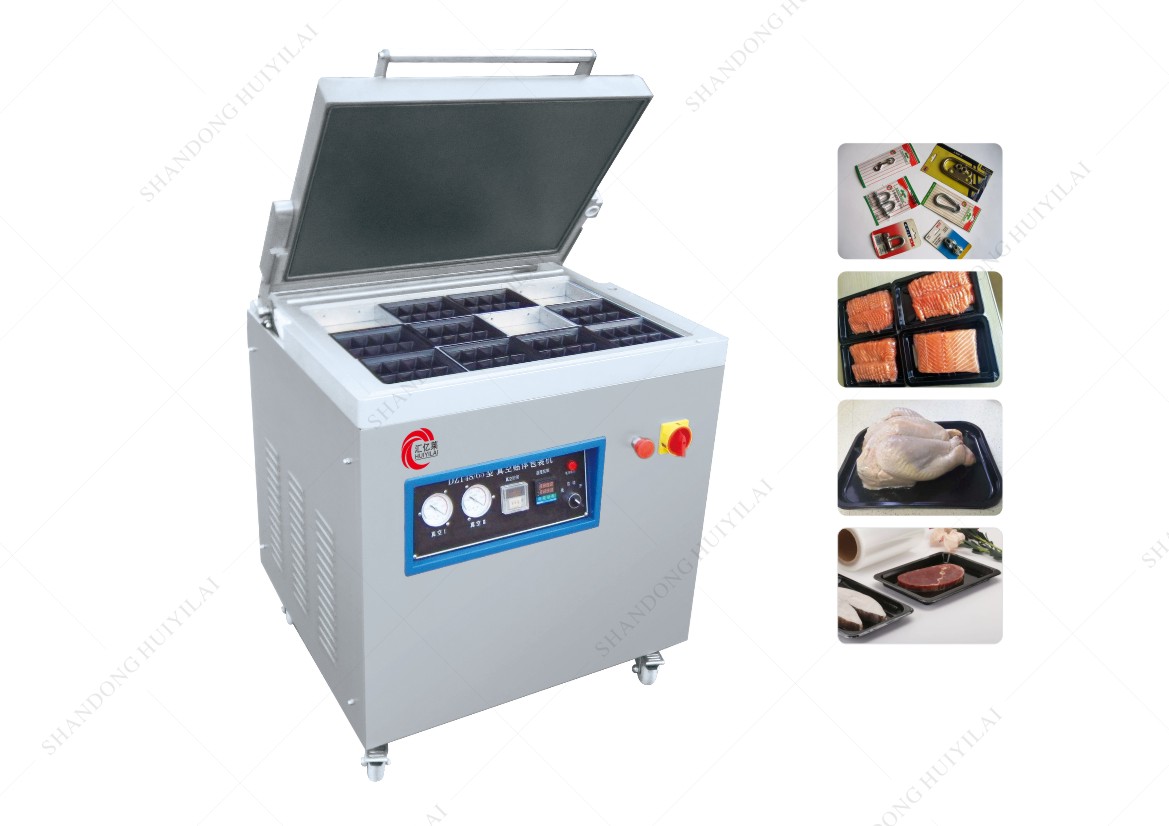
Vacuum Skin Packaging operates differently. You place your product on a rigid bottom tray or cardboard substrate. The machine uses a specialized upper film. An internal heating element warms this film until it becomes highly pliable. The vacuum cycle engages, and the machine drapes this softened film tightly over the food. It forms a flawless second skin. It secures the product to the base tray completely. This method elevates retail displays and prevents loose juices from pooling around raw meats.
Baseline Shelf-Life Realities
You need grounded expectations regarding food preservation. Chamber sealing easily removes up to 99.9% of ambient oxygen. This stops aerobic bacterial growth instantly. It also prevents lipid oxidation, keeping fats from turning rancid in the freezer. Your foods retain vibrant colors and firm textures for significantly longer periods.
However, vacuum extraction never replaces strict temperature control. Anaerobic bacteria thrive in oxygen-depleted environments. Pathogens like the ones causing botulism pose severe risks if you handle ingredients improperly. You must establish precise refrigeration protocols. You must maintain strict freezing schedules for long-term storage. Removing oxygen buys you time, but it does not sterilize your product.
Table: Mechanics Comparison: Standard vs. Chamber Vacuum | Feature | Standard External Sealer | Chamber Vacuum Sealer |
| Extraction Method | Suctions air through micro-channels | Evacuates entire environmental chamber |
| Liquid Handling | Often sucks moisture into the pump | Liquids remain static during extraction |
| Pressure Application | Direct mechanical squeezing | Atmospheric equalization |
| Pouch Requirements | Requires textured or embossed bags | Uses standard smooth pouches |
Standard Operating Procedure: How to Use a Chamber Vacuum Skin Sealer
Running a vacuum cycle seems straightforward initially. However, achieving consistent, airtight results requires a strict standard operating procedure. Small deviations in your prep work cause immediate seal failures.
Phase 1: Pre-Chilling
You must emphasize the critical step of chilling liquids and moisture-heavy foods. Under vacuum pressure, the boiling point of water drops dramatically. If you place warm soup inside the chamber and engage the pump, the liquid will literally boil over at room temperature. It will spill out of the bag and coat the entire interior. Always chill stocks, sauces, and wet marinades in the refrigerator before processing.
Phase 2: Material Selection
Select your packaging materials carefully based on your specific application.
- Smooth Chamber Pouches: Use these for standard vegetables, boneless proteins, and solid blocks of cheese. They offer high clarity and reliable barrier properties.
- Bone-Guard Materials: Apply these rigid inserts when handling sharp items. They prevent punctures from exposed bones or hard crusts.
- Rigid Trays and VSP Film: Select these materials for retail displays. They lock the food firmly in place and create an attractive, premium presentation.
Phase 3: Parameter Configuration
You must dial in the machine settings perfectly for every unique batch of food.
- Vacuum Time/Percentage: Set the optimal extraction level for your product. Use around 90% extraction for fragile items like soft cheeses. Push the setting to 99% for dense proteins and firm root vegetables.
- Seal Time: Adjust your heat duration strictly based on bag thickness. Thin bags require minimal heat. Commercial gauge bags typically need 1.5 to 3 seconds of seal time to melt the polymer layers properly.
- Cooling Time: Never skip this essential pause. The plastic polymer turns molten during the seal phase. It must cool and set completely before chamber pressure normalizes. If you shorten the cooling time, the returning air pressure will rip the soft seal wide open.
Phase 4: Placement & Execution
Execution dictates your success rate. Ensure the bag opening lies perfectly flat across the seal bar. Even a tiny wrinkle creates an air channel, leading to immediate leaks. Use heavy plastic filler plates to displace empty air inside the chamber. When you fill the empty space with solid plates, the pump has less air to remove. This simple trick speeds up your cycle times significantly.
Advanced Applications: Preserving High-Risk and Liquid-Heavy Foods
Once you master basic pouch sealing, you can leverage your machine for highly complex preservation tasks. A true Chamber Vacuum Skin Sealer handles fragile, sharp, and wet ingredients flawlessly when you apply advanced techniques.
Managing Liquids and Marinades
Bagging soups, dense stocks, and wet marinades demands careful handling. Even when properly chilled, liquids shift when you lay a bag flat. Use gravity to your advantage. Place inclined inserts inside the machine. These angled plates prop the pouch up slightly. The liquid rests safely at the bottom of the bag, far away from the heated seal bar. This guarantees a clean, dry seal every single time.
Protecting Fragile and Soft Foods
Soft items like fresh berries, muffins, and delicate pastries crush instantly under standard vacuum pressure. You need to utilize the Modified Atmosphere Packaging (MAP) feature if your machine includes a gas flush option.
The gas flush system injects an inert gas, typically food-grade nitrogen, directly into the chamber just before the heat seal applies. This creates a protective cushion inside the pouch. The nitrogen displaces the oxygen completely, halting bacterial growth. Meanwhile, the inflated pillow of gas protects your delicate items from being crushed when the lid opens. Your baked goods stay perfectly intact.
Handling Bone-In Proteins
Ribeye steaks, lamb chops, and bone-in poultry present severe puncture risks. When the final vacuum pulls the plastic tight, sharp bone edges slice right through the film. You must mitigate these puncture risks systematically.
You can double-bag sharp items, sacrificing an extra pouch to protect the exterior barrier. Alternatively, apply food-grade bone guards directly to the sharp edges prior to initiating the skin seal. These wax-coated canvas sheets wrap around the bone. They blunt the sharp points and protect the integrity of your vacuum environment entirely.
Evaluating Chamber Vacuum Skin Sealers: Procurement Criteria
Selecting the right equipment prevents operational bottlenecks. You must evaluate internal components and structural dimensions rigorously. Do not base your decision solely on exterior aesthetics or basic suction claims.
Pump Architecture (Oil-Lubricated vs. Dry Pump)
The pump serves as the engine of your machine. You must match its architecture to your daily throughput requirements.
- Dry Pumps: These mechanisms utilize synthetic pistons. They require significantly lower maintenance because you never have to change fluid. They operate perfectly for light-duty, residential, or low-volume prep. However, they generate friction heat quickly. You must allow mandatory cooldown periods between intense cycles to prevent motor burnout.
- Oil Pumps: These rotary vane pumps handle continuous, high-volume commercial runs easily. They achieve much deeper, faster vacuum levels. However, they demand strict maintenance. You must perform mandatory oil changes. You also need to run weekly conditioning cycles to evaporate trapped moisture from the oil reservoir.
Chamber Dimensions & Scalability
Size the internal chamber correctly from day one. Measure the internal cavity and compare it against your largest common cut of meat. Evaluate the seal bar length against your highest-volume tray size. If you routinely seal large briskets, a compact machine will fail your needs immediately.
Consider the massive impact of dual seal bars. Machines equipped with bars on both the left and right sides allow you to seal multiple bags simultaneously. This layout doubles your throughput capacity without requiring a stronger pump. It provides immediate scalability for growing operations.
Security & Compliance
Commercial settings require strict adherence to health regulations. Always shortlist machines featuring legitimate NSF or ETL sanitation ratings. Inspectors actively look for these certification badges.
Furthermore, evaluate the interior design for daily sanitation. Look for seal bars you can lift out easily without tools. Smooth, crevice-free stainless steel interiors prevent bacterial harborage. Finally, prioritize machines with programmable preset memory. Digital presets ensure your staff pull the exact same vacuum percentage every shift, ensuring total consistency across your product line.
Implementation Risks and Common Sealing Failures
Even the best machines fail when operators ignore basic physics. Understanding failure points allows you to troubleshoot issues instantly and keep your production lines moving.
The "Boil-Over" Contamination
We previously discussed chilling liquids, but you must understand the mechanical consequences of ignoring this rule. When you seal hot food, the resulting boil-over creates a violent aerosol inside the chamber. Moisture rapidly coats the seal bar, causing the current bag to leak. Worse, the pump sucks this vaporized moisture directly into its core. The water mixes with the oil, turning it milky white. This contamination destroys the lubrication capacity and eventually ruins the pump.
Incomplete or Melted Seals
Troubleshooting heat settings prevents ruined packaging. If you see wrinkles trapped in the melted plastic, you failed to lay the bag flat. Air will leak through that tiny channel. If the seal pulls apart easily, you provided insufficient cooling time. If the plastic looks burned, charred, or completely severed, you set the seal bar temperature far too high for your specific film gauge. You must adjust the timer down by half-second increments until the seal looks clear and uniform.
Pump Degradation
Ignoring maintenance schedules destroys oil pumps rapidly. As you process normal foods, ambient humidity and trace moisture naturally pull into the pump. Over time, this condensation builds up inside the oil reservoir. You must mitigate this risk by running "oil conditioning" cycles. Running the pump hot for ten minutes without sealing bags evaporates this internal condensation safely. If you skip this routine, internal rust will seize the rotary vanes permanently.
Chart: Troubleshooting Sealing Failures | Symptom | Root Cause | Immediate Action |
| Plastic melted completely through | Seal timer set too high | Reduce seal time by 0.5 seconds |
| Seal separates after cycle | Insufficient cooling time | Increase cooling timer to 3+ seconds |
| Liquid boils inside bag | Food temperature too high | Abort cycle and chill food immediately |
| Pump oil appears milky | Moisture contamination | Run conditioning cycle or change oil |
Conclusion: Next Steps for Implementation
Deploying vacuum technology successfully requires careful alignment between your equipment and your daily operational demands. First, use clear shortlisting logic. Match your daily volume exactly to the appropriate pump type. If you run continuous batches, invest in an oil pump. Second, match your presentation needs to the correct film type. Standard prep work needs simple pouches, while retail displays demand rigid VSP trays.
For your actionable next step, conduct a thorough volume audit. Count exactly how many seals your team performs per day. Once you establish your volume, request sample films from vendors. Test your specific food products using these samples before committing to a commercial unit. Proper testing guarantees your new machine will elevate your preservation strategy immediately.
FAQ
Q: How much longer does a chamber vacuum skin sealer actually keep food fresh?
A: These systems realistically extend freshness three to five times longer than traditional storage methods. However, this depends entirely on your baseline food quality before sealing. You must maintain rigorous temperature control. The exact vacuum percentage achieved also matters. Poor handling prior to sealing completely negates these longevity benefits.
Q: Can I use regular textured vacuum bags in a chamber sealer?
A: Yes, you can use them, but it is completely unnecessary. Chamber sealers operate on atmospheric pressure differentials. They do not need micro-channels to suction air out. You only require standard, smooth commercial pouches. They perform flawlessly and simplify your material sourcing.
Q: Why is my chamber sealer boiling my soups during the cycle?
A: Pressure dictates physical boiling points. As atmospheric pressure drops inside the sealed chamber, the boiling point of water drops significantly. If your soup is warm, it will boil at room temperature under deep vacuum. The solution is always thoroughly chilling the liquid before sealing, rather than reducing your extraction time.


