Upgrading to a Chamber Vacuum Skin Sealer transitions your packaging operation from basic air-evacuation to precision atmospheric control. You shift from simple storage to professional-grade preservation and presentation. It opens up entirely new culinary possibilities for your kitchen or production facility. Standard suction sealers frequently fail when handling liquids. They also crush delicate ingredients under pressure. This lack of visual quality falls short for commercial retail or high-end culinary preparation.
We provide a practical, implementation-focused tutorial for executing advanced packaging recipes. You will learn the exact protocols needed to master this specialized equipment. We will also establish clear evaluation criteria required to justify upgrading your current setup. By understanding the core mechanics and material requirements, you can optimize your workflows, eliminate food waste, and dramatically improve product integrity.
Key Takeaways
- Operational Efficiency: Chamber technology allows for rapid marination and liquid sealing without drawing moisture into the pump, drastically reducing prep time and food waste.
- Product Integrity: By equalizing pressure inside and outside the packaging, delicate structures remain uncrushed during the vacuum cycle.
- Evaluation Focus: Choosing the right machine hinges on pump type (oil vs. dry), cycle speed, maximum tray/pouch dimensions, and specific skin-film compatibility.
- Implementation Reality: True vacuum skin packaging (VSP) requires matching the machine’s thermal seal capabilities with the correct rigid bottom trays and highly permeable top films.
The Operational Case for Upgrading to a Chamber Vacuum Skin Sealer
Understanding atmospheric pressure mechanics reveals why chamber models outperform external suction sealers. A suction sealer pulls air directly from the bag. This acts like a straw, sucking liquids into the sealing channel and causing seal failure. A chamber machine operates on a completely different physical principle. You place the entire package inside a sealed compartment. The pump evacuates ambient air from the entire cavity simultaneously.
During this evacuation, the pressure inside the package equals the pressure outside the package. Liquids remain completely still. The bag or film does not collapse onto the food. Once the target vacuum level hits, the thermal bar activates to seal the package. Only after the seal completes does air return to the chamber. The returning atmospheric pressure pushes tightly against the film, creating a flawless seal. This succeeds precisely where external sealers fail.
To justify the upgrade, we must look at specific business success criteria. Implementing this technology delivers immediate operational benefits:
- Reduction in prep time: Rapid infusion speeds up marinades from hours to minutes.
- Extended shelf life: Anaerobic environments slow bacterial growth and prevent freezer burn.
- Improved retail presentation: The "second skin" effect creates visually striking, premium product displays.
- Zero-leakage guarantees: Thermal seals on rigid trays completely secure liquid-heavy recipes.
This equipment also drives massive scalability. You can smoothly transition from single-batch home preparation to continuous, commercial-grade throughput. Operations scale effortlessly when you eliminate manual workarounds for sealing wet ingredients.
Essential Protocols for Vacuum Skin Packaging Preparation
Achieving perfect results requires strict adherence to preparation protocols. Material compatibility is your first major hurdle. Standard pouches differ entirely from vacuum skin packaging materials. You cannot use regular vacuum bags for true skin packaging applications. You must pair rigid base trays with specialized top web skin films. These films stretch uniformly under heat and pressure. They conform exactly to the contours of the food without tearing.
Packaging Material Compatibility Chart | Material Type | Primary Use Case | Machine Compatibility | Visual Presentation |
| Standard Chamber Pouches | Storage, Sous Vide | Basic Chamber Sealers | Wrinkled, utilitarian |
| Rigid Base Trays | Retail Display, Liquids | VSP Capable Machines | Structured, protective |
| Top Web Skin Films | VSP Sealing | VSP Capable Machines | Invisible "second skin" |
Temperature considerations dictate your workflow. You must completely chill ingredients before packaging them. This prevents low-pressure boiling, often called the vapor pressure challenge. At sea level, water boils at 212°F (100°C). Inside a deep vacuum, the boiling point drops drastically. Warm liquids will boil instantly inside the machine. They will splatter across the chamber and ruin the thermal seal. Always chill liquids to at least 38°F (3°C) before processing.
Compliance and food safety protect your customers and your reputation. You must structure packaging workflows to prevent cross-contamination between raw proteins and ready-to-eat items. Adhere to safe anaerobic storage guidelines strictly. Depriving low-acid foods of oxygen creates favorable conditions for botulism if temperatures rise. You must keep sealed low-acid products refrigerated below 40°F (4°C) at all times.
Best Practice: Always label packages with the exact sealing date and required storage temperature. This ensures proper rotation and prevents food safety hazards in commercial environments.
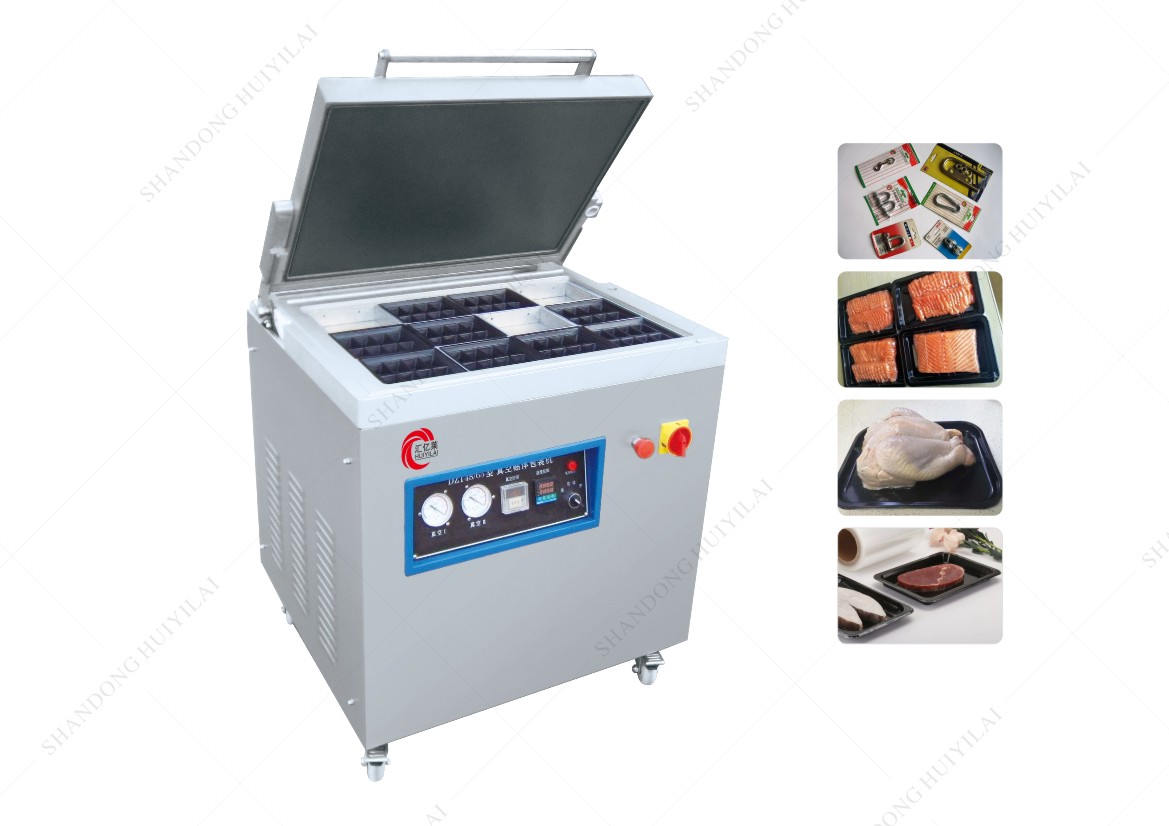
High-Impact Recipe Tutorials to Validate Your Investment
These recipes serve as a practical proof-of-concept. They help evaluate specific machine capabilities. Executing these techniques requires precise control over vacuum depth and sealing times.
Application 1: Rapid Vacuum Marination (Proteins)
You can use the vacuum cycle to alter the physical structure of proteins. The sudden drop in atmospheric pressure expands protein fibers. This forces marinades deep into the tissue quickly. It condenses a 24-hour marination process into just 15 minutes. This technique proves critical for high-volume kitchen efficiency.
- Portion the raw protein into uniform sizes.
- Mix your marinade thoroughly in a separate container.
- Place the protein and the chilled marinade into a rigid VSP tray.
- Run a maximum vacuum cycle without sealing. Let the pressure equalize.
- Repeat the vacuum cycle once more, then engage the thermal seal.
Outcome: You achieve deep flavor penetration instantly. The protein absorbs the liquid fully, leaving minimal excess marinade in the tray.
Application 2: Texture Compression (Fruits & Vegetables)
You can compress cellular structures to completely alter the texture of produce. Try this technique on porous items like watermelon or cucumber. The process collapses the air pockets inside the fruit. It intensifies both flavor and color dramatically. This validates the machine's precise atmospheric control. It also proves the equipment can handle high-water-content items without causing pump damage.
- Cut the watermelon into thick, uniform blocks.
- Place the blocks evenly in the tray, leaving space between pieces.
- Pull a deep vacuum cycle, reaching at least 98% evacuation.
- Release the pressure instantly. You will see the fruit collapse and darken.
- Apply the top web film and seal the tray for storage.
Outcome: The fruit takes on a dense, meaty texture. It mimics the mouthfeel of raw tuna, creating unique culinary presentations.
Application 3: Retail-Ready Liquid & Sauce Packaging
Securing stews or liquid-heavy items challenges ordinary equipment. You must use VSP trays to handle delicate prepared meals successfully. The equipment creates a tight thermal bond between the tray flange and the top film.
- Cook the stew and chill it completely in an ice bath.
- Portion the cold liquid evenly into rigid VSP trays.
- Wipe the tray flanges completely clean. Debris will cause seal failures.
- Load the trays into the Chamber Vacuum Skin Sealer.
- Run a standard VSP cycle to melt the film over the liquid.
Outcome: You achieve perfect thermal seal integrity. The package demonstrates the aesthetic advantage of skin packaging. The product looks fresh, secure, and ready for direct-to-consumer sales.
Core Evaluation Dimensions for Chamber Vacuum Skin Sealers
Choosing the right equipment requires analyzing specific hardware capabilities. Do not base your decision on aesthetic design. You must evaluate the internal engineering.
Pump architecture represents your most important choice. You must choose between oil-lubricated pumps and dry pumps. Each offers distinct advantages and drawbacks for commercial operations.
Vacuum Pump Architecture Comparison | Feature | Oil-Lubricated Pumps | Dry Pumps |
| Continuous Duty | Excellent. Can run back-to-back cycles. | Poor. Requires cooldown periods. |
| Vacuum Depth | Pulls up to 99.9% vacuum. | Struggles past 90% vacuum. |
| Maintenance Needs | High. Requires routine oil changes. | Low. No oil to change. |
| Ideal Environment | High-volume commercial settings. | Light duty or occasional use. |
Control board granularity directly impacts recipe execution. You need programmable presets to standardize production. Look for equipment offering precise control over vacuum percentage and seal time. You should also evaluate gas flush capabilities. Modified Atmosphere Packaging (MAP) injects inert gases like nitrogen before sealing. This protects fragile items from the physical crushing force of returning air. It also extends color retention for fresh meats.
Chamber dimensions dictate your maximum throughput. Calculate the internal real estate carefully. Ensure it matches your target tray sizes. If you plan to pack large cuts of meat, verify the chamber height accommodates them. You must match the machine's capacity to your daily volume requirements to avoid production bottlenecks.
Implementation Risks, Maintenance, and Troubleshooting
Operating high-vacuum equipment involves navigating specific physical realities. The "boil-over" reality catches many new users off guard. As discussed earlier, dropping atmospheric pressure lowers the boiling point of liquids. If you ignore temperature protocols, you will create massive spills inside the chamber. You must calibrate cycle times carefully. If you see liquids start to bubble aggressively, abort the cycle immediately to prevent a mess.
Maintenance overhead remains a transparent reality of owning this equipment. Proper upkeep ensures longevity and prevents sudden breakdowns. You must perform routine oil changes on oil-lubricated pumps. Check the oil sight glass weekly. Clear oil indicates a healthy pump. Cloudy or milky oil indicates moisture contamination. If you see cloudy oil, you must run an oil conditioning cycle or change the oil immediately to prevent internal rust.
You also need to maintain the sealing mechanisms. Replace the Teflon tape over the seal bar periodically. Burned or torn tape creates weak seals and exposes the heating wire. Keep spare seal bar heating elements on hand. These wires degrade over time through repeated thermal cycling. Replacing them takes only minutes, but waiting for shipping will halt your entire production line.
Common Mistake: Failing to clean the tray flange before sealing. Even a small drop of sauce on the rim will prevent the top web film from bonding correctly, leading to leaks and spoilage.
Shortlisting Logic: Next Steps for Your Operation
Moving forward requires a methodical approach to procurement. Start by assessing your baseline needs. Document your exact daily throughput requirements. Note the typical liquid content of your recipes. Define your presentation requirements clearly. You must decide if standard pouch sealing suffices, or if you require rigid tray skin packaging.
Requesting demos protects your investment. Never buy commercial equipment blindly. You should require vendors to test your specific recipes. Send them your sauces, your proteins, and your exact packaging materials. Ask them to record a video of the machine processing your items. Observe the seal integrity and the vacuum depth yourself before authorizing any purchase.
Vendor support evaluation proves just as crucial as hardware specs. Prioritize brands that offer highly accessible replacement parts. You need assurances that oil, Teflon tape, and seal bars ship quickly. Demand clear service level agreements. An unsupported machine sitting idle costs you production time and product spoilage.
Conclusion
A chamber vacuum skin sealer represents a significant operational upgrade. It transforms basic food preservation into a precise science. You gain the ability to manipulate textures, accelerate marination, and create flawless retail presentations. By mastering atmospheric control, you eliminate the common frustrations associated with liquid sealing and delicate ingredients.
Base your purchasing decision strictly on operational realities rather than superficial features. Prioritize pump durability, specific recipe requirements, and long-term material compatibility.
- Audit your workflow: Identify where prep times lag due to traditional marination or messy liquid sealing.
- Test your materials: Ensure you source compatible rigid trays and permeable top web films before scaling production.
- Prioritize maintenance: Build routine oil changes and seal bar inspections into your weekly kitchen schedule.
- Demand proof: Require equipment vendors to demonstrate success using your specific high-liquid recipes.
FAQ
Q: What is the difference between a standard chamber sealer and a true vacuum skin packaging (VSP) machine?
A: A standard chamber sealer primarily vacuums and seals flexible plastic pouches. A true VSP machine uses specialized heating elements to soften a permeable top web film. It then drapes and seals this film tightly over the food and onto a rigid bottom tray, creating a seamless "second skin" presentation.
Q: Do I need an oil-pump machine for liquid-heavy recipes?
A: Yes. Oil-lubricated pumps handle moisture much better than dry pumps. Frequent sealing of liquid-heavy recipes releases water vapor into the chamber. Oil pumps tolerate this vapor, achieve deeper vacuum levels, and withstand continuous, high-volume commercial use without overheating.
Q: Why are my liquids boiling inside the chamber before the machine seals?
A: Lowering atmospheric pressure inside the chamber drastically lowers the boiling point of liquids. Under a deep vacuum, water can boil at room temperature. To prevent this violent boiling and splattering, you must chill all liquids to at least 38°F (3°C) before packaging.
Q: Can I use standard vacuum bags for skin packaging?
A: No. Standard vacuum bags lack the specific thermal properties required for skin packaging. VSP requires specialized top web films that stretch and conform to the product under heat, along with rigid base trays to provide structural support during the sealing process.


