Transitioning from batch processing to continuous onion frying represents a major operational shift. Food processors must balance massive production demands against the delicate nature of fresh ingredients. Scaling your operations requires precision, reliability, and robust equipment design. The primary hurdles include maintaining consistent product quality and preventing burnt batches. Onions naturally contain high sugar levels. They remain notoriously prone to rapid caramelization and charring during cooking. This phenomenon causes rapid oil degradation. It quickly inflates labor costs if left unchecked. We will define the end-to-end components of a fully automated onion frying production line. You will discover how individual machines connect into a highly seamless workflow. Finally, we provide an evidence-based framework to evaluate and shortlist the right industrial equipment for your facility.
Key Takeaways
- A complete production line integrates pre-processing (peeling, slicing), continuous frying, de-oiling, and cooling to minimize human intervention and maximize throughput.
- The core investment is the continuous onion frying machine, which must be evaluated on temperature recovery times, oil filtration capabilities, and energy efficiency.
- Equipment configurations vary significantly depending on the end product: crispy fried onion flakes (birista) require different moisture-handling processes compared to battered onion rings.
The Anatomy of a Complete Onion Frying Production Line
Understanding system architecture is crucial for a successful installation. You must connect individual machines properly. This creates a seamless workflow. A standard automated line divides into three distinct operational phases. Each phase relies heavily on the success of the previous one. A failure early in the line cascades into poor end-product quality.
Phase 1: Pre-Processing (Preparation)
Preparation dictates the final texture of your product. You cannot fry poorly prepped raw materials effectively. The pre-processing phase involves several critical steps.
- Root cutting and peeling equipment: Automated machines remove the outer skins. They also slice off the root and crown. Pneumatic peeling systems work best here. They minimize physical damage to the delicate onion layers.
- Precision slicing machines: Uniform thickness is non-negotiable. Mixed slice sizes create a massive problem. Thin slices burn quickly. Thick slices remain undercooked and soggy. High-speed rotary blades ensure every piece measures exactly the same.
- Water washing and air-drying: Sliced onions release milky fluids packed with natural sugars. Washing removes these surface sugars. Air-knife drying then blasts away excess moisture. This step critically protects oil integrity during the frying stage.
Common Mistake: Skipping the air-drying step introduces excess water into the hot oil. This causes violent splattering and accelerates oil breakdown.
Phase 2: The Core Frying Process
This phase transforms the raw vegetable into a finished snack or ingredient. It requires precise timing and heat management.
- Feeding conveyors: These units utilize adjustable speed controls. They deliver a consistent volume of product. Overloading the belt causes uneven cooking. Underloading wastes energy.
- The anchor equipment: The continuous onion frying machine acts as the heart of your operation. It submerges the product in hot oil. It transports the food steadily through the heating zones. You must carefully calibrate its belt speed to match your desired crispness.
Best Practice: Always interlock your feeding conveyor speed to your fryer belt speed. This ensures a steady product density across the entire cooking zone.
Phase 3: Post-Processing (Finishing)
Removing the product from the oil does not stop the cooking process. You must manage residual heat and surface fat immediately.
- De-oiling machines: Vibratory or centrifugal systems handle this task. They shake or spin the hot product. This removes lingering surface oil. Effective de-oiling is critical for product crispness. It also significantly extends shelf life by delaying rancidity.
- Air-cooling conveyors: Fans blow ambient air across the moving product belt. The food must reach room temperature before packaging. Residual heat trapped in a bag creates condensation. Condensation ruins crispy textures instantly.
- Automated weighing and packaging: Multi-head weighers divide the cooled product into precise portions. Vertical form-fill-seal machines bag the final goods. They often flush the bags using nitrogen to preserve freshness.
Fried Onion Flakes vs. Onion Rings: Equipment Variations
You cannot use a one-size-fits-all approach. Different end products demand different solution categories. A system designed for crispy strings will fail if you run heavily battered rings through it.
Crispy Fried Onions (Flakes/Strings)
These products focus heavily on moisture extraction prior to cooking. Raw onions contain high water percentages. You must remove as much surface moisture as possible. This prevents the oil temperature from dropping drastically upon entry.
Flakes require a specialized frying belt. The mesh must feature very tight spacing. Small onion pieces tend to float or break apart. A tight mesh prevents these tiny fragments from escaping. Escaped pieces sink into the heating elements. They burn quickly and ruin the entire oil batch. You need continuous scraping mechanisms to remove these micro-particles.
Battered & Breaded Onion Rings
Onion rings introduce external starches into the equation. You must install additional inline equipment. Batter enrobing machines coat the raw rings in a liquid mixture. Breading applicators then dust them in dry crumbs. You place these units immediately before the fryer.
Battered rings are highly buoyant. They float on the oil surface. You need a hold-down belt inside the fryer. This secondary belt sits just below the oil line. It traps the rings underwater. This guarantees even coloring and full starch gelatinization. Without a hold-down belt, the tops of the rings remain pale and raw.
| Feature | Crispy Fried Onion Flakes | Battered Onion Rings |
| Pre-Fry Moisture Focus | Air-knife drying to remove surface liquids. | Batter viscosity control to ensure adhesion. |
| Belt Mesh Type | Fine, tight mesh to retain small slivers. | Wider mesh to prevent batter from sticking. |
| Hold-Down Belt | Rarely necessary. Pieces sink initially. | Absolutely critical. Prevents buoyant floating. |
| De-oiling Method | High-speed centrifugal spinning. | Gentle vibratory shaking to protect breading. |
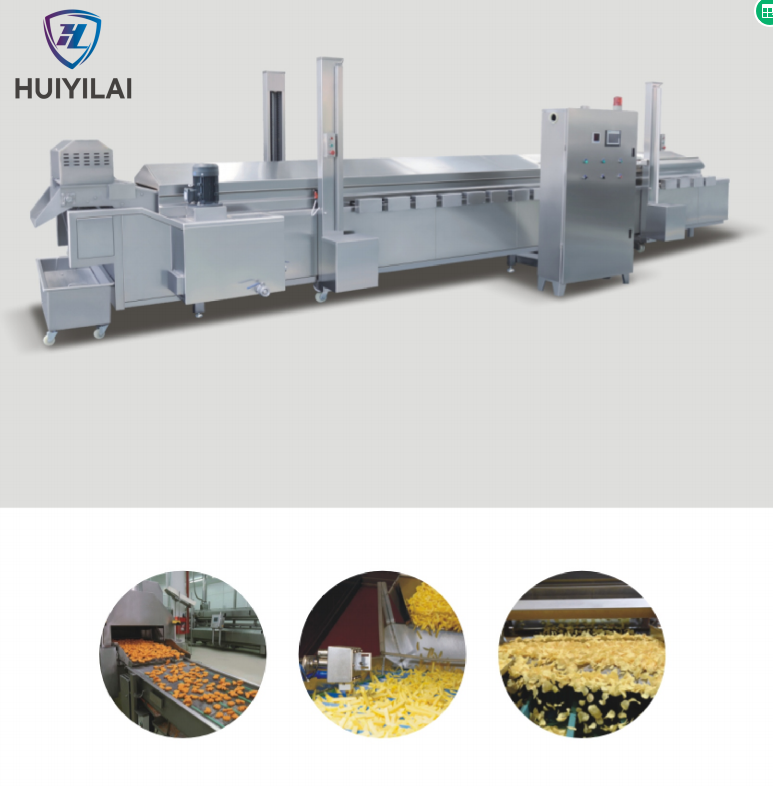
Core Evaluation Criteria for an Onion Frying Machine
You need a skeptical, industry-standard lens when evaluating equipment. Manufacturers offer countless features. You must map these features directly to your operational outcomes. The right equipment solves specific chemical and thermodynamic challenges.
Temperature Control and Zoned Heating
The reality of processing onions is harsh. They have exceptionally high sugar content. They burn rapidly under standard conditions. A single, uniform heat setting across the entire vat often leads to disaster.
Look for multi-zone temperature control. A continuous onion frying machine should offer independent heating zones. You need high heat at the entry point. The product enters cold and wet. High heat evaporates the moisture quickly. It recovers the target temperature instantly. You need lower heat near the exit point. The product is mostly dry here. Lower heat prevents the natural sugars from caramelizing into bitter char. This zoned approach guarantees a golden, crispy finish every time.
Oil Filtration and Turnover Rate
The reality is simple: burnt onion particles degrade oil quality fast. Free fatty acids build up. The oil darkens and smokes. This forces you to discard large volumes of oil frequently. Such waste heavily increases your operational expenses.
Look for advanced filtration capabilities. You need continuous bottom-scraping systems. They drag heavy sediment out of the vat constantly. You also need inline fine-mesh filtration. These external filters catch suspended micro-particles before they burn. Extending your oil life is the fastest way to improve your profit margins.
Best Practice: Aim for equipment offering a rapid oil turnover rate. The system should hold the minimum oil volume necessary for frying. This ensures fresh oil constantly replaces absorbed oil.
Energy Source and Efficiency
Heating a massive volume of oil requires immense energy. You must evaluate gas, electric, and thermal oil heating methods carefully. Base your decision on local utility availability.
Gas direct heating offers fast temperature recovery. It suits high-capacity lines perfectly. Electric heating provides precise control but often incurs higher utility bills in some regions. Thermal oil (indirect heating) uses a secondary fluid to transfer heat gently. It minimizes oil scorching. Evaluate your required production capacities before selecting a heating method.
Implementation Realities: Footprint, Safety, and Maintenance
Purchasing equipment is only the first step. You must navigate rollout risks and daily operational realities. Factory constraints often dictate equipment choices.
Facility Space and Layout
Continuous lines require a significant linear footprint. You cannot squeeze them into a small corner. Assess your factory floor plans meticulously.
Determine whether you need a straight-line or U-shape conveyor configuration. Straight lines offer the simplest product flow. They require less maintenance. However, they demand a very long facility. U-shape layouts bend the production line back on itself. They save linear space but introduce complex corner-transfer conveyors. You must ensure product does not jam at these transfer points.
Ventilation and Fire Suppression
High-moisture products create heavy exhaust requirements. As the moisture evaporates, it carries fine oil droplets into the air. You must address this heavy steam load. Install industrial extraction hoods above the continuous line. Ensure your facility handles the massive CFM (Cubic Feet per Minute) airflow requirements.
Safety remains paramount. Ensure the equipment meets local compliance for automated fire suppression systems. High-volume fryers pose inherent fire risks. Your exhaust hoods must integrate with CO2 or wet chemical suppression setups. Never operate an industrial line without these fail-safes actively armed.
Sanitation and Downtime (CIP)
Food safety compliance demands rigorous cleaning schedules. You must evaluate the ease of daily sanitation. Complex machines trap debris in hidden corners. This breeds bacteria and ruins subsequent batches.
Look for systems featuring automated lifting hoists. These hoists raise the heavy conveyor belts and hold-down mechanisms vertically out of the vat. Maintenance crews gain instant access to the internal tub. They can scrub the system safely without heavy manual labor. Clean-in-Place (CIP) systems also automate the boiling-out process. They circulate caustic cleaning fluids through the pipes and heat exchangers automatically.
Common Mistake: Buying a unit without automated hoists forces workers to manually lift heavy components. This leads to poor cleaning routines and frequent workplace injuries.
Shortlisting Vendors and Next Steps
Procuring heavy machinery requires a logical framework. You must drive qualified conversions by asking the right questions. Do not rely solely on glossy brochures.
Requesting Proof of Concept
Never buy a continuous line blindly. Advise your procurement team to ask vendors for Factory Acceptance Testing (FAT). You must use your specific onion variety during this test.
Different onion cultivars possess varying water and sugar ratios. A machine testing perfectly with sweet onions might fail with pungent varieties. Sending your actual raw material ensures the equipment handles your exact recipe. Demand a physical or live-streamed demonstration of the output.
Assessing Vendor Support
A machine is only as good as the support behind it. Parts wear out. Belts stretch. Heating tubes require eventual replacement. Prioritize manufacturers offering clear Service Level Agreements (SLA).
Verify their spare parts inventory. Ensure they stock critical components domestically. Ask about their installation and commissioning protocols. The vendor should send specialized engineers to your facility. These engineers must train your local operators on safe startup and shutdown procedures.
Defining Your RFP
A poorly written Request for Proposal (RFP) yields inaccurate quotes. Provide manufacturers with highly specific data. Use this checklist to build your RFP:
- Target kg/hour: State your required output of finished, fried product. Do not state raw input weight. Moisture loss changes the math drastically.
- End-product type: Specify whether you want crispy flakes, battered rings, or dusted strings.
- Available facility dimensions: Provide exact ceiling heights, floor lengths, and drainage locations.
- Preferred heating energy: State whether you want natural gas, electricity, or thermal oil options based on your local infrastructure.
- Automation level: Specify if you need integrated weighing and bagging or just the raw processing line.
Conclusion
Investing in an automated production line fundamentally changes your processing capabilities. It is about balancing immense capacity with strict quality control. You must handle fresh ingredients delicately while scaling output aggressively.
The right onion frying machine acts as either the bottleneck or the catalyst for profitability. Prioritize precise oil management and multi-zone temperature precision. Ignore superficial features. Focus on equipment facilitating fast temperature recovery and continuous sediment removal.
Your next step requires active planning. Gather your facility dimensions and target capacity metrics. Consult with a processing engineer immediately. Request a customized layout drawing. Visualizing the workflow ensures you select a system perfectly matched to your production goals.
FAQ
Q: What is the minimum capacity for a continuous onion frying production line?
A: Typically, entry-level continuous lines start at 100 to 200 kg/h of finished product. Anything lower is usually better served by semi-automatic batch fryers. A continuous line ensures uniformity and reduces labor, making it ideal for higher-volume processing operations.
Q: How much oil does a continuous onion frying machine consume?
A: Oil consumption relies primarily on the product absorption rate. Slice thickness and batter type dictate this rate rather than the equipment itself. However, integrating efficient post-fry de-oiling systems recovers up to 20% of surface oil. This significantly reduces overall usage.
Q: Can the same production line be used for both garlic and onions?
A: Yes, you can process both items on the same line. You will need to make minor adjustments to belt speeds and temperature profiles. Keep in mind that flavors cross-contaminate easily. You must perform thorough Clean-in-Place (CIP) procedures between runs.


