Purchasing a commercial or industrial fryer machine represents a highly capital-intensive decision for any food business. This single piece of equipment directly dictates your final food quality. It also controls daily operational throughput and long-term utility expenses heavily. Buyers often over-index on the upfront purchase price. They frequently underestimate crucial ongoing factors like daily fluid consumption. Thermal recovery times and overall energy efficiency often go completely ignored during procurement. This common oversight inevitably leads to bottlenecked kitchen operations. It also inflates operational budgets significantly over the equipment lifecycle. Our primary objective is to define the exact operational scope of modern frying equipment. We categorize the primary structural designs available on the market today clearly. You will receive an evidence-based framework to evaluate the right system. We tailor this guide strictly for specific commercial applications. By understanding these core mechanical principles, you can align equipment capabilities seamlessly. You will meet your rigorous menu demands while protecting profit margins.
Key Takeaways
- Application Dictates Design: The choice between tube, open-pot, flat-bottom, or continuous models depends entirely on the menu item’s sediment profile and required volume.
- Operational Costs Over Initial Price: Advanced oil filtration and energy-efficient heat exchangers significantly reduce long-term operational costs, offsetting higher initial purchase prices.
- Compliance is Non-Negotiable: Integrating new equipment requires strict adherence to local fire suppression, ventilation, and workplace safety codes.
- Throughput Reliability: A successful deployment relies on matching the machine's thermal recovery rate to peak-hour production demands.
The Operational Role of a Commercial Fryer Machine
Beyond basic heating capabilities, a commercial frying system operates as a precisely engineered thermal management tool. Manufacturers design it for rapid, consistent heat transfer across varying volumes. It also plays a vital operational role in fluid preservation. The primary business goal centers on achieving uniform food output at scale. You must simultaneously minimize fluid degradation while actively preventing energy waste.
Many food service operations fail when they choose underpowered heating units. Selecting the wrong equipment leads directly to slow thermal recovery times. This structural failure results in greasy, heavy food and unhappy customers. Severe bottlenecked kitchen operations occur during your busiest peak hours. You end up wasting significant money on rapid fluid spoilage. We highly recommend matching the thermal output to your exact production demands accurately.
The cooking medium itself acts as a massive thermal heat sink. When you drop frozen foods into the vat, the temperature plummets instantly. A well-engineered unit senses this sudden drop immediately. It fires the burners or activates the heating elements to recover lost heat rapidly. If it takes too long, the food absorbs excess grease. It ruins the texture and flavor profile entirely. Proper thermal management guarantees crispy, golden results every single time. It keeps your fast-paced service line moving swiftly.
Solution Categories: Selecting the Right Fryer Machine Architecture
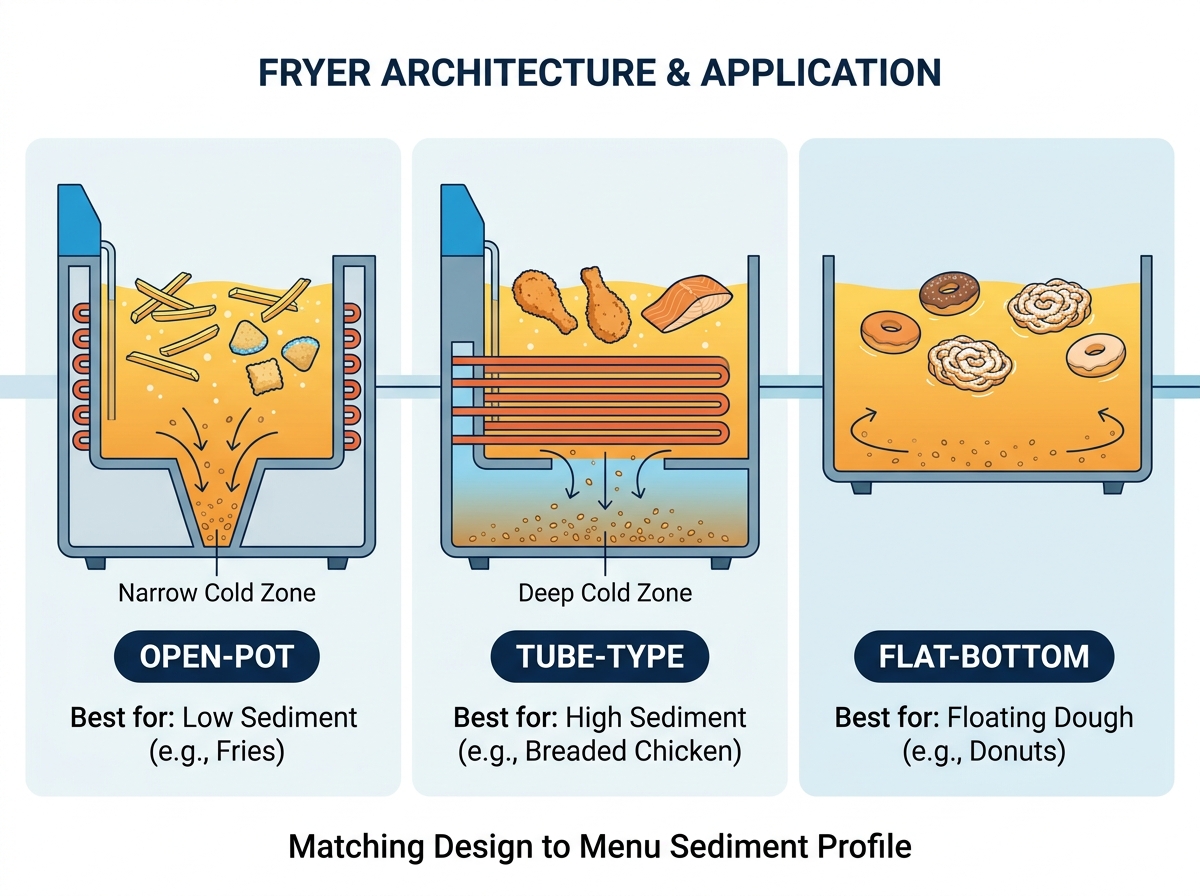
You cannot adopt a simple one-size-fits-all approach to commercial frying equipment. Different menu items interact quite differently with the heated medium. Some foods shed heavy breading, while others release high internal moisture. You must carefully select the structural design matching your specific culinary output.
Open-Pot Fryers
These specific units serve as the absolute best choice for low-sediment foods. French fries, cheese sticks, and frozen appetizers work perfectly here. The physical design features a narrow cold zone at the very bottom. This structural choice allows unobstructed physical access to the entire vat. You can clean the interior easily and quickly. Staff simply wipe down the smooth metal walls during routine daily maintenance.
However, open-pot designs remain a poor operational choice for heavily breaded items. Falling sediment quickly fouls the remarkably shallow cold zone. Burnt breading degrades the cooking medium rapidly via carbonization. It imparts a harsh, bitter taste to all subsequent food batches. You will ruin expensive products by misusing this design.
Tube-Type Fryers
These distinct models excel strictly when cooking high-sediment foods. Bone-in fried chicken and heavy fish fillets thrive in these specific units. They feature a remarkably wide, deep cold zone located below the heating tubes. This deliberate structural choice prevents falling sediment from burning. It significantly extends the usable life of your expensive cooking medium.
The main operational limitation involves routine manual cleaning. The internal heating tubes create physical obstacles inside the main vat. They make the interior much more difficult to clean manually. Staff must use specialized bristled brushes to scrub between and underneath the hot pipes. This adds considerable time to closing shift duties.
Flat-Bottom Fryers
Specialty wet dough products require this highly unique design. Doughnuts, funnel cakes, and tempura batter float directly on the surface. The wide, shallow surface area allows items to fry freely. You do not need a traditional wire fry basket. The wet dough expands outward without any physical restriction.
These specialty units feature absolutely no true cold zone. They require frequent manual skimming throughout the operational day. You should never use them for standard high-sediment items. Loose breading will fall to the flat bottom and burn instantly. This ruins the entire batch and creates severe kitchen smoke issues.
High-Volume & Industrial Variations (Pressure & Continuous)
Pressure units cook raw food much faster at lower overall temperatures. They trap active steam directly inside the sealed vessel. This mechanical process seals in natural moisture perfectly. They serve as the undisputed standard for commercial fried chicken operations globally. You achieve juicy interior meat and crispy skin consistently.
Belt-driven continuous systems handle non-stop food manufacturing effortlessly. Large industrial facilities rely on them heavily for massive processing lines. A continuous fryer machine automatically moves raw product through the heated medium. It ensures identical, precise cook times for thousands of items per hour. They often incorporate programmable logic controllers for ultimate consistency.
Matching Machine Capabilities to Key Applications
Different food business models require highly specific engineering solutions. A busy neighborhood diner operates differently than a massive frozen food factory. You must evaluate your true operational scale before purchasing any equipment.
Quick Service Restaurants (QSRs) demand rapid thermal recovery times above all else. They handle back-to-back frozen drops continuously during operating hours. The baseline temperature must not plummet during a busy lunch rush. Staff need reliable equipment delivering relentless thermal consistency. High-efficiency gas models often dominate this fast-paced sector. They recover lost heat in mere seconds rather than several minutes.
Institutional dining facilities face entirely different daily logistical challenges. Large hospitals, corporate cafeterias, and universities demand programmable, multi-vat systems. They handle diverse, constantly rotating menus simultaneously. You must prevent flavor crossover and cross-contamination carefully. For example, you must isolate fresh seafood from standard potato products. Split-vat configurations allow simultaneous cooking at distinct temperatures. They isolate different flavor profiles perfectly within the same footprint.
Industrial food processing prioritizes continuous daily throughput heavily. Automated mechanical sediment removal becomes a highly critical feature here. Bulk fluid-handling capabilities maintain strict 24/7 production consistency. You cannot stop an entire processing line merely to manually filter a single vat. Conveyor systems ensure precise thermal exposure times. They guarantee every single nugget or patty achieves exact color and texture specifications.
Bottom-Line Benefits: Evaluation Dimensions for Decision Makers
Smart procurement buyers evaluate commercial equipment based on long-term operational savings. The baseline sticker price represents only a small fraction of the actual operating expense. You must analyze daily resource consumption meticulously before deciding.
Built-in Oil Filtration
Systems featuring integrated mechanical filtration can easily double usable fluid life. The upfront purchase cost is undeniably higher. However, you typically realize a full financial return within 12 to 18 months. You achieve this through drastically reduced fluid purchasing and disposal costs. Automated filtration removes microscopic carbonized particles daily. It prevents rapid oxidation and severe chemical breakdown.
Energy Source (Gas vs. Electric)
Choosing carefully between available utilities impacts your daily operating budget significantly.
- Gas Models: They typically offer much faster heat-up and thermal recovery cycles. They require dedicated commercial gas lines and specialized pressure regulators. Burner designs dictate overall efficiency.
- Electric Models: They provide highly efficient direct heat transfer. The heating elements sit submerged directly in the cooking medium. They are often easier to physically install. However, they rely heavily on fluctuating local commercial utility rates.
Programmability and Automation
Digital smart controllers feature distinct preset menu buttons. They reduce costly human error drastically in chaotic busy kitchens. You ensure consistent culinary outcomes regardless of high operator turnover. Staff simply press a digital button and wait for the audible alarm. Advanced models even lift the heavy baskets automatically when the internal timer finishes.
Thermal Efficiency
Look closely for advanced units featuring complex internal heat baffles. Infrared ceramic burners transfer far more heat directly into the cooking medium. They prevent valuable energy from escaping uselessly up the exhaust flue. This lowers ambient kitchen temperatures significantly. It also reduces your monthly facility utility bills drastically.
| Equipment Type | Ideal Food Profile | Cold Zone Size | Cleaning Difficulty |
| Open-Pot | Low-sediment (Fries) | Narrow / Shallow | Very Easy |
| Tube-Type | High-sediment (Chicken) | Wide / Deep | Moderate to Hard |
| Flat-Bottom | Floating dough (Doughnuts) | None | Requires constant skimming |
| Continuous | Industrial volume | Varies by model | Requires automated CIP systems |
Implementation Risks and Compliance Realities
Installing high-capacity kitchen equipment involves significant physical logistical hurdles. You cannot simply plug it into the wall and start cooking immediately. Facility managers must address strict regulatory compliance requirements.
Ventilation and HVAC Strain: Upgrading capacity requires verifying your existing mechanical exhaust hoods. They must handle the newly increased effluent and ambient heat load. An undersized hood fails to capture dangerous grease-laden vapors. This coats your kitchen surfaces in highly flammable residue. It creates severe slipping hazards for your staff.
Fire Suppression Standards: You must align your facility strictly with NFPA 96 codes. Local municipal regulations demand automatic fire extinguishing systems in all commercial cooking spaces. Code compliance remains absolutely non-negotiable. Fire marshals will immediately shut down operations lacking proper wet-chemical suppression nozzles aimed directly at the open vats.
Space and Ergonomics: Factor in the true physical footprint of the unit. Ensure adequate safe clearance for daily fluid draining and safe transport. Consider potential workflow disruption during the complex installation process. Kitchen staff need ample room to load heavy baskets safely. They cannot bump into other busy cooks during peak service.
Utility Infrastructure: Verify your main electrical panel capacity thoroughly. Check specific required voltage and phase requirements for large electric models. Test commercial gas line delivery pressure before finalizing any major purchase. Inadequate gas pressure leads to weak pilot lights. It causes frustratingly slow thermal recovery cycles.
Shortlisting Logic: Next Steps for Procurement
You need a highly methodical approach to narrow down your numerous equipment options. Follow these structured steps closely before contacting commercial equipment dealers.
- Audit Current Volume: Document your peak-hour pounds-per-hour output requirements carefully. This specific metric determines your necessary vat capacity accurately. Do not blindly guess your output volume. Measure it meticulously during your busiest Friday night service.
- Analyze Menu Sediment: Use your detailed menu profile to eliminate incompatible structural designs immediately. For example, rule out open-pot models completely if you serve heavily battered fish. This single step prevents incredibly costly buying mistakes.
- Request Performance Projections: Require vendors to provide detailed estimated annual utility consumption data. Ask for specific efficiency metrics based on your documented volume. Do not rely solely on the baseline sticker price. Evaluate the long-term resource efficiency accurately.
- Verify Service Networks: Shortlist reputable manufacturers boasting established local service technicians. Ensure they stock readily available replacement parts in your specific region. This mitigates future operational downtime effectively. A broken heating unit during a busy weekend rush costs thousands in lost revenue.
Conclusion
Investing heavily in modern commercial frying equipment requires shifting your focus away from basic heating capabilities. You must fully embrace holistic fluid management, advanced energy efficiency, and seamless kitchen workflow integration. Smart buyers must evaluate the structural design directly against their specific culinary output. By aligning equipment architecture exactly with specific menu profiles, operations secure reliable, high-quality output consistently. Accurate evaluation of long-term operational efficiency protects your vital profit margins. Take the necessary time to audit your true production volume. Verify your facility utility infrastructures completely before making a major purchase. A well-chosen system elevates your entire food service operation immediately. It minimizes dangerous waste, accelerates daily service times, and guarantees ultimate customer satisfaction.
FAQ
Q: What is the average lifespan of a commercial fryer machine?
A: These units typically last 7 to 10 years during daily commercial use. This lifespan depends heavily on your consistent cleaning practices. Strict adherence to preventative maintenance schedules extends equipment longevity significantly. Neglected units often fail much sooner due to severe internal carbon buildup.
Q: How does a built-in filtration system save money?
A: It removes microscopic carbonized particles daily. This action drastically slows chemical degradation and rapid oxidation. It reduces the frequency of total fluid replacements. You buy significantly less cooking medium annually, which saves substantial operational money over time.
Q: What is a "recovery time" and why does it matter?
A: It represents the exact time needed for temperatures to return to optimal levels after submerging cold food. Slow recovery results directly in food absorbing excess grease. This leads to a heavy, subpar product. Fast recovery ensures a perfectly crispy exterior.
Q: Can one fryer handle multiple types of food?
A: Technically yes, but practically it risks severe flavor transfer. French fries might end up tasting strongly like fish. You also face varying sediment accumulation issues. Multi-vat split configurations are highly recommended for handling diverse, expansive menus safely.


