Upgrading to a commercial-grade cleaning system requires balancing significant capital expenditure against projected labor efficiency and hygiene standards. Facility managers constantly face the pressure to maintain pristine environments without inflating daily operational budgets. Choosing an advanced extraction system becomes a critical pivot point for overall facility health.
For facility managers and commercial cleaning contractors, purchasing the wrong equipment results in bottlenecked operations, poor surface recovery, and inflated maintenance costs. Subpar machines often fail to remove embedded soils. They leave facilities vulnerable to compliance failures and slip-and-fall liabilities. When daily operations rely on outdated tools, labor costs inevitably skyrocket.
This guide breaks down the technical specifications, true return on investment, and operational risks of integrating a vortex cleaning machine into your workflow. You will discover a clear framework for final procurement decisions. Armed with these insights, you can secure reliable equipment tailored perfectly to your facility needs.
Key Takeaways
- True vortex cleaning systems reduce labor hours by combining high-pressure agitation with immediate extraction, though initial capital investments typically range from mid-to-high commercial tiers.
- Total Cost of Ownership (TCO) extends beyond the sticker price; successful ROI models must account for consumables, preventative maintenance, and operator training time.
- Evaluation should strictly align with your facility's square footage, primary floor composition (porous vs. non-porous), and required compliance standards (e.g., OSHA, LEED).
- Avoid over-specifying; selecting equipment with a PSI or recovery capacity far exceeding your daily operational needs accelerates wear and decreases overall ROI.
What Differentiates a Commercial Vortex Cleaning Machine?
Defining the Technology
You might wonder what separates a true vortex system from a standard automatic scrubber or a basic pressure washer. A typical auto-scrubber uses gravity-fed water and simple mechanical brushes. It picks up fluid but often leaves residual moisture behind. Basic pressure washers simply blast dirt away. They leave massive puddles requiring secondary cleanup.
A vortex cleaning machine integrates cyclonic water recovery and high-pressure rotary spray in one enclosed dome. This technology forces water down into the substrate. Simultaneously, it creates a powerful vacuum seal. The unit recovers soiled water instantly. It prevents dirty water from spreading across the floor. This enclosed loop redefines commercial surface maintenance.
Core Engineering Mechanics
To understand the superiority of this equipment, we must look at its core mechanical actions. They work in tandem to eliminate redundant tasks.
- High-speed rotary agitation: Internal spray bars spin at high RPMs. They deliver heated cleaning solutions deep into porous surfaces. This action aggressively breaks down embedded soils and grease.
- Simultaneous vacuum extraction: The cyclonic vacuum pulls the agitated soil and water upward immediately. It leaves surfaces completely dry and safe for immediate foot traffic.
- Closed-loop fluid control: The spray remains confined beneath the cleaning deck. This prevents overspray onto walls, baseboards, or nearby merchandise.
The Business Case for Upgrading
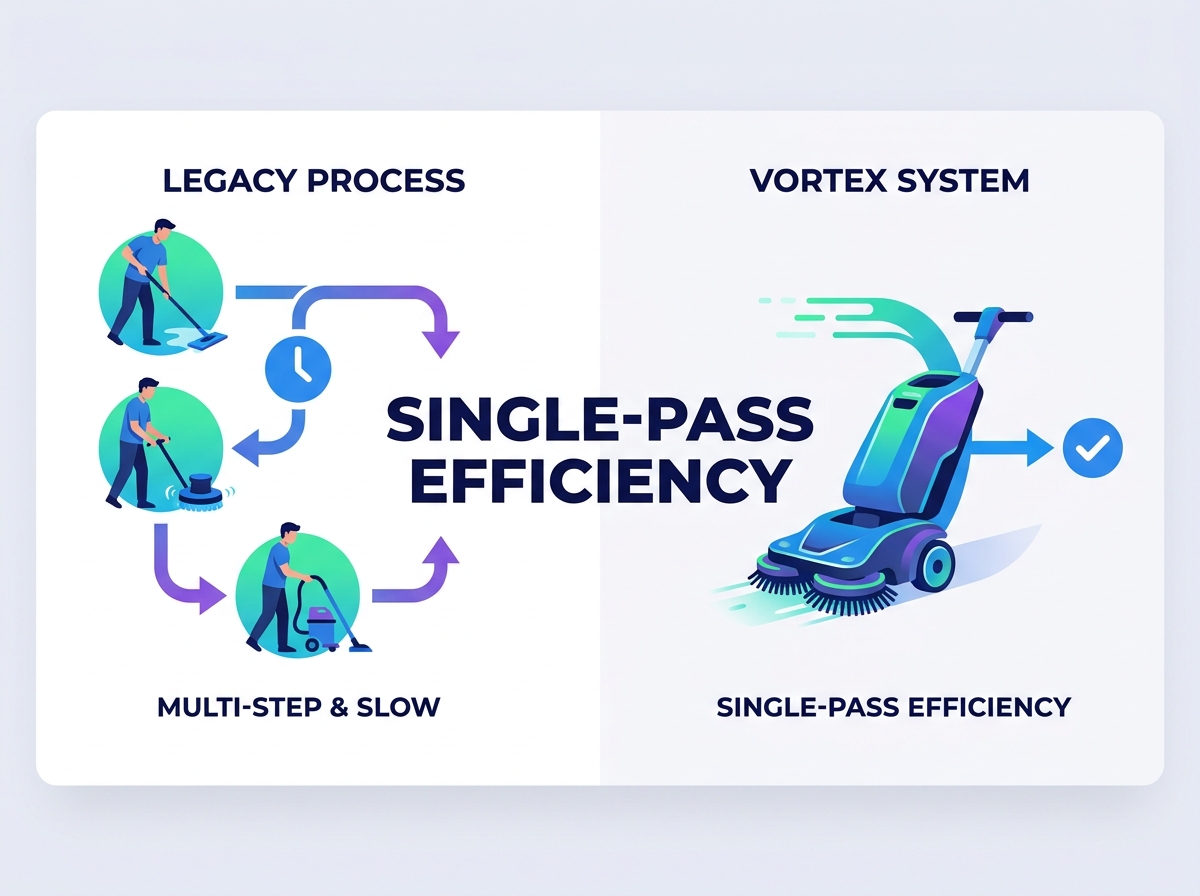
Moving from manual multi-step processes transforms your bottom line. Traditional methods demand a mop, a scrub cycle, and a separate wet-vac pass. These legacy methods consume massive amounts of labor. They also trap dirt inside grout lines.
Upgrading to a single-pass system slashes your cleaning times. A process requiring three hours manually now takes forty-five minutes. You can reallocate your staff to high-touch detail work. The immediate drying time also eliminates the need for physical barricades. You can clean busy corridors during operating hours without disrupting commerce.
Core Evaluation Criteria: Aligning Features to Outcomes
Pressure (PSI) and Flow Rate
Buyers often assume higher PSI translates to better cleaning power. This misconception leads to expensive substrate damage. You must match pressure settings directly to your surface types. Blasting delicate tile grout with 2,500 PSI will erode the mortar. It forces water underneath the tiles.
Conversely, industrial concrete floors handle high pressure easily. Flow rate matters just as much as PSI. A higher flow rate flushes debris away faster. Adjustable pressure regulators are mandatory features. They allow operators to dial down the force for sensitive surfaces. This flexibility prevents costly facility repairs.
Vacuum Recovery and Water Lift
Excellent water recovery prevents slip-and-fall liabilities. We evaluate recovery through two metrics: CFM (Cubic Feet per Minute) and water lift. CFM measures the volume of air moving through the system. Water lift measures the actual suction strength.
You need high water lift to pull moisture out of deep grout lines. High CFM ensures the system moves that moisture into the recovery tank quickly. Superior recovery reduces drying times to near-zero. Fast drying keeps your facility compliant with safety regulations. It also prevents mold growth in porous surfaces.
Ergonomics and Operator Fatigue
A heavy, clumsy machine drains operator energy rapidly. You must assess maneuverability, weight distribution, and handle vibration. High handle vibration causes micro-traumas in the hands and wrists over long shifts.
Equipment causing operator fatigue leads to decreased productivity. It also invites potential workers' compensation claims. Look for units featuring balanced weight distribution. Large, non-marking wheels help navigate thresholds easily. An ergonomic design ensures your team maintains consistent cleaning speeds throughout their entire shift.
Build Quality and Component Sourcing
Commercial environments destroy fragile equipment. Evaluate the durability of the outer housing. High-density polyethylene tanks withstand impacts better than cheap plastics. You also need to inspect the accessibility of the internal pump.
If routine maintenance requires dismantling the entire chassis, labor costs will soar. Determine whether replacement parts are proprietary. Industry-standard hoses, quick-disconnects, and vacuum motors keep repair costs low. Proprietary components force you to buy expensive parts directly from the manufacturer.
Table: Quick Reference for Equipment Evaluation Metrics
| System Component | Key Metric to Check | Ideal Target for Commercial Use | Operational Impact |
| Pressure Pump | Adjustable PSI Range | 400 to 1,200 PSI | Prevents grout damage while allowing deep cleaning. |
| Vacuum Motor | Water Lift (inches) | 100+ inches of lift | Ensures zero-moisture recovery and instant drying. |
| Airflow | CFM (Cubic Feet/Minute) | 110+ CFM | Speeds up the extraction of heavy sludge. |
| Chassis/Housing | Material Composition | Rotomolded Polyethylene | Resists cracking, denting, and chemical corrosion. |
Decoding Vortex Cleaning Machine Costs and True ROI
Upfront Capital Expenditure
Procurement budgets require realistic price brackets. Entry-level commercial units generally range from $3,000 to $5,000. These standard models handle moderate daily use on flat surfaces. They often feature single vacuum motors and lower flow rates.
Heavy-duty industrial models demand higher investments. Multi-surface extractors with dual vacuums, auto-fill capabilities, and auto-dump features scale from $6,000 to over $10,000. These premium machines tackle massive square footage. They minimize the time operators spend emptying recovery tanks.
Hidden Maintenance and Consumable Costs
Evaluating expenses requires looking past the sticker price. Consumables and routine wear parts eat into your annual budget. You must factor in replacement vacuum seals, inline filters, and rotary unions. Rotary unions endure immense stress. They spin at high speeds while transferring pressurized water.
Vacuum motors also have finite lifespans. Commercial carbon brushes wear down after several hundred hours of use. Additionally, some manufacturers mandate proprietary chemical requirements. Using off-brand defoamers or detergents might void your warranty. These proprietary chemicals often cost significantly more than generic alternatives.
Calculating the Payback Period
A basic ROI framework justifies your capital expenditure. Calculate the labor hours saved per week. Multiply those saved hours by your operator's hourly wage, including burden rates. This figure represents your gross labor savings.
Next, subtract your monthly maintenance costs and the amortized equipment cost. For example, saving 15 hours a week at $20 an hour yields $300 weekly savings. If the amortized cost and maintenance equal $150 a week, your net positive return is $150 weekly. Most commercial users see complete payback within 8 to 14 months.
Leasing vs. Buying
Cash flow preservation often dictates procurement strategies. Leasing equipment makes financial sense for rapidly growing cleaning contractors. It requires minimal upfront capital. Many lease agreements also include preventative maintenance schedules. This keeps your machines running perfectly without unexpected repair bills.
Outright ownership provides better long-term savings. If your facility possesses available capital, buying eliminates interest rates. Ownership works best for in-house facility teams with predictable, static cleaning requirements. Carefully weigh your tax write-off options, such as Section 179 deductions, before deciding.
Implementation Realities: Training, Risks, and Compliance
The Adoption Curve
Introducing advanced technology triggers an adoption curve. Staff require realistic timelines to reach peak efficiency. Do not expect maximum productivity on day one. Operators must develop muscle memory for the new equipment.
Address the risk of operator resistance early. Veteran staff often prefer legacy mops and buckets. They might view complex machinery as cumbersome. Counter this by emphasizing how the machine reduces physical strain. Thorough, hands-on training sessions dissolve intimidation. Empowering your team ensures rapid adoption and better floor care.
Standard Operating Procedures (SOPs)
Neglecting daily maintenance routines guarantees premature equipment failure. You must establish strict Standard Operating Procedures. Operators need to clear inline filters after every single shift. Clogged filters starve the pump of water, causing catastrophic cavitation.
Flushing the pump system is equally vital. Leaving harsh chemical residues inside the lines deteriorates rubber seals overnight. Operators must run clean water through the system before storing it. Hang hoses properly to allow draining. These simple, five-minute routines extend the lifespan of your investment by years.
Safety and Environmental Compliance
Daytime cleaning operations face strict noise level restrictions. Pay close attention to decibel (dB) ratings. Machines exceeding 75 dB will disrupt office environments and healthcare facilities. Seek models featuring acoustic dampening.
Indoor air quality matters significantly. Ensure your exhaust ports feature HEPA filtration. This prevents the machine from blowing microscopic dust back into the air. Wastewater disposal compliance also requires attention. You must dump extracted sludge into approved sanitary drains. Never dump chemical-laden recovery water into storm sewers. Facility audits will penalize improper disposal heavily.
Warranty Traps
Commercial warranties contain strict clauses. Ignorance of these clauses voids your coverage instantly. Using unauthorized harsh solvents is a primary violation. Highly acidic tile cleaners melt internal brass and plastic components.
Neglecting freeze-protection destroys more pumps than actual wear. If operators leave the machine in an unheated vehicle during winter, residual water freezes. Expanding ice cracks the pump manifold. Manufacturers easily identify freeze damage and will deny your claim. Always run winterizing solutions through the system if storing it in cold environments.
Shortlisting Framework: Making Your Final Decision
Define Success Criteria
Document your exact needs before speaking to sales representatives. Vague requirements lead to purchasing over-specified, expensive equipment. Write down specific production goals based on your floor plans.
For example, state: "We must clean 10,000 square feet of tile per shift using only one operator." Identify your narrowest doorways and elevator capacities. Note the exact locations of your water sources and drain points. Clear success criteria empower you to reject machines failing to meet your logistical realities.
Vendor Vetting
Equipment is only as reliable as the vendor supporting it. Evaluate distributors meticulously. Ask about their local parts availability. If a proprietary switch breaks, you cannot wait three weeks for international shipping.
Request their Service Level Agreements (SLAs) for emergency repairs. Top-tier vendors guarantee on-site technician dispatches within 48 hours. Furthermore, inquire about loaner equipment policies. If your primary machine requires extended shop time, a free loaner unit keeps your facility operations running smoothly.
The Pilot Test
Never finalize a purchase without an exhaustive on-site demonstration. Showroom floors do not reflect the reality of your facility. You must observe the equipment handling your specific soils.
- Select the worst area: Specify that the demo must take place on your worst-condition floors. Test it on heavily soiled grout or grease-stained concrete.
- Use your own staff: Have your typical staff operate the unit, not just the polished sales rep. Assess how easily they handle the controls.
- Check the recovery: Run a dry paper towel over the cleaned area immediately. If the towel gets wet, the vacuum recovery is insufficient.
- Evaluate the teardown: Time how long it takes to empty and rinse the unit after the test.
Next Steps
Once a machine passes the pilot test, move to procurement. Request specialized quotes encompassing the machine, required accessories, and a year's supply of consumables. Verify shipping lead times to align with your facility schedules.
Finally, schedule comprehensive operator training. Do not let the vendor drop off the pallet and leave. Demand a certified training session for your entire shift crew. Proper onboarding secures your investment and guarantees immediate productivity gains.
Conclusion
Integrating a high-performance system into your facility is a major operational pivot. When properly matched to your exact floor types, this equipment drastically lowers long-term labor costs. It eliminates redundant manual scrubbing. Your staff gains the ability to clean vast areas quickly and safely.
Always base your final decision on practical metrics. Focus heavily on water recovery rates and local parts accessibility. Exact surface matching matters far more than flashy marketing claims about maximum pressure. An overly powerful pump without adequate vacuum lift merely creates hazardous puddles.
Stop losing money to inefficient floor care methods. Contact your local commercial equipment sales team today for a custom ROI analysis. Request a detailed specification sheet. Better yet, schedule an on-site facility audit to see the extraction technology transform your dirtiest floors firsthand.
FAQ
Q: What is the average lifespan of a commercial vortex cleaning machine?
A: Lifespan depends entirely on usage frequency and maintenance rigor. In high-use commercial settings, machines typically last 5 to 7 years. Facilities performing daily filter checks, routine pump flushes, and scheduled preventative maintenance can often extend this lifespan to a decade before needing major overhauls.
Q: Can a vortex cleaning machine be used on all hard floor surfaces?
A: No. These systems are ideal for tile, grout, and sealed concrete. However, high-pressure moisture injection can severely damage unsealed wood, laminate, or specific delicate natural stones. Always verify surface compatibility and dial down the PSI when cleaning softer substrates.
Q: How much maintenance does a cyclonic/vortex system actually require?
A: Operators must perform daily filter checks and rinse recovery tanks after every use. Weekly tasks include inspecting the pump for leaks and checking vacuum seals for tears. Annual professional servicing is highly recommended to replace worn carbon brushes and rebuild high-stress rotary unions.
Q: Are battery-powered vortex machines worth the premium over corded models?
A: Battery models eliminate trip hazards and save immense time normally spent managing cords. However, you must weigh the upfront premium and the eventual cost of lithium-ion battery replacements against the labor savings gained from unhindered mobility in highly congested facilities.


