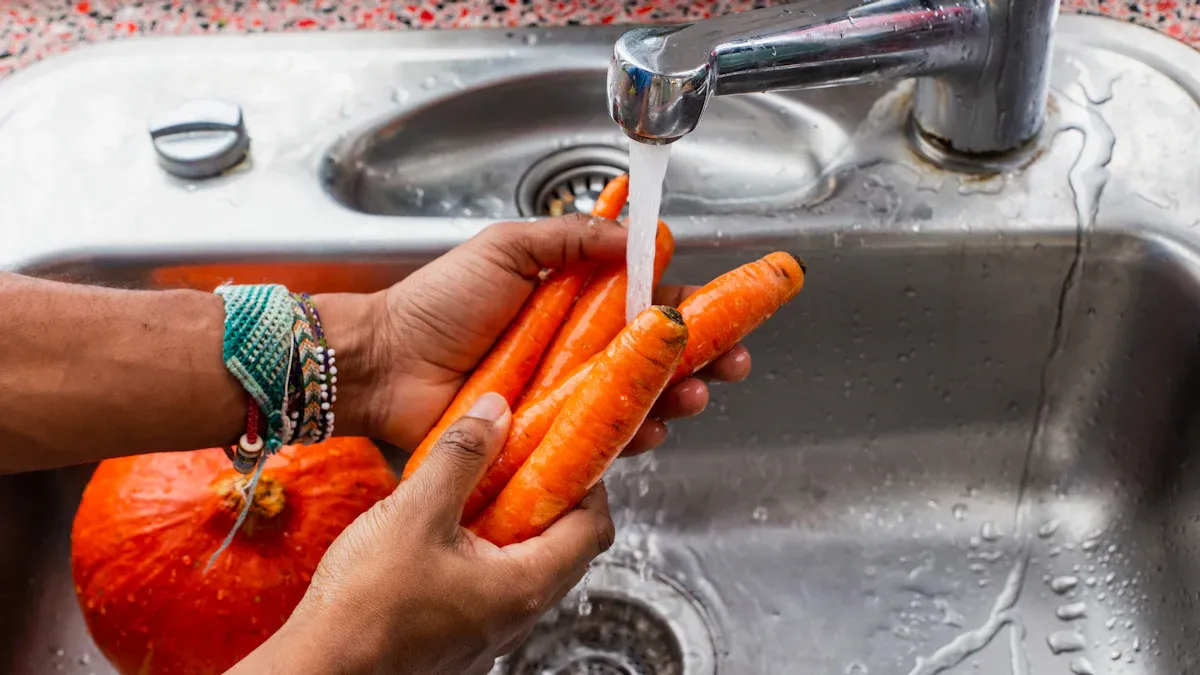
You can clean carrots fast and well with a cleaning machine. This machine uses water sprays and spinning brushes or rollers. These parts take dirt off every part of the carrot. In big places, a carrot washing machine works faster than washing by hand. It also uses less water. These machines have special filters that clean and reuse water. This helps save water and is better for the planet. At home, smaller machines use the same ideas. They help you clean carrots with less work.
Key Takeaways
Cleaning Machine Components
A carrot cleaning machine has many important parts. These parts work together to clean carrots quickly and well. Each part helps you get clean carrots for carrot processing or cooking.
Water Spray System
The water spray system uses strong jets of water. These jets knock dirt and debris off the carrots. As carrots move through the machine, water sprays hit them from many sides. This step comes after the brushes scrub the carrots. The strong water spray removes any leftover soil or small bits. The carrots look bright and fresh after this. Many carrot washing machines use water recirculation. This means the system cleans and uses the water again. This saves water and cuts down on waste. Some machines use less than 1.5 gallons of fresh water each minute. Using less water helps the environment during the cleaning process.
Hair Roller Mechanism
The hair roller mechanism has soft brushes that spin. These brushes gently scrub the carrots as they move through the machine. The brushes touch all sides, so every carrot gets cleaned evenly. The rollers can change to fit different carrot sizes and shapes. You can clean other root vegetables too. This makes the carrot washer useful for many jobs. The rollers also polish the carrots. This gets them ready for more processing or packaging.
Loading and Conveyor
The loading and conveyor system moves carrots through the carrot cleaning machine. You put the carrots on the conveyor, and it carries them into the washing area. The conveyor keeps the carrots moving at the same speed. This helps the brushes and water jets clean each carrot well. Some carrot washing equipment has automatic controls. You can change the speed and roller settings for different carrots or soil. The conveyor system means you do less work by hand. It also helps keep the carrots from getting damaged. Safety features like guardrails and emergency stop buttons keep you safe while using the machine.
Tip: Do regular maintenance, like checking the rollers and cleaning the water filters. This keeps your carrot washing equipment working well and safely.
Here is a table that shows the main features of a modern carrot cleaning machine:
Component/Feature | Description |
Versatility | Cleans many root vegetables, not just carrots. |
Processing Capability | Cleans, polishes, sorts, and grades vegetables. Some models can dry them too. |
Durability | Made from stainless steel for heavy use and does not rust. |
Energy and Water Efficiency | Uses water recycling and low power for better operation. |
User-Friendly Design | Easy controls make setup fast and need less watching. |
A carrot washing machine uses all these parts together. This gives you a fast, safe, and complete cleaning process. You save time and get better carrots for carrot processing.
Carrot Washing Steps
You can get clean and safe carrots by using a cleaning machine. Each step helps take off dirt and lowers germs. This gets carrots ready for carrot processing or eating. The carrot washing machine uses water, rollers, and brushes. These tools help every carrot meet food safety rules.
Pre-Rinse Preparation
First, you get the carrots ready to wash. This step is important because it takes off most of the soil and dirt. You put the carrots on the conveyor of the carrot washing equipment. The machine soaks the carrots and sprays them with water. This helps loosen the dirt. Pre-rinse makes sure the carrots are clean for the market. It also helps stop bad germs from staying on the carrots. Some machines add safe sanitizers to the water. This makes cleaning even better. You help keep food safe by making sure the carrots are clean before the main wash.
Pre-rinse takes off soil and dirt.
It helps lower bad germs.
Sanitizers in the water can help stop cross-contamination.
Wash Carrots with Rollers
Next, the carrots go into the main washing area. Here, the carrot washing machine uses a hair roller mechanism and strong water sprays. The rollers spin and gently scrub the carrots. This takes off dirt, stains, and some of the skin. The water sprays help the rollers clean the carrots well. The rollers can change to fit different carrot sizes. This way, every carrot gets cleaned the same. The carrot washer uses soft bristle rollers so the carrots do not get hurt. You get clean and shiny carrots ready for more processing.
The rollers and water sprays work together to take off dirt and germs.
The rollers help move the carrots for even cleaning.
Soft bristle rollers gently peel and shine the carrots.
Note: The cleaning machine can wash many carrots at once and still clean well. Abrasive peelers and knife peelers can clean lots of carrots in just a few minutes. Water jets and feed systems keep the cleaning fast and stop clogs.
Here is a table that shows how different peeler types handle big batches:
Peeler Type | Mechanism Description | Cleaning Quality Handling |
Abrasive Peeler | Uses a spinning drum with silicon carbide for gentle peeling. | Water jets wash away skins, stop clogs, and keep things clean during big batches. |
Knife Peeler | Uses still blades for careful peeling, taking off only a thin layer. | Cuts down on waste, keeps more carrot, and gives high cleaning quality for big amounts. |
Final Rinse and Discharge
After the main wash, the carrots go to the final rinse area. The special carrot washer uses cool, clean water to rinse off any leftover dirt or soap. This step is important for food safety. The final rinse takes off water-soluble pesticides and any last bits of soil. You can use a scrub brush to clean the grooves and bumps on the carrots. The cleaning machine then moves the carrots to the discharge area. Here, the carrots dry in the air before you pack or store them. Air-drying helps stop damage and keeps the carrots fresh for longer.
The final rinse takes off dirt and soap.
Scrub brushes help clean hard spots.
Air-drying gets carrots ready for packing or storage.
You can see the carrot washing steps in this easy order:
Put carrots on the conveyor.
Pre-rinse to take off soil and dirt.
Wash carrots with rollers and water sprays.
Final rinse to take off any last germs.
Air-dry and discharge for packing or more processing.
When you use a carrot washer, you save time and get the same results each time. The cleaning machine and carrot washing machine help you clean big batches fast. You get clean, safe carrots ready for carrot processing, storage, or sale.
Brush and Roller Types
Selection for Carrot Cleaning
You must pick the right brushes and rollers for your carrot cleaning machine. The kind you choose changes how well the cleaning works. Brushes scrub and peel carrots. They take off dirt and help keep more carrot. Coated abrasive rollers polish and peel carrots. They make the carrot surface smooth and help clean better. You can see how they work in the table below:
Type of Brush/Roller | Function | Impact on Cleaning Quality |
Brushes | Wash, peel, and scrub carrots, removing dirt and minimizing loss | Removes debris and improves cleaning |
Coated Abrasive | Peel and polish with different abrasiveness levels | Smooths surface and increases cleaning efficiency |
When you pick brushes and rollers, you look at a few things. These are the material, bristle strength, and design. Nylon brush rollers work well for carrot cleaning and carrot processing. Bristles need to be strong and bend easily. This way, they do not scratch the carrots. Common brush materials like PA6, PA66, and nylon 1010 fight germs and last long. Roller cores use steel or stainless steel to stay strong. Some brush rollers have wavy shapes to clean carrots better.
The brush roller cleaning machine washes and peels carrots.
Rotating hair rollers take off dirt and can peel vegetables.
The water spray system rinses carrots during the cleaning process.
Material and Design
You want brushes and rollers that last long and clean well. Imported nylon brushes do not wear out fast and break less. This means your carrot washer works well for many years. You can change the hardness of the brush for different vegetables. Soft and hard brush rollers work together to clean dirt but do not hurt the carrots. The design lets you peel root vegetables and keep them whole.
Brushes can last up to five years if you take care of them. You should check the rollers and clean the filters often. This keeps your carrot cleaning machine working well and helps with big batches.
Tip: Use brushes with adjustable hardness for different vegetables. This helps you get the best results and keeps your carrots safe.
Versatility of Cleaning Machines
Other Root Vegetables
A cleaning machine is not just for carrots. You can use it for many root vegetables. The machine cleans each type fast and well. It works in homes and big kitchens. You can get vegetables ready to cook or process with less work.
Here are some root vegetables and greens you can clean with these machines:
Carrots
Parsnips
Beets
Turnips
Herbs
Herb roots
Daikon radish
Potatoes
Sweet potatoes
Spinach
A cleaning machine is flexible. You do not need a new machine for every vegetable. This saves you both time and space in your kitchen or work area.
Adjustable Settings
You can change the settings on cleaning machines. This helps you clean each vegetable the best way. You can set the brush speed, water pressure, and how strong the cleaning is. These settings let you wash soft or hard vegetables without hurting them.
Here is a table that shows how different machines offer adjustable features:
Machine Type | Features |
Brush Washing Machine | Adjustable settings and rotating brushes for customization based on vegetable size and type. |
Automatic Vegetable Washing Machine | Adjustable cleaning intensity to adapt to fragile or hardy produce. |
Formit Peeling Machines | Easy transitioning to different vegetables without mechanical adjustments. |
You can clean carrots of all shapes and sizes. Machines have special parts to make sure every carrot gets clean. For example, a carrot washer uses tumbling and water that moves around to wash all sides. Some machines can also sort and grade carrots for packing or more processing.
Machine Type | Function |
Destoning Machine | Removes clods and foreign objects, rinsing the carrots for safe movement through the line. |
Carrot Washing Machine | Uses recirculating water and tumbling to thoroughly wash carrots, with optional brushes for heavy soil. |
Polishing Machine | Cleans and polishes carrots using finely haired brushes, enhancing appearance and shelf life. |
Chunk / Length Grader | Sorts oversized and undersized carrots to ensure uniformity in size for packaging. |
Radial Grader | Grades carrots by diameter, sorting them based on size for efficient processing. |
Tip: You can use adjustable settings to clean many kinds of vegetables. This makes your cleaning machine a smart tool for any kitchen or food business.
You can use a cleaning machine to wash carrots fast. These machines help you do less work and save time. You can clean many carrots at the same time. This is good for big groups of carrots and different kinds. Cleaning machines make sure every carrot is washed and peeled the same way. They use less water and energy than washing by hand. This is better for the earth.
Machines clean lots of carrots each hour and need less work.
You get clean carrots with no dirt or germs every time.
Machines help you get the same good results for carrot processing.
Aspect | Automated Washing Machines | Manual Washing |
Water Usage | Uses less water and can clean and reuse water | Usually uses more water |
Energy Consumption | Uses less energy with special technology | Uses more energy |
Waste Generation | Makes less waste with smart washing | Makes more waste |
You should try a cleaning machine for better carrots and a safer kitchen.
FAQ
How often should you clean the carrot washing machine?
You need to clean the machine every time you use it. This stops dirt and germs from staying inside. Cleaning it often keeps your carrots safe. It also helps the machine work well.
Can you wash other vegetables in a carrot cleaning machine?
Yes, you can wash many root vegetables in the machine. You can clean potatoes, beets, and turnips too. Some machines let you change settings for different shapes and sizes.
Do you need special soap or sanitizer?
Most machines just use water to clean. You can add a food-safe sanitizer for extra cleaning. Always read and follow the machine’s instructions to stay safe.
Is a carrot washing machine safe for kids to use?
Kids should not use the machine by themselves. The moving parts can hurt them. Always watch children and follow all safety rules.