Relying on manual labor for food prep rapidly hits a ceiling. Escalating wages, inconsistent cut sizes, and constant throughput bottlenecks restrict your growth. We need a better way to scale operations. A commercial vegetable processing line is an integrated, automated sequence of machinery. It transforms raw produce into fresh-cut, frozen, or ready-to-eat products seamlessly. Transitioning to a fully automated system is not merely a basic equipment purchase. It represents a strategic facility upgrade. This operational shift directly influences food safety compliance, overall capacity, and your ultimate profit margins. In this comprehensive guide, you will discover the core components of modern processing setups. We will explore tangible business benefits and facility implementation realities. You will learn exactly how to choose the right equipment partner. This ensures your facility maximizes yield and minimizes unnecessary downtime.
Key Takeaways
- Integrated Efficiency: A continuous vegetable processing line eliminates handling bottlenecks between washing, cutting, and packing, drastically reducing labor reliance.
- Yield & Consistency: Precision cutting and automated grading minimize waste, improving the percentage of saleable premium product.
- Risk Mitigation: Sanitary equipment design directly supports HACCP and GFSI compliance by reducing microbial harborage points.
- Scalable Engineering: Successful implementation requires modular machinery that aligns with current facility layouts while allowing for future capacity expansion.
Core Components of an Integrated Vegetable Processing Line
Pre-Processing and Washing Systems
Initial washing removes dangerous field debris safely. We use bubble washers for gentle, continuous agitation. They lift dirt from fragile leafy greens without causing mechanical damage. Flume washers use flowing water channels to transport and clean heavier items efficiently. Brush rollers aggressively scrub tough root crops like potatoes and carrots.
Water recirculation matters immensely when evaluating these systems. You want machinery that filters and reuses water efficiently during long shifts. Excellent systems remove heavy soil and agricultural pesticides effectively. They must accomplish this without bruising delicate greens or stripping essential nutrients.
Table: Produce Washing Technologies Compared
| Washing Technology | Best Suited For | Agitation Method | Risk of Bruising |
| Bubble Washer | Leafy greens, herbs, delicate fruits | Aerated water injection | Very Low |
| Flume Washer | Tomatoes, peppers, mixed vegetables | Directed water flow | Low |
| Brush Roller | Potatoes, carrots, beets | Rotating mechanical bristles | Moderate (Avoid on fragile items) |
Automated Peeling and Cutting
You must choose peeling methods carefully to protect your margins. Abrasive peelers work well for thick-skinned root vegetables. Knife peelers offer higher precision for regular shapes. Steam peelers loosen skins using rapid high-pressure bursts. Steam peeling often reduces raw yield loss significantly compared to mechanical scraping.
Cutting modules dictate your final product appearance. Dicers, slicers, and shredders utilize specialized rotary blades. Prioritize machines featuring quick-change blade cassettes. You can swap these cassettes swiftly between different product runs. This guarantees uniform cut dimensions. Retail supermarkets and foodservice buyers demand this strict visual consistency.
Dewatering and Drying
Removing excess water protects product integrity over time. Centrifugal spin dryers work exceptionally well for robust produce batches. Continuous air-knife drying tunnels blow moisture off fragile items gently. They use high-velocity ambient air to strip surface water.
Moisture control impacts your business operations directly. Excess water accelerates bacterial decay in the bag. Effective drying extends the shelf life of fresh-cut produce noticeably. It also prevents nasty freezer burn in commercial frozen applications.
Inspection and Packaging Integration
We rely heavily on advanced inspection technology today. Optical sorters detect subtle discoloration and foreign objects instantly. They use high-speed cameras to eject defective pieces mid-air. Metal detectors guarantee final product safety before shipping.
These inspection systems feed seamlessly into automated packaging zones. Conveyors hand off finished products to multi-head weighers. They drop highly precise portions into bags or trays. Modified atmosphere packaging (MAP) systems then flush out oxygen. They replace it with inert gases, locking in long-lasting crispness.
Tangible Business Benefits: ROI and Operational Economics
Labor Cost Reduction vs. Capital Expenditure
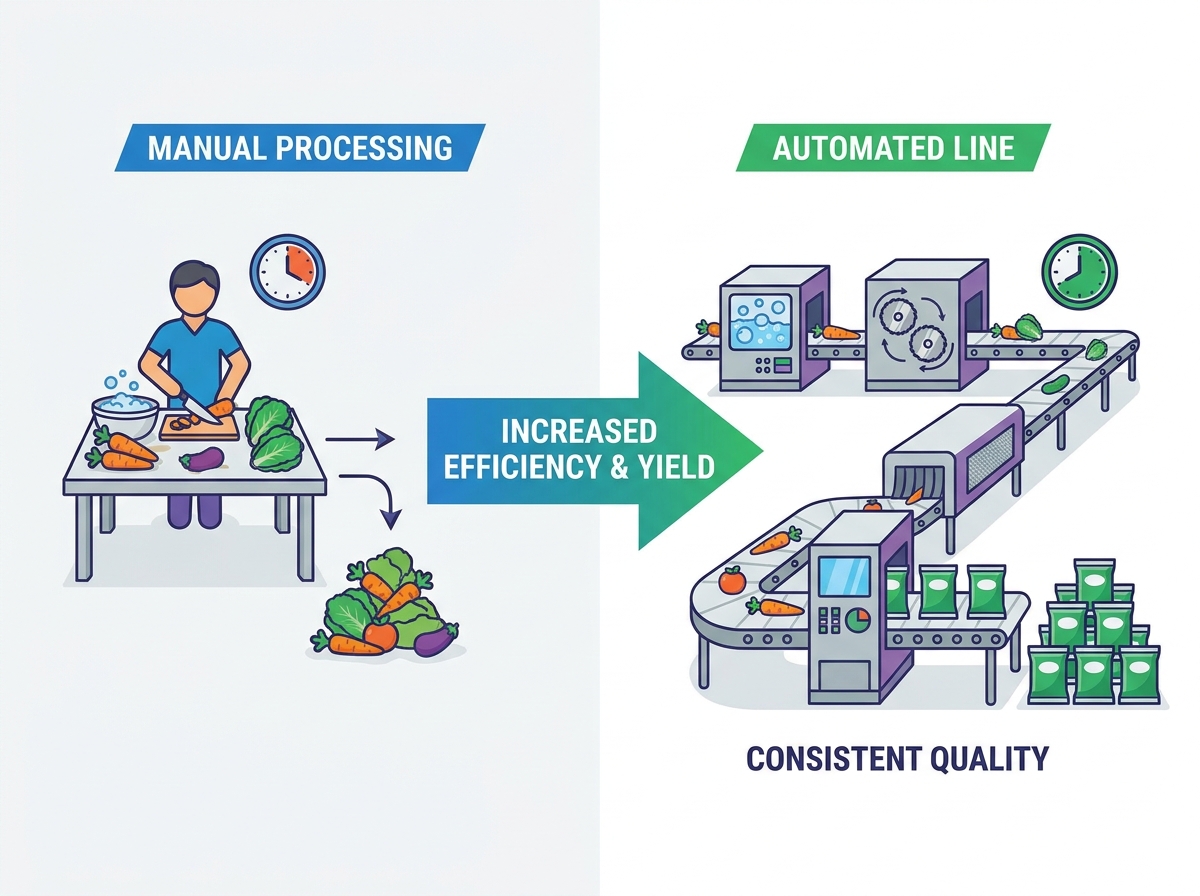
Shifting from manual prep tables to automated lines slashes direct labor. You no longer need dozens of manual cutters filling a cold room. A modern vegetable processing line handles massive volumes efficiently. It easily replaces twenty manual workers with a single continuous stream.
However, you must adjust your operational hiring assumptions. Direct manual labor drops dramatically. You will now require higher-skilled machine operators. Dedicated maintenance technicians become essential. They keep the line running smoothly and prevent mechanical bottlenecks.
Maximized Material Yield
Manual processing always creates wasteful off-cuts. Human cutters naturally produce inconsistent shapes and discard usable chunks. Precision machinery strictly limits this expensive giveaway.
Automated blades maximize the usable portion of every vegetable. Imagine improving your overall material yield by just 3 to 5 percent. Depending on your total processing volume, this translates into massive annual revenue gains. Less raw material goes into the compost bin. More premium product goes into the final package.
Common Yield Loss Areas to Monitor:
- Over-peeling root crops due to dull abrasive rollers.
- Aggressive trimming of leafy green stems.
- Improperly calibrated slicers creating unusable vegetable slivers.
- Inefficient water channels dropping usable scraps into drains.
Consistent Product Quality
Commercial buyers strictly punish inconsistent products. Uniformity holds immense commercial value across the entire industry. Foodservice clients desperately need predictably sized diced roots. Uniform vegetable cubes ensure perfectly even cooking times in restaurant kitchens.
Retail consumers expect visually flawless bags of salad mix. Consistent dimensions convey premium quality and freshness. Automated sorting and cutting deliver this visual perfection every single shift. It builds strong brand trust instantly.
Extended Shelf Life
Human hands introduce harmful bacteria continuously. Physical handling damages delicate plant cell walls during prep. Reducing manual touchpoints naturally protects your raw materials from rapid degradation.
Optimizing your chill and dry times further slows decay. Rapid automated processing inhibits enzymatic browning effectively. It effectively starves microbial growth by removing excess surface water. Ultimately, your fresh-cut products survive several days longer on supermarket shelves.
Navigating Food Safety and Compliance Standards
Hygienic Design Principles
Equipment fabrication materials matter deeply. Processing environments often feature high acidity from tomato juices or high salinity. Standard 304-grade stainless steel works perfectly for general dry areas. You should upgrade to 316-grade stainless for wet, highly corrosive environments.
Design structures must completely eliminate microbial hiding spots. Crevice-free continuous welding is non-negotiable for food zones. Sloped surfaces prevent dangerous water pooling after washdowns. Bacteria cannot multiply if dirty water constantly drains away naturally.
Clean-in-Place (CIP) Capabilities
Sanitation teams need incredibly fast access to internal parts. Evaluate equipment strictly for rapid cleaning accessibility. How quickly can your team strip down the cutting modules?
Transitioning from a cabbage run to an onion run requires thorough cleaning. Difficult-to-clean equipment causes daily operational headaches. It inevitably leads to dangerous cross-contamination or excessively long downtime. CIP systems automate the flushing of internal pipes, saving valuable labor hours.
Audit Readiness
Strict B2B retail buyers audit your facility regularly. You must select processing lines supporting rigorous safety standards natively.
Look for machinery compliant with HACCP principles. FDA and CE certifications remain critical baseline requirements. Built-in sanitation features appease the most demanding safety auditors easily. This readiness protects your lucrative retail contracts from sudden suspension.
Facility Layout and Implementation Realities
Footprint and Workflow
Available floor space dictates your specific line configuration. Linear setups require long, unbroken floor layouts. U-shaped or L-shaped layouts optimize tighter square footage efficiently. They route the product back toward the initial loading dock.
You must physically separate distinct processing zones carefully. "Dirty" zones handle raw receiving and initial soil washing. "Clean" zones manage precision slicing, drying, and final packaging. Strict physical separation prevents disastrous cross-contamination events between unwashed and ready-to-eat foods.
Utility Requirements and Infrastructure
Ignore hidden facility utility costs at your own peril. Evaluate the complete line's total electrical draw carefully before ordering.
Critical Utilities to Verify:
- Electrical Capacity: Ensure your local grid supports multiple high-horsepower motors starting simultaneously.
- Compressed Air: Pneumatic valves and air-knives require massive, continuous airflow.
- Water Supply: Industrial washers consume thousands of gallons daily.
- Floor Drainage: High-volume wash lines dump massive amounts of water quickly. You must verify your wastewater treatment capacity beforehand.
Change Management
New automated machinery disrupts established warehouse routines. Operator training requires dedicated time and financial resources. You must write entirely new Standard Operating Procedures (SOPs) for the floor.
Expect a distinct operational learning curve. Anticipate a 2-4 week adjustment period after installation. Your team needs this buffer before consistently hitting optimal throughput targets. Do not schedule massive production runs during the first week.
Evaluation Framework: Choosing the Right Equipment Partner
Turnkey Solutions vs. Piecemeal Integration
A single-vendor turnkey line ensures beautifully seamless handoffs. The mechanical conveyors and software logic communicate flawlessly out of the box. You deal with one point of contact for troubleshooting.
Mixing different vendors creates complex integration challenges. You may require custom transition conveyors to bridge physical gaps. Programming different Programmable Logic Controllers (PLCs) often requires expensive outside software engineers. Piecemeal setups look cheaper initially but often run over budget.
Testing and Validation (FAT/SAT)
Never skip Factory Acceptance Testing (FAT). Demand the manufacturer test your specific raw materials before shipment. Do not rely on generic produce videos.
Produce behavior varies heavily by geographical region. Starch content, skin toughness, and water retention differ wildly. Testing guarantees the machine handles your exact crop characteristics properly. Site Acceptance Testing (SAT) ensures it still works after shipping and final installation.
Aftermarket Support and Long-Term Viability
A cheaper machine causing constant weekly downtime is a massive net loss. Evaluate the supplier's immediate spare parts availability carefully. Ask where they store their replacement belts and custom blades.
Do they offer remote digital troubleshooting capabilities? Strong warranty terms protect your initial capital investment. Robust aftermarket support ensures your vegetable processing line runs profitably for many years. Partner with manufacturers who view your success as their own.
Conclusion
Transitioning from basic manual prep tables to automated setups represents a massive strategic shift. It upgrades your facility to an engineered production powerhouse. Successful deployment relies equally on robust equipment and rigorous facility planning. Review your structural infrastructure before spending any capital. Excellent machinery fails completely inside poorly planned layouts. Document your target throughput in kilograms per hour today. Measure your facility dimensions precisely. Define your end-product visual specifications clearly. Use this solid data to initiate a productive layout consultation with a trusted manufacturer.
FAQ
Q: How much floor space is required for a commercial vegetable processing line?
A: Floor space ranges widely from 50 to over 300 square meters. It depends entirely on your target capacity and packaging integration needs. Custom U-shaped or L-shaped layouts can expertly optimize particularly tight footprints. Always consult a manufacturer for a 3D layout draft.
Q: Can one processing line handle both leafy greens and root vegetables?
A: Yes, but it heavily requires modularity. Washers can often handle both categories using simple water speed adjustments. However, cutting and peeling modules must be bypassed or physically swapped depending on the specific produce type you run that shift.
Q: What is the typical lead time for installing a turnkey vegetable processing line?
A: You should generally expect a 3 to 6 month lead time. This timeframe stretches from initial layout approval to final Site Acceptance Testing (SAT). It factors in custom equipment manufacturing, international shipping, and necessary facility preparation work.
Q: How do we calculate the ROI of automated vegetable processing equipment?
A: To calculate ROI effectively, add your current manual labor costs, raw material waste costs, and rejected batch costs. Weigh these combined operational savings against the machinery's purchase price, monthly utilities, and routine maintenance over a standard 5-year depreciation schedule.


