Tap water alone struggles against modern agricultural waxes. It fails to remove oil-based pesticides effectively. Rinsing an apple under the faucet removes loose dirt. However, it leaves stubborn hydrophobic layers intact. Commercial chemical washes attempt to solve this problem. Unfortunately, they introduce recurring costs, create plastic waste, and leave potential chemical residue on your plates.
A home fruit cleaning machine offers a tech-driven, zero-additive approach to produce purification. It bridges the gap between basic rinsing and absolute food safety. You no longer have to guess if your produce is truly clean.
This guide bypasses marketing hyperbole to objectively break down the core technologies available today. We examine practical implementation realities and the strict evaluation criteria you need. You will learn how to shortlist the right machine for your household's unique safety needs and daily workflow.
Key Takeaways
- Technology Dictates Efficacy: Hydroxyl water ion technology and ultrasonic cavitation are the current gold standards for balancing chemical breakdown with physical safety; avoid unventilated ozone models.
- Form Factor Equals Adoption: Choose between "drop-in" wireless capsules for sink integration or countertop basins based on your daily volume and kitchen footprint.
- Beware of "100%" Claims: No device removes 100% of pesticides; credible brands cite third-party lab tests demonstrating realistic 90–95% reduction rates.
- Maintenance Matters: A machine that is difficult to clean will harbor bacteria, defeating its primary purpose. Look for IPX7 waterproofing and self-cleaning electrode features.
The Efficacy Gap: Why Water and Chemical Washes Fall Short
Many consumers rely on basic habits to prepare their family meals. We turn on the sink, rub a tomato for a few seconds, and assume it is safe to eat. This outdated approach ignores how modern agriculture operates.
The Limitation of Mechanical Rinsing
Standard tap water easily removes loose dirt and water-soluble compounds. It does a fine job clearing away visible garden soil. However, it completely fails to penetrate hydrophobic agricultural waxes. Farmers apply these water-resistant waxes to apples, cucumbers, and citrus fruits to extend shelf life. These wax layers trap stubborn pesticide residues underneath. Water simply rolls off the surface. It leaves the hidden chemical layers entirely untouched.
The Problem with Liquid Produce Washes
Many shoppers turn to bottled liquid produce washes to combat these waxes. This introduces a new set of problems. Independent consumer testing frequently shows disappointing results. Bottled washes often offer negligible improvements over standard tap water.
Furthermore, these chemical liquids leave behind surface-active agents. These agents can soak into porous skins and alter the delicate flavor profiles of berries or mushrooms. Liquid washes also fail the eco-friendly test entirely. You must repeatedly buy them in single-use plastic bottles, generating ongoing waste for your household.
The ROI of Automation
Integrating a dedicated device into your kitchen solves these issues fundamentally. It shifts produce hygiene from an ongoing consumable expense to a one-time hardware investment. You standardize safety across every meal. You eliminate recurring chemical costs entirely. Automated purification gives you peace of mind without requiring you to restock plastic bottles every month.
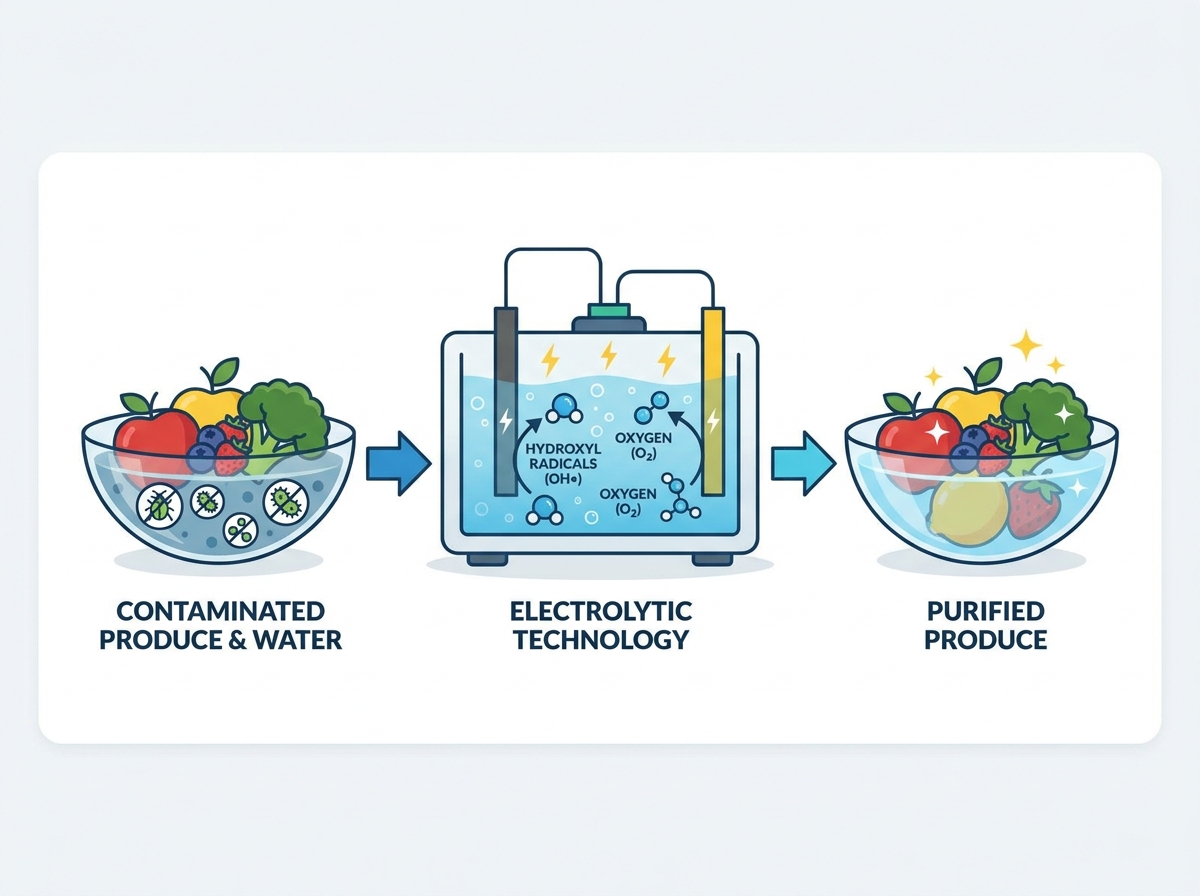
Core Technologies: Evaluating the Purification Engine
Not all purification devices operate equally. Manufacturers use distinct scientific principles to achieve clean produce. Understanding these core technologies helps you separate effective tools from expensive gimmicks.
Electrolytic / Hydroxyl Ion Technology
This is currently the most advanced and safest method available for home use. The machine uses electricity to split standard tap water molecules.
How it works: The device converts water into highly reactive hydroxyl radicals. These radicals aggressively seek out organic compounds. They break down the molecular structure of pesticides, herbicides, and harmful bacteria. They neutralize the chemical bonds entirely.
Verdict: We highly recommend this technology. It leaves zero residue behind. It requires absolutely no chemical additives. Once the cycle finishes, the hydroxyl radicals revert safely back into harmless water and oxygen.
Ultrasonic Cavitation
Ultrasonic tech borrows principles from medical and jewelry cleaning fields. It provides exceptional physical cleaning power for complex surfaces.
How it works: The device generates high-frequency sound waves inside the water bath. These waves create millions of microscopic bubbles. The bubbles implode rapidly. This implosion blasts physical particulates, microscopic dirt, and wax out of tight crevices. It works exceptionally well for textured items like strawberries, raspberries, and broccoli florets.
Verdict: This technology is excellent for physical cleaning. It performs best when manufacturers combine it with hydroxyl technology for complete chemical neutralization.
Ozone (O3) Generators
Ozone is a powerful oxidizing agent. Many older or industrial machines rely on it to sanitize food.
How it works: The machine pumps ozone gas directly into the water bath. The gas oxidizes contaminants on contact, destroying bacterial cell walls and degrading chemicals.
Risk Assessment: Ozone presents specific household risks. Ozone off-gassing can escape the water bath. It acts as a severe respiratory irritant in poorly ventilated kitchens. We recommend ozone models only if the unit is fully sealed. The device must feature robust safety shut-offs to prevent gas leaks into your breathing space.
Produce Purification Technologies Comparison
| Technology | Primary Mechanism | Best Application | Safety & Residue Risk |
| Hydroxyl Ion | Electrolytic molecular breakdown | Neutralizing pesticides and bacteria | Extremely safe; reverts to water/oxygen |
| Ultrasonic | High-frequency bubble cavitation | Removing dirt from crevices (berries, broccoli) | Very safe; purely physical cleaning |
| Ozone (O3) | Oxidation via gas injection | Heavy-duty bacterial sanitization | Moderate risk; requires excellent ventilation |
Functional Criteria: Shortlisting by Design and Capacity
Selecting the right engine is only the first step. The physical design of the device determines how often you will actually use it. If a machine feels cumbersome, it will sit unused in a cabinet. You must evaluate form factor, materials, and power.
Form Factor: Wireless Capsules vs. Integrated Basins
Your kitchen size and meal prep habits should dictate the physical style you choose.
Wireless Capsules (Drop-ins): These are compact, puck-shaped devices. They are highly scalable. You simply fill your own sink or a large bowl, drop the capsule in, and turn it on. They are ideal for small kitchens because they require minimal storage space. They easily accommodate varying batch sizes. However, you must remember to recharge them regularly.
Integrated Basins: These are all-in-one countertop units. They resemble a specialized salad spinner or a small washing machine. They perform better for consistent, high-volume prep. Families who wash large batches of produce daily benefit most from basins. Keep in mind they take up permanent counter space. They often require manual filling and draining, unless you connect a dedicated water line.
Material Safety & Build Quality
The internal components sit directly in the water containing your food. Material safety is non-negotiable.
- Electrode Materials: Require food-grade titanium or high-quality stainless steel for the electrolytic generators. Cheap metals will rust over time. They can leach heavy metals into your purified water.
- Housing Plastics: Verify the manufacturer uses BPA-free plastics for any housing part touching the produce.
- Structural Integrity: The casing must resist cracking under daily thermal expansion from varying water temperatures.
Power and IPX Waterproofing
Water and electricity demand strict safety standards. This is especially true for battery-operated drop-in units.
Ensure a strict IPX7 waterproof rating for wireless units. This rating guarantees the device can survive full submersion without battery short-circuits. Next, evaluate the battery cycle limits. Check how many 10-minute cycles the device can perform per charge. A machine offering only two cycles per charge will frustrate a user who preps meals for a large family. Ensure the battery capacity aligns with your weekly meal prep volume.
E-E-A-T and Red Flags: Navigating Exaggerated Claims
The wellness appliance market frequently exaggerates capabilities. You must apply strict scrutiny to marketing claims. Look for verifiable data over emotional promises.
Debunking the "100% Pure" Myth
Dismiss any brand claiming absolute eradication of agricultural chemicals. No device removes 100% of pesticides. Science simply does not support absolute zero in home environments.
Credible manufacturers behave differently. They provide transparent reporting. They claim realistic 90%+ degradation rates. They often name specific common pesticides in their data, such as chlorpyrifos or dichlorvos. Balanced claims indicate a trustworthy brand.
Demand Independent Verification
Do not trust in-house testing alone. Legitimate machines will provide accessible, verifiable testing reports. They source these from recognized compliance labs.
- Look for SGS testing certificates.
- Verify FDA-compliant material certifications for the plastics and metals.
- Check for ISO-certified manufacturing facility badges.
If a brand hides its lab reports or ignores requests for documentation, move on to a competitor.
Eco-Friendly Washing Claims
Many brands slap an "eco-friendly" label on their packaging. You must validate this marketing by assessing the actual mechanics.
Evaluate the water-to-produce ratio required for the machine to operate effectively. If a basin model requires three gallons of water to wash a single apple, it fails the sustainability test. Furthermore, check its power draw. Efficient electrolytic models use minimal electricity compared to industrial heating elements. True eco-friendliness balances water conservation, low power usage, and the elimination of chemical plastic bottles.
Workflow Integration and Maintenance Realities
Even the best machine requires practical handling. Understanding the daily workflow ensures your hardware remains sanitary and functional for years.
The Pre-Rinse Requirement
A fruit cleaning machine is not a garbage disposal. You cannot throw mud-caked potatoes directly into the purifier. Heavy mud or bulk debris will quickly clog the delicate titanium electrodes.
You must manually rinse off root vegetables first. Remove visible clumps of garden soil under the tap. Once the bulk dirt is gone, transfer the produce into the machine. Let the device handle the microscopic threats, waxes, and chemicals.
Device Maintenance Protocols
Neglected machines harbor bacteria. This entirely defeats their primary purpose. You must commit to simple but vital maintenance steps.
- Descaling: Mineral buildup from hard water inevitably coats the internal plates. This white crust reduces electrolytic efficiency significantly. Ensure the manufacturer provides clear guidelines on safe descaling. Most require a simple soak using mild citric acid or white vinegar every few weeks.
- Drying: Devices must be thoroughly dried between uses. Never toss a wet wireless capsule into a dark, warm drawer. Moisture trapped inside the electrode casing promotes dangerous mold growth. Stand it upright in a well-ventilated area.
- Visual Inspections: Check the charging ports weekly to ensure no water has bypassed the waterproof seals.
Next-Step Action
Audit your daily kitchen routine right now. Observe how you handle vegetables tonight.
If you wash produce in small, frequent batches while cooking, prioritize a fast-charging wireless capsule. It adapts to quick tasks seamlessly. Conversely, if you bulk-prep all your weekly salads on Sunday afternoon, evaluate a higher-capacity countertop basin. Match the tool to your established habits to guarantee long-term adoption.
Conclusion
Upgrading your kitchen with modern purification technology is a measurable step toward better household food safety. However, success depends entirely on selecting technology backed by science rather than marketing fluff.
To ensure you make a smart investment, keep these final action steps in mind:
- Focus exclusively on electrolytic or ultrasonic models to avoid respiratory risks.
- Demand transparent lab data proving 90%+ pesticide degradation.
- Verify robust IPX7 waterproofing to protect your investment.
- Choose a form factor that removes friction from your daily kitchen workflow.
By applying these strict criteria, you protect your family from hidden agricultural chemicals while streamlining your meal preparation process.
FAQ
Q: Can a fruit cleaning machine completely replace vegetable brushes?
A: No. While ultrasonic models excel at removing wax and microscopic dirt, they cannot handle heavy bulk soil. Heavily soiled root vegetables like potatoes or farm-fresh carrots still require a physical brush. You must remove embedded soil before relying on chemical purification.
Q: Does electrolytic water alter the taste or texture of berries and delicate fruits?
A: Unlike chemical washes, electrolytic technology degrades directly into standard water and oxygen post-cycle. It leaves zero residual chemicals behind. As a result, you will experience absolutely no taste or texture changes on delicate items like raspberries.
Q: How long do the titanium plates or internal components last?
A: Quality machines utilize aerospace-grade titanium. These components typically last 3 to 5 years under normal household use. To achieve this lifespan, you must regularly descale the unit and keep the internal plates free of hard water mineral buildup.


