Commercial kitchens and food processing facilities face intense dual pressures today. Rising labor costs squeeze profit margins tighter every quarter. Simultaneously, food safety compliance standards like HACCP and FDA regulations grow stricter annually.
The current market is heavily flooded with equipment making wildly unverifiable claims. Manufacturers frequently exaggerate pesticide removal rates and daily throughput numbers. This noise makes it incredibly difficult to separate premium machinery from poorly built alternatives.
This comprehensive guide bypasses the usual marketing fluff. We provide an evidence-based framework to help you evaluate, shortlist, and ultimately select the perfect vegetable cleaning machine. You will learn to make decisions based on operational realities and verified food safety standards.
Key Takeaways
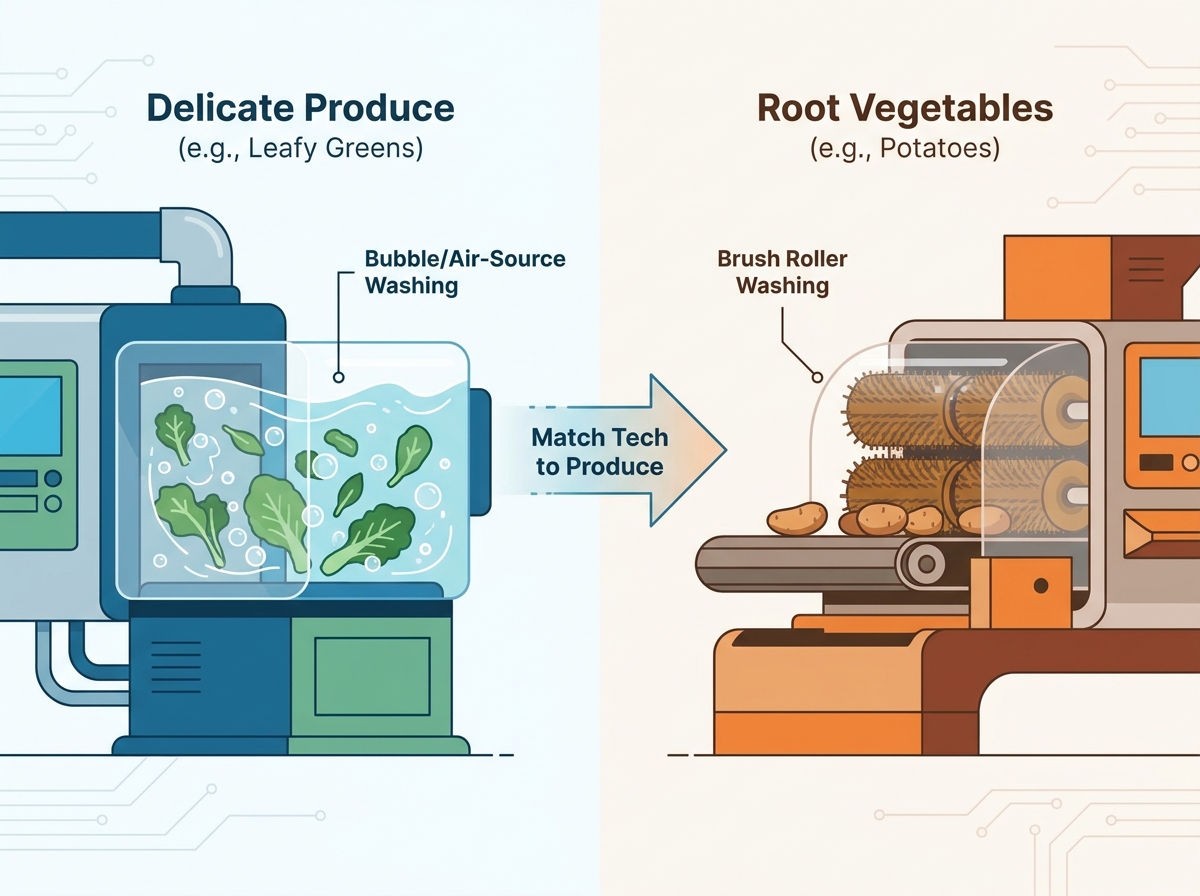
- Match tech to produce: Delicate leafy greens require bubble/air-source washing, while root vegetables need brush roller systems.
- Look beyond theoretical capacity: Assess "operational throughput" factoring in loading, unloading, and water changeover times.
- Prioritize sanitization: Equipment must be constructed of food-grade 304 or 316 stainless steel with accessible drainage and no dead corners to prevent bacterial harborage.
- Factor in implementation: True ROI includes installation facility requirements (drainage, power), water consumption rates, and daily cleaning labor.
Assessing Your Facility’s True Needs and Bottlenecks
Stop guessing your equipment needs. You must audit your current processing environment thoroughly before contacting vendors. An accurate baseline prevents expensive purchasing mistakes.
Define Success Criteria
Identify your primary operational goal first. Are you trying to reduce manual prep time? Do you want to standardize wash consistency across multiple shifts? Or do you need to increase overall daily volume? Clear goals drive smart purchases. A facility aiming to cut labor hours needs high automation. Conversely, a boutique kitchen might prioritize gentle handling over sheer speed.
Volume vs. Footprint
Space is incredibly valuable in commercial kitchens. Calculate your required hourly throughput in pounds or kilograms. Compare this target number against your actual available square footage. Remember to account for human operators standing nearby. You also need dedicated space for intake bins and outtake conveyors.
Common Mistake: Buyers often measure only the machine dimensions. They forget to leave clearance for maintenance access and daily wash-down procedures.
Produce Diversity
Categorize your most frequently handled produce carefully. Root vegetables covered in heavy clay soil demand aggressive treatment. Fragile herbs require a completely different approach. A machine optimized for scrubbing potatoes will completely destroy delicate spinach leaves. If you process both categories, you might need two separate modular units.
Water and Drainage Realities
Evaluate your existing facility infrastructure immediately. High-capacity commercial washers demand industrial-grade floor trenches. They also require specific minimum water pressures to operate efficiently. Older kitchens frequently lack these critical plumbing upgrades. Pumping hundreds of gallons through an inadequate drain causes immediate flooding.
Core Technologies: Matching the Method to the Produce
Understanding the underlying mechanics of different washing systems is crucial. You cannot apply a one-size-fits-all approach to agricultural products. The physical structure of your crop dictates the required technology.
Produce Washing Technology Comparison Chart
| Technology Type | Primary Mechanism | Best Suited For | Major Limitations |
| Air Bubble / Surf | High-pressure air agitation | Leafy greens, berries, tomatoes | Cannot remove heavy, caked mud |
| Brush Roller | Abrasive nylon friction | Potatoes, carrots, ginger | Damages thin-skinned items |
| Ultrasonic & Ozone | Sound waves and gas injection | Reducing surface pathogens | Requires precise chemical monitoring |
Air Bubble/Surf Washing
This method utilizes high-pressure air blown through submerged pipes. The air creates a tumbling, surf-like water effect. This turbulent action gently dislodges dirt from complex surfaces.
Best for: You should use this technology for leafy greens, berries, tomatoes, and similar delicate items. It prevents bruising while ensuring thorough coverage.
Limitations: It remains largely ineffective against heavily caked mud on root vegetables. The bubbles simply lack the abrasive force needed to break apart dried clay.
Brush Roller Washing
Abrasive, rotating nylon brushes physically scrub the produce. The items roll forward continuously along a bed of spinning cylinders. Operators can usually adjust the stiffness of the bristles.
Best for: This technology excels at cleaning potatoes, carrots, and ginger. Use it for root vegetables requiring peeling or heavy soil removal. Harder bristles can even remove outer skins entirely.
Limitations: You face a high risk of bruising thin-skinned produce. This aggressive mechanism will easily shred fragile greens or crush ripe tomatoes.
Ultrasonic and Ozone Integration
The system uses high-frequency sound waves to create microscopic cavitation bubbles. These bubbles implode, safely dislodging microscopic dirt particles. The system also utilizes ozone gas injection for deep sanitization.
Reality Check: This method effectively reduces surface pathogens and lowers chemical residues. However, skeptical buyers should always request third-party lab verification. Do not blindly accept absolute "100% elimination" claims from overzealous manufacturers. Ozone also requires proper ventilation to protect your staff from off-gassing.
Key Evaluation Criteria: What to Look for in a Vegetable Cleaning Machine
Evaluating hardware requires looking past the shiny exterior. You must inspect the structural integrity and the internal components. We recommend using the following criteria during your vendor evaluations.
- Material Quality & Build: Accept nothing less than SUS304 or SUS316 stainless steel. You must verify the weld quality visually. Smooth, continuous welds effectively prevent bacterial buildup. Cheap spot-welding leaves microscopic gaps where dangerous pathogens thrive.
- Water Filtration and Recycling Systems: High-end models feature secondary filtration tanks. These integrated tanks capture floating debris and recirculate clean water back into the main tub. This feature is absolutely critical for controlling utility bills in high-volume processing settings.
- Motor and Drive Components: Look specifically for variable frequency drives (VFDs). You need the ability to adjust belt and brush speeds dynamically. This flexibility becomes essential when switching between different types of seasonal produce. Ask for IP65 or IP67 washdown-rated motors to ensure water resistance.
- Ease of Disassembly (The Cleanability Factor): The machine itself must be exceptionally easy to clean. Look for clever tool-less removal designs. Belts, filter screens, and spray nozzles should pop off quickly. If it takes your staff two hours to clean the unit, your daily labor savings disappear completely.
- Compliance and Safety: Ensure the equipment meets all regional safety certifications. Look for CE, UL, NSF, or local health department equivalents. The machine must also feature highly visible emergency stop mechanisms positioned within easy reach of the operator.
Implementation Realities and Hidden Bottlenecks
Buying the machine represents only the first step. Integrating it into your daily production line reveals the true operational challenges. Prepare your team for these real-world implementation hurdles.
- The "Theoretical vs. Actual" Capacity Trap: Manufacturers frequently quote theoretical maximum capacities based on perfect conditions. You should de-rate these optimistic figures by 20 to 30 percent. Real-world operations involve physical loading times. You also lose production minutes during shift changes and water cycling.
- Maintenance Overhead: Conveyor belts, spray nozzles, and nylon brushes act as consumable parts. They wear out regularly under heavy use. Always ask vendors about replacement part availability. Inquire about shipping lead times. Check whether parts are proprietary or universally sourced from local hardware suppliers.
- Operator Training: Moving from manual washing to automated lines fundamentally changes your workflow. This transition requires specific, documented training. Staff must understand proper chemical dosing if you use sanitizers in the wash water. They must master load balancing to prevent physical jams.
- Cross-Contamination Risks: Improperly maintained filtration systems pose massive dangers to consumers. Inadequate daily cleaning protocols create similar hazards. These daily failures can easily turn a premium washing unit into a dangerous bacterial vector. Strict hygiene protocols remain entirely non-negotiable.
Best Practice: Implement a standardized daily breakdown checklist. Require your shift managers to sign off on the cleanliness of the machine before powering it down for the night. This creates accountability.
Shortlisting Vendors and Making Your Final Decision
Navigating the final purchasing phase requires diligence. You are buying a long-term partnership, not just a piece of metal. Protect your investment by holding vendors to high verification standards.
Requesting Proof of Concept
Do not buy equipment blindly based on brochures. For any significant investment, request specific video demonstrations first. Ask the manufacturer to process your exact type of produce. Ensure they replicate your typical soil levels during the test. A reputable vendor will happily perform a Factory Acceptance Test (FAT) on camera.
Evaluating Vendor Support
Prioritize manufacturers or distributors offering clear, written warranty terms. You want highly responsive technical support teams in your time zone. Demand transparent Service Level Agreements (SLAs) before signing any contract. Ask them specifically how quickly they can dispatch a technician if the machine goes down during your peak season.
Assessing Long-Term Modularity
Look for systems offering modular upgrades. Your business will likely grow over the next few years. A modular design allows you to add an extra air-drying conveyor later. You might also want to attach an automated sorting table. Buying adaptable equipment prevents you from outgrowing the machine too quickly.
Conclusion
Buying the right equipment is an exercise in careful balancing. You must weigh your daily throughput needs against your available footprint, primary produce type, and facility infrastructure.
The most expensive machine isn't always the right fit for your floor. The best choice is the one solving your specific operational bottleneck. It should streamline your workflow without introducing new maintenance nightmares for your staff.
Next Steps: Conduct a thorough site audit of your floor space and drainage capacity today. Once you have those measurements, contact a technical sales representative. Discuss a custom equipment specification based entirely on your verified daily volume.
FAQ
Q: Do vegetable cleaning machines completely remove pesticides?
A: No machine can claim 100% removal. Machines utilizing ozone or ultrasonic features can significantly reduce surface-level pesticide residues and bacteria. However, they cannot remove systemic chemicals absorbed deeply into the plant tissue itself.
Q: Can one machine handle both root vegetables and delicate leafy greens?
A: Generally, no. Root vegetables require abrasive brush rollers, which will quickly destroy leafy greens. Some modular hybrid systems exist. However, most facilities opt for a bubble washer for greens and a separate brush washer for roots to ensure maximum quality.
Q: How much water does a commercial vegetable washer use?
A: Consumption varies wildly by operational scale. However, premium machines feature built-in water filtration and recirculation systems. These smart recycling features can reduce overall water usage by up to 50% compared to traditional continuous-flow tap washing methods.
Q: What is the daily maintenance requirement?
A: Operators must drain the tanks completely. They need to remove and rinse the filtration screens thoroughly. Staff must also sanitize the internal tub daily to prevent bacterial harborage and comply with local food safety standards.


