
Views: 0 Author: Site Editor Publish Time: 2026-08-05 Origin: Site


Social media platforms constantly highlight the latest kitchen gadgets. You have likely seen videos of bubbling water purifying berries on TikTok or Instagram. You watch dark, murky water drain away, leaving seemingly pristine produce behind. Naturally, this heavy hype triggers immediate consumer skepticism. We all want to reduce our daily exposure to agricultural pesticides. We also want to eliminate foodborne bacteria from our family meals. However, you might wonder if buying a dedicated electronic device truly provides an upgrade. Does it beat traditional hand washing? Separating genuine health benefits from clever marketing requires a closer look at the facts. This article provides an objective, evidence-based evaluation of these devices. We explore the pros, cons, and scientific realities. We aim to help you assess the practical value for your household. You will gain clarity to make a confident, informed purchasing decision.
Every food safety discussion must begin by establishing a practical baseline. The FDA and the USDA consistently recommend running tap water. They advise consumers to gently rub produce under a steady stream. This straightforward action effectively removes superficial dirt. It also dislodges a significant majority of loose surface bacteria. However, this baseline relies heavily on mechanical friction. You must physically agitate the surface to clean it properly.
This reality exposes a significant gap in traditional washing methods. You cannot easily scrub fragile produce. Raspberries crush under minimal pressure. Broccoli florets contain hundreds of tight, microscopic crevices. Your fingers cannot physically reach into these hidden areas during a quick rinse. Furthermore, agricultural scientists engineer modern pesticides for durability. They formulate these chemicals to bind tightly to crop surfaces. This waterproof engineering prevents heavy rain from washing away the protective chemical layer. Naturally, your kitchen sink water struggles against this exact same waterproof barrier. Tap water simply rolls off the stubborn residue.
We must define clear success criteria to determine if purchasing an electronic device is truly worth your time. A high-quality device must meet three specific benchmarks:
Understanding the underlying technology helps separate marketing fiction from scientific reality. When you drop a fruit cleaning machine into a bowl of water, it relies on complex physiochemical processes rather than magic.
Most premium devices utilize a process called electrolysis. The machine features titanium grids housed inside the base. When activated, these grids pass a low-voltage electrical current through the surrounding tap water. This current splits the water molecules (H2O) into hydrogen ions (H+) and hydroxyl radicals (OH-).
These newly formed hydroxyl radicals are highly reactive. They immediately seek out organic compounds in the water. When they encounter bacteria or pesticide molecules, they steal electrons from them. This electron theft physically destroys the cellular walls of bacteria. It also breaks down the complex molecular structures of surface agricultural chemicals. They degrade into harmless substances like water and basic mineral salts.
However, we must clarify a critical limitation. Hydroxyl technology acts strictly on exposed organic compounds. It is not a magic eraser. Commercial growers often coat apples and cucumbers in food-grade wax. This heavy wax layer blocks the hydroxyl ions from reaching the trapped chemicals underneath.
Some devices incorporate ultrasonic technology. This mechanism relies on high-frequency sound waves traveling through the liquid medium. These invisible waves create thousands of microscopic vacuum bubbles. The bubbles expand rapidly and then violently collapse. Engineers call this process cavitation.
The collapsing bubbles produce microscopic shockwaves. These shockwaves act as tiny, invisible scrubbers. They gently dislodge stubborn dirt and microscopic bug eggs from delicate surfaces. They clean soft berry skins perfectly without causing physical bruising.
Lab tests frequently show impressive efficacy rates. Clinical environments often report 90% or higher pesticide degradation. However, your kitchen is not a controlled laboratory. Real-world results vary wildly. Efficacy drops if you use too much water. It also drops if you run a cycle for too short a time.
Best Practice: Never overcrowd your soaking bowl. The active ions need space to circulate around every piece of produce. Leave plenty of room for the water to move freely to maximize chemical breakdown.
You must weigh the practical benefits against the daily implementation realities. The true value of a fruit cleaning machine lies in workflow optimization.
Hands-Free Convenience: A machine automates the tedious soaking and scrubbing process. You simply drop the device into the bowl, turn it on, and walk away. This saves you active preparation time. You can chop other vegetables or prepare proteins while the machine handles the produce.
Gentle on Delicate Produce: Hand-scrubbing soft berries often ruins them. Raspberries and strawberries turn into mush under heavy faucet pressure. A machine cleans these fragile items effectively. It removes hidden dirt without causing physical damage.
Extended Shelf Life: Mold spores ruin expensive berries rapidly. Users frequently report their produce lasting significantly longer in the fridge post-purification. The machine destroys the invisible mold spores clinging to the fruit skins. This drastically reduces spoilage and food waste.
Time Investment: Automation saves physical labor, but it slows down immediate consumption. A standard cleaning cycle typically takes 10 to 15 minutes. If you want a quick apple for a snack, waiting 15 minutes feels frustrating.
Form Factor and Upkeep: Adding another appliance requires counter space. You must regularly charge the device. Furthermore, you must perform occasional deep cleaning. Mineral deposits from hard water build up on the titanium generator grids. You must soak the device in vinegar monthly to maintain peak performance.
False Sense of Security: This represents the biggest consumer misconception. Machines only treat the exterior surface. They do not neutralize systemic pesticides. Farmers apply systemic chemicals to the soil. The plant roots absorb them, distributing the chemicals directly into the flesh of the fruit during growth. No surface wash can remove chemicals hiding inside the fruit.
You do not strictly need a dedicated electronic device to clean produce thoroughly. You can achieve highly comparable results using common household pantry staples.
Baking Soda (Sodium Bicarbonate): Scientific literature heavily supports baking soda. A widely cited agricultural study demonstrated that an alkaline baking soda solution degrades certain contact pesticides highly effectively. However, it requires precise execution. You must measure the powder accurately. You must soak the produce for at least 12 to 15 minutes. Most importantly, you must rinse the fruit exceptionally well afterward. Any leftover residue leaves an unpleasant, chalky taste.
Vinegar Solutions: White vinegar serves as an excellent natural antibacterial agent. The high acidity kills many common foodborne pathogens. It also excels at reducing mold spores. However, vinegar proves less effective against specific complex pesticide classes. Additionally, porous fruits like strawberries absorb the vinegar easily. If you fail to rinse them properly, they carry an acidic aftertaste.
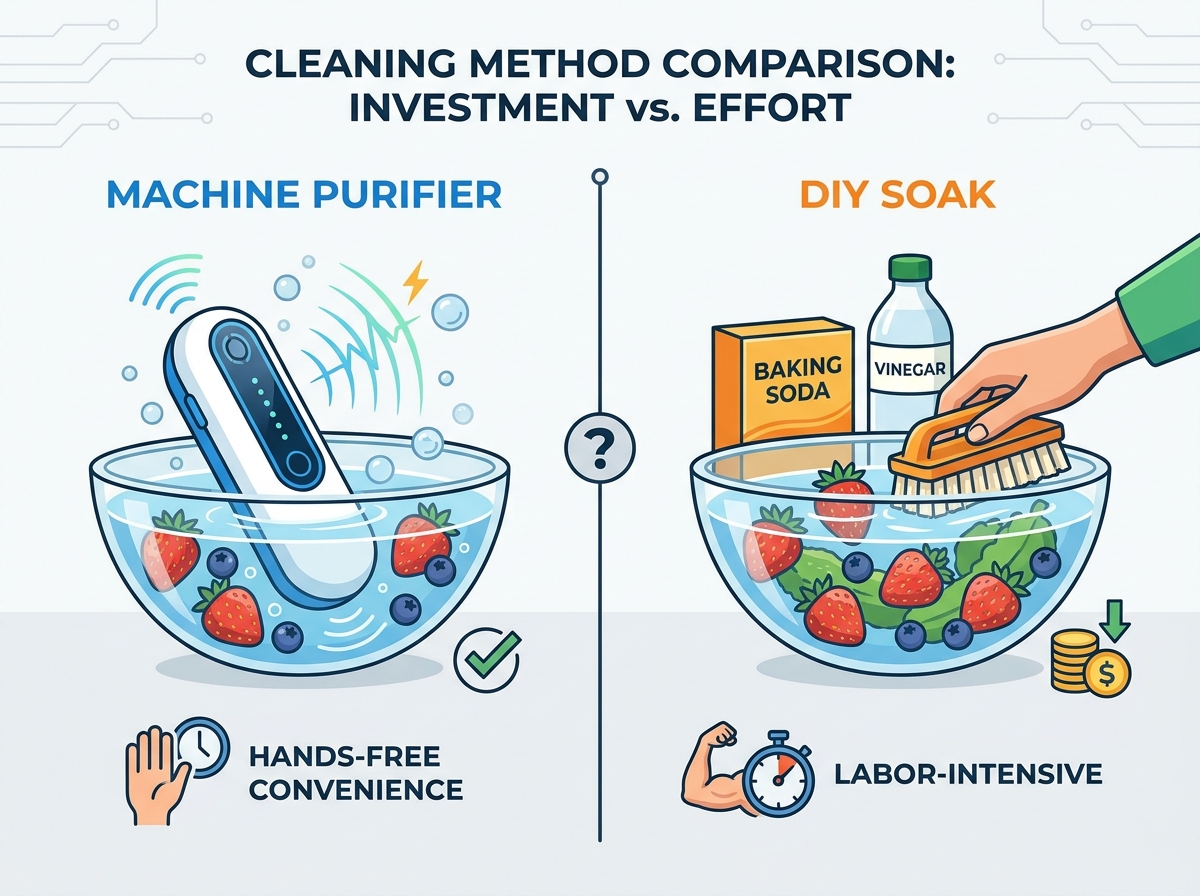
The Verdict: Machines win on recurring convenience and neutral taste. You push one button and walk away. DIY methods win entirely on upfront accessibility.
| Cleaning Method | Primary Mechanism | Preparation Required | Potential Taste Impact |
|---|---|---|---|
| Electronic Machine | Hydroxyl Ions / Cavitation | None (Push button operation) | Zero chemical aftertaste |
| Baking Soda Soak | Alkaline Degradation | High (Measuring and mixing) | Chalky if poorly rinsed |
| Vinegar Solution | Acidic Pathogen Reduction | Medium (Ratio mixing) | Sour/acidic if poorly rinsed |
| Tap Water Only | Mechanical Friction | Low (Active scrubbing required) | None |
Before purchasing, you must honestly assess your daily kitchen habits. These devices fit perfectly into some households while gathering dust in others.
If you decide to integrate a fruit cleaning machine into your routine, avoid cheap knockoffs. The internal components dictate the lifespan of the device. Pay close attention to these three specifications.
Generator Material: Look specifically for aerospace-grade titanium grids. The electrolysis process places immense stress on the metal. Cheap steel grids rust and degrade rapidly when submerged repeatedly. Titanium resists degradation perfectly.
Battery Life and Charging: Opt for magnetic charging interfaces. Open USB ports inevitably fail when exposed to water constantly. A premium magnetic connection ensures longevity. Look for units offering at least 20 to 30 cleaning cycles per single charge to avoid daily frustration.
IPX Waterproof Rating: This remains non-negotiable. The device must carry an IPX7 rating or higher. This specific certification guarantees the motor, battery, and internal wiring remain fully protected during total submersion. Lower ratings risk dangerous short circuits.
A dedicated fruit cleaner is not a strict biological necessity for a healthy kitchen. However, it functions as a highly convenient luxury appliance. It legitimately upgrades kitchen workflow for produce-heavy households. It effectively reduces surface contaminants, extends the shelf life of fragile berries, and eliminates the need for tedious manual scrubbing.
Your next step requires an honest lifestyle assessment. Review your weekly grocery receipts. Estimate how much you spend on delicate produce. Calculate how much time you currently spend standing over the sink washing greens. If the hands-free convenience reduces your daily meal prep friction, investing in a high-quality unit makes practical sense.
A: No. Commercial wax requires warm water and physical friction (a produce brush) to remove. Machines only clean the surface of the wax.
A: Yes, many hydroxyl machines degrade hormones and bacteria on raw meat, but you must strictly sanitize the device itself after this use to prevent cross-contamination.
A: No. Unlike vinegar or commercial produce wash liquids, hydroxyl ion machines only use water and leave zero chemical aftertaste.


