Consumers increasingly worry about pesticide residue and harmful bacteria lurking on their fresh produce. However, many buyers remain rightfully skeptical of gadget-heavy kitchen solutions. Nobody wants another bulky appliance gathering dust on the counter. We need to frame this debate clearly. Think about traditional washing methods, like standard running water or baking soda soaks. How do they stack up against the rising popularity of a dedicated vegetable cleaning machine? This article will separate scientifically backed benefits from exaggerated marketing claims. We will explore the exact technology powering these devices. You will learn what they can realistically wash away. By the end, you can determine if this appliance offers a genuine return on your investment in household health and daily prep workflow.
Key Takeaways
- Vegetable cleaning machines utilize distinct technologies (ultrasonic, hydroxyl/electrolysis, ozone) with varying degrees of proven efficacy.
- They excel at cleaning hard-to-wash produce (berries, broccoli) and saving active prep time, but do not achieve the "100% pesticide removal" often claimed by manufacturers.
- DIY methods (like baking soda soaks) are highly effective and free, meaning a machine's true value lies in workflow automation and specific contaminant targeting rather than exclusive cleaning power.
- Investment justification depends heavily on household produce consumption volume, immunocompromised considerations, and available counter space.
The Contaminant Problem: What Are We Actually Trying to Wash Away?
Every apple, spinach leaf, and berry travels a long road before reaching your kitchen. During this journey, produce collects numerous unwanted elements. Before we evaluate any cleaning technology, we must define the baseline threats. We can generally categorize these contaminants into four main groups.
- Surface Dirt and Debris: This includes soil, sand, and tiny insects. These elements hide deep inside leafy greens and complex vegetables like broccoli.
- Wax Coatings: Growers often apply food-grade wax to apples and cucumbers. This wax preserves moisture and improves visual appeal. However, it can trap environmental contaminants underneath.
- Agricultural Chemicals: Farmers use pesticides to protect crops. We must distinguish between water-soluble pesticides (which rest on the skin) and systemic pesticides (which the plant absorbs through its roots).
- Pathogens: Dangerous bacteria like E. coli, Salmonella, and Listeria contaminate produce during harvesting, packing, or transport. They pose serious foodborne illness risks.
Most households rely entirely on tap water to handle these threats. Scientific consensus shows standard rinsing does help. Running water successfully removes most loose dirt. It also washes away a fair portion of water-soluble pesticides. However, cold tap water severely struggles elsewhere. It cannot dissolve wax-trapped chemicals. It also fails to penetrate the microscopic crevices of complex produce structures where bacteria hide.
This establishes our success criteria for any cleaning appliance. A worthwhile machine must measurably outperform a standard two-minute soak and rinse. It must either deliver superior contaminant removal efficacy, or it must offer undeniable time-saving convenience. If an appliance fails both tests, it belongs back on the store shelf.
How a Vegetable Cleaning Machine Actually Works (Decoding the Tech)
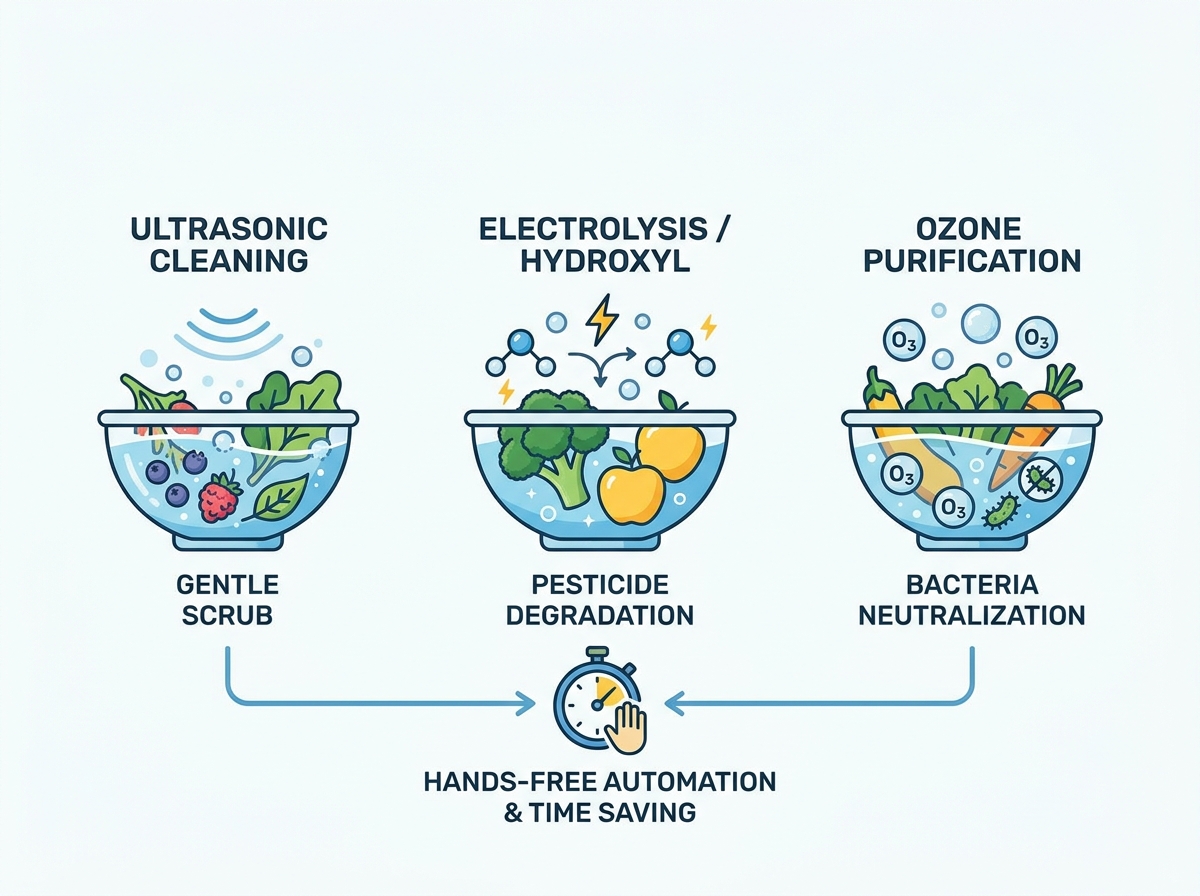
Manufacturers throw a lot of scientific jargon at consumers. Words like "cavitation" and "hydroxyl radicals" often confuse buyers. We need to decode this technology. Most devices on the market use one of three distinct mechanisms. Some premium models combine two for better results.
Ultrasonic Cleaning
Ultrasonic technology relies on high-frequency sound waves. The machine sends these waves through the water basin. This action creates microscopic cavitation bubbles. These bubbles rapidly expand and collapse against the surface of your food. This process acts like a microscopic scrubbing brush.
The reality check here is highly practical. Ultrasonic cleaning is excellent for removing stubborn dirt. It easily dislodges tiny bugs trapped inside leafy greens or delicate berries. It performs this physical scrubbing without damaging the food. However, it has very little impact on chemical breakdown. Sound waves cannot neutralize pesticides or kill pathogens effectively on their own.
Electrolysis / Hydroxyl Water Ionizers
This technology sounds complicated, but it uses basic chemistry. The device uses electricity to split water molecules. This splitting creates highly reactive oxidizing agents, primarily hydroxyl radicals. These agents actively seek out and degrade organic compounds in the water.
Science supports this mechanism. Studies prove hydroxyl radicals successfully degrade certain surface pesticides. They break complex chemical rings into harmless elements. However, effectiveness varies significantly by chemical type. Some pesticides degrade rapidly, while others resist oxidation. You cannot expect a universal 100% removal rate.
Ozone Purifiers
Ozone machines actively infuse the water basin with ozone gas (O3). Ozone is a powerful, naturally occurring oxidant. When infused into water, it aggressively attacks bacteria cell walls. It also neutralizes many lingering agricultural chemicals.
The implementation risk is the primary concern here. Ozone is highly effective, but it requires strict safety compliance. Poorly ventilated or uncertified ozone machines pose respiratory risks. If ozone gas escapes the water basin into your kitchen air, it can irritate your lungs. Always ensure an ozone-based device carries proper safety certifications.
| Technology Type | Primary Mechanism | Best For Removing | Major Limitation |
| Ultrasonic | High-frequency sound wave cavitation | Dirt, bugs, loose debris | Does not chemically neutralize pesticides |
| Electrolysis (Hydroxyl) | Splits water to create oxidizing agents | Surface pesticides, bacteria | Effectiveness varies by specific chemical type |
| Ozone | Infuses water with O3 gas | Bacteria, stubborn chemicals, odors | Potential respiratory hazard if poorly ventilated |
Pros and Cons: The Realities of Daily Implementation
Understanding the science is only half the battle. You also need to know how these devices impact your daily life. Like any kitchen appliance, a vegetable cleaning machine brings distinct advantages and frustrating drawbacks. Let us examine the practical realities of daily implementation.
The Pros (Value Adds)
The biggest advantage is creating a frictionless workflow. Kitchen multitasking becomes much easier. You can drop your produce into the basin, press a single button, and walk away. The machine handles the batch processing hands-free. Meanwhile, you can chop onions, marinate chicken, or set the dining table. This automation saves valuable active prep time.
Another major benefit is preserving the structural integrity of your food. Manual scrubbing easily damages delicate items. Think about washing ripe raspberries or fragile herbs. Running them under high tap pressure turns them to mush. A machine gently cleans these items without physical damage.
Finally, these machines excel at odor and bacteria reduction. If you purchase a multi-purpose machine, you can also use it for meats or seafood. Hydroxyl and ozone technologies neutralize lingering smells effectively. They reduce cross-contamination risks when prepping different food groups.
The Cons (Adoption Risks)
The primary barrier is the cost versus frequency of use equation. These devices represent a high upfront investment. If you only eat fresh salads once a week, the appliance will feel like a waste of money. It requires daily or near-daily usage to justify the purchase.
Footprint and maintenance present another significant hurdle. Kitchen counter space is premium real estate. Self-contained basins take up considerable room. Furthermore, the machine itself requires upkeep. Hard water will eventually clog the internal components. You must perform routine descaling. You also need to properly dry the unit to prevent mold growth inside the chassis.
The most important limitation is the "systemic" pesticide reality. We must clarify this point completely. No machine can remove systemic pesticides. These chemicals are absorbed directly into the roots. They live inside the flesh of the fruit or vegetable. Surface cleaning, regardless of the advanced technology used, cannot extract chemicals from inside an apple.
Vegetable Cleaning Machine vs. The DIY Baking Soda Soak
Before buying an electronic device, we must establish a strong DIY benchmark. The scientific community widely recognizes the baking soda method. It is highly effective, incredibly cheap, and accessible to everyone.
The standard DIY method requires precise ratios. You mix one teaspoon of baking soda per two cups of water. You submerge your produce completely. Then, you let it soak for 12 to 15 minutes. Afterward, you thoroughly rinse the food under cold tap water.
When we compare efficacy, the DIY method performs remarkably well. Independent university studies often highlight baking soda. It is highly effective at degrading specific agricultural chemicals, like thiabendazole. Baking soda creates an alkaline environment. This environment rapidly breaks down many common toxic residues on fruit skins. In terms of pure chemical removal, a baking soda soak often matches basic electrolysis machines.
The real contrast emerges during the time and convenience comparison. The DIY method demands manual labor. You must measure the powder perfectly. You must monitor the clock closely. A 15-minute soak slows down dinner preparation significantly. Furthermore, you still have to manually scrub stubborn dirt off the produce afterward.
A machine offers one-button automation. It eliminates measuring and active monitoring. It often completes a cycle in just five minutes. The ultrasonic feature handles the scrubbing for you.
Our verdict is clear. The machine does not offer an exclusive health cure. The DIY method handles chemistry just fine. Instead, position the machine as a premium convenience upgrade. It replaces manual labor with automation. It is a workflow enhancement rather than a strict health necessity.
Evaluation Framework: Is It Worth Your Money?
Deciding to purchase this appliance requires honest self-reflection. You must evaluate your cooking habits, kitchen layout, and dietary goals. Use this evaluation framework to make an informed decision.
Who Should Short-List This Product
Certain households will gain immediate benefits from this technology. You should seriously consider buying one if you fit into these categories.
- High-volume fresh produce consumers: Vegans, daily juicers, and large families process pounds of vegetables weekly. The time saved via batch automation adds up quickly.
- Individuals with mobility issues: If you suffer from arthritis or hand dexterity issues, manual scrubbing is painful. An automated machine restores kitchen independence safely.
- Time-focused cooks: Buyers who prioritize kitchen automation will love the hands-free nature of the device. It perfectly complements other smart kitchen tools.
Who Should Skip It
This appliance is not for everyone. Casual cooks who rarely buy fresh vegetables should skip it entirely. Buyers with limited counter space will find a large basin frustrating. Finally, avoid this product if you expect a miracle cure. Anyone seeking 100% removal of all food-borne risks will be deeply disappointed by the scientific reality.
Purchasing Criteria (What to Look For)
If you decide to move forward, shop smartly. Pay close attention to these three core purchasing criteria.
- Capacity and Style: Choose between sink-drop-in models and self-contained countertop basins. Drop-in models save storage space. Countertop basins offer better controlled environments but require counter room.
- Technology Pairing: Seek out combination devices. Look for ultrasonic plus electrolysis combos. This pairing delivers the most comprehensive clean, tackling both physical dirt and surface chemicals.
- Verifiable Certifications: Insist on legitimate safety testing. This is especially crucial for ozone models to prevent respiratory hazards. Additionally, ensure the device carries an IPX7 waterproof rating to guarantee long-term electrical safety.
Conclusion
Our final purchasing recommendation hinges on realistic expectations. A vegetable cleaning machine is not a mandatory health device for human survival. The traditional baking soda soak remains a highly effective, free alternative. However, this technology serves as a highly effective convenience appliance for the right household. It automates tedious prep work, gently cleans fragile foods, and provides peace of mind against surface contaminants.
You must set realistic expectations regarding pesticide removal. No device removes 100% of chemicals, and none can touch systemic pesticides hiding inside the food. The value lies in risk reduction and workflow improvement.
Your next steps are straightforward. Assess your daily produce intake honestly. Measure your available kitchen counter space. Finally, check consumer reviews for specific models that boast third-party laboratory testing. By aligning your lifestyle with the right technology, you can make a smart, health-conscious investment.
FAQ
Q: Do vegetable cleaning machines actually remove pesticides?
A: Yes, they reduce surface pesticides significantly. Technologies like electrolysis and ozone break down many common agricultural chemicals. However, they cannot remove 100% of residue. More importantly, no machine can remove systemic pesticides that the plant has already absorbed inside its flesh.
Q: Can I use a vegetable cleaner for meat and seafood?
A: You can, provided the manufacturer explicitly states it is safe. Hydroxyl and ozone technologies effectively neutralize meat odors and reduce surface bacteria. Always clean the device thoroughly afterward to prevent dangerous cross-contamination between raw proteins and fresh produce.
Q: How do you clean the vegetable cleaning machine itself?
A: Maintenance requires a simple loop. You must routinely descale the machine using a mild vinegar solution to remove mineral buildup. After every use, wipe the basin completely dry. Leaving standing water inside the device promotes harmful mold and mildew growth.
Q: Are ozone vegetable cleaners safe for home use?
A: They are safe only if they are properly regulated and used correctly. Ozone is a respiratory irritant. You must use ozone devices in a well-ventilated kitchen. Always purchase compliant devices with verifiable third-party safety certifications to avoid accidental gas exposure.


