Viral social media ads make chopping look entirely effortless. A quick slap of a plastic lid, and perfectly diced onions magically appear in seconds. But daily kitchen prep rarely matches this curated perfection. A Vegetable Chopper promises to eliminate tedious knife work. It claims to save you from watery eyes and sore wrists. However, skeptical buyers often wonder about the aftermath. Does the time saved during chopping simply shift to a frustrating cleanup phase?
We need an evidence-based, objective look at these popular gadgets. This review evaluates the true utility, durability, and practical limitations of these devices. You will learn how to identify quality materials and understand performance boundaries. Ultimately, we will help you decide if it is a necessary kitchen investment or just another gadget destined for the donation bin.
Key Takeaways
- Time ROI: Vegetable choppers offer maximum value for batch cooking and meal prepping; they are generally inefficient for single-ingredient tasks due to cleanup time.
- Produce Limitations: They excel at firm, uniform produce (onions, bell peppers) but often fail on overly soft (ripe tomatoes) or dense items (sweet potatoes).
- Durability Risks: The most common points of failure are snapped plastic hinges and dulled stainless-steel grids.
- Maintenance Reality: Hand-washing is frequently required, as high dishwasher heat can warp the plastic catch trays, rendering the device unusable.
The Prep vs. Cleanup Equation: Do They Actually Save Time?
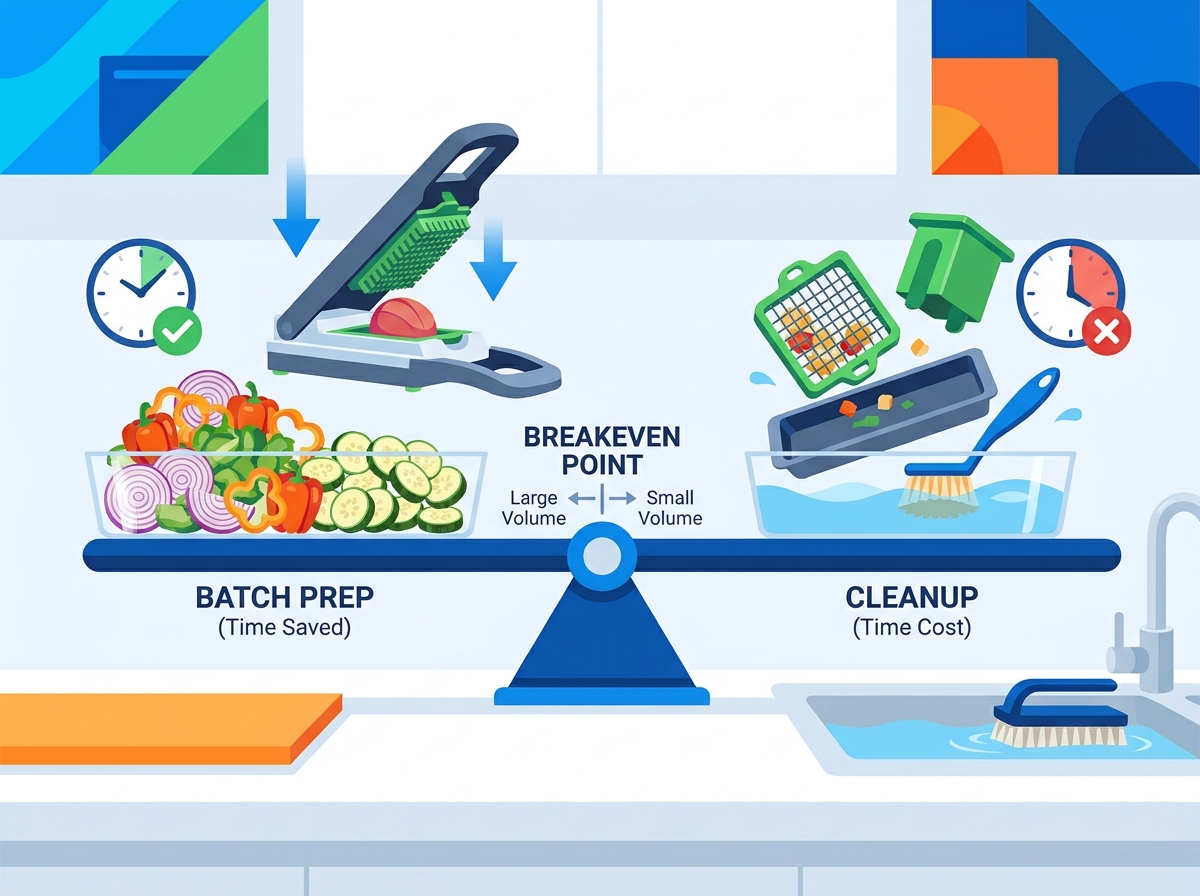
Home cooking presents a unique time management challenge. We often focus solely on pure chopping speed. We watch videos of rapid dicing and assume immediate efficiency. However, total kitchen time involves much more. It includes preparation, cooking, and the inevitable cleaning. A gadget might dice a large onion in five seconds flat. But if it takes five minutes to meticulously scrub the blades afterward, you lose overall efficiency. You must evaluate the entire start-to-finish process.
The breakeven point depends heavily on your ingredient volume. The time saved using a Vegetable Chopper outweighs cleanup time only during large culinary tasks. Making a massive batch of fresh pico de gallo makes perfect sense. Meal prepping lunches for the entire week easily justifies the setup effort. Cooking holiday dinners for a large family also tips the scale in favor of the gadget. Conversely, for a single meal requiring half an onion, a traditional chef's knife remains faster overall.
Consider the target user carefully before judging the tool. Home cooks often lack professional, rapid knife skills. Some face ongoing mobility or dexterity issues in their hands. For them, this tool provides an immediate, life-changing functional upgrade. It reduces physical strain and ensures perfectly uniform cuts for even cooking. Experienced cooks, on the other hand, might find it highly redundant for small, everyday meals. They can easily mince garlic or dice a solitary carrot before you even finish assembling the plastic parts.
Evaluating the Solution Categories: Which Design Makes Sense?
Buyers face a crowded market filled with vastly different designs. Each category serves a distinct culinary purpose. Understanding these internal mechanisms helps you choose the right tool for your specific recipes.
Push-Down Dicers (Alligator Style)
These popular models rely entirely on downward physical leverage. You force produce through a sharp grid blade into a catch tray below. They excel at uniform, precise dicing. If you need perfectly cubed onions, carrots, or potatoes, this design works best. It delivers highly consistent results for hearty soups and stews. The uniform pieces ensure everything cooks at the exact same rate.
Pull-Cord Manual Choppers
This design uses a manual pull-mechanism instead of downward force. Pulling the nylon cord spins internal blades horizontally. They work exceptionally well for rough mincing. You can quickly process garlic, fresh herbs, or toasted nuts. They also handle simple, chunky purees like rustic salsa. However, they do not produce uniform cubes. The longer you pull the cord, the finer the chop becomes. It requires careful visual monitoring.
Electric Mini-Choppers
These units feature motorized blade spinning powered by a wall outlet. They offer completely hands-free operation. You simply press a top button to process your ingredients rapidly. While highly convenient, they carry a significant drawback. They are highly prone to turning crisp vegetables into watery mush. Over-pulsing even slightly ruins the delicate texture of fresh produce.
Core Evaluation Criteria: What to Look for Before Buying
Not all kitchen gadgets offer the same reliable build quality. You must evaluate specific components before making a final purchase. Poor materials inevitably lead to broken hinges and severely dull blades.
Blade Material and Sharpness
The cutting grid endures immense physical pressure during use. You need rust-resistant, specially hardened stainless steel. Look specifically for 420-grade stainless steel in the product description. This grade prevents the grid from bending under sudden stress. Dull blades simply crush food instead of cutting it cleanly. They also require significantly more physical force from you, increasing the risk of accidental injury.
Structural Integrity (Plastics)
The outer housing material matters just as much as the internal blades. You need thick, BPA-free, shatter-resistant ABS plastic. The device must withstand heavy downward force repeatedly. Dense root vegetables push plastic hinges to their absolute breaking limits. Cheap plastics crack easily after just a few vigorous uses.
Leverage and Ergonomics
Evaluate the top handle design carefully. A longer top lid provides far better mechanical leverage. It requires less upper body weight to push through tough vegetable skins. Ergonomic designs actively reduce wrist strain during long prep sessions. They make weekend batch prepping significantly more comfortable.
Catch Tray Capacity
Standard capacities typically range from 1.2 liters to 1.5 liters. Always check this specification on the box. Smaller trays require frustrating, highly frequent emptying. If you prep large batches, a tiny tray ruins your cooking workflow entirely. A generous capacity keeps your prep area clean and beautifully organized.
Essential Buyer Checklist
| Feature | Ideal Specification | Why It Matters |
| Blade Material | 420-Grade Stainless Steel | Prevents bending and crushing; maintains sharp edge longer. |
| Housing Material | BPA-Free ABS Plastic | Resists shattering under heavy physical leverage. |
| Capacity | 1.2L to 1.5L Catch Tray | Reduces workflow interruptions during batch cooking. |
| Accessories | Included Cleaning Claw | Safely dislodges trapped skins from the pusher grid. |
The Truth About Performance: What Works and What Fails
Marketing videos often exaggerate overall product performance. Real-world cooking reveals very distinct limitations. You need to know exactly what a Vegetable Chopper can and cannot handle safely.
The Ideal Candidates (High Success Rate)
Certain foods cut flawlessly every single time you press down. They demonstrate the true, intended capability of the product. Firm, moisture-rich produce yields the absolute best results. You will see excellent, satisfying performance with:
- Onions
- Zucchini
- Bell peppers
- Celery stalks
- Cucumbers
These specific items snap cleanly right through the metal grid. They leave minimal sticky residue behind on the plastic pushers.
The Friction Points (Preparation Required)
We must address a transparent assumption often ignored by brands. Large vegetables still require mandatory pre-cutting. You cannot put a massive, whole onion onto the small grid. You must slice it in half or quarters first to fit the designated blade area. This initial knife work represents a minor, yet real, friction point. It adds an extra step back into the prep process.
The Failures (Not Recommended)
Avoid processing certain ingredients entirely. Ripe tomatoes and soft cheeses often fail completely. The tough tomato skin resists the blade, while the soft interior squashes into the grid instead of cutting cleanly. This creates a frustrating, mushy mess. Ultra-dense foods pose an even bigger physical threat. Sweet potatoes and large butternut squash chunks require immense force. They carry a high risk of snapping the metal blades or cracking the main plastic hinge.
The Hidden Costs: Cleaning, Safety, and Storage
Buyers often overlook the immediate aftermath of meal prep. Routine maintenance and long-term storage present real, practical challenges. You must consider these hidden costs before buying another appliance.
The Cleaning Reality
Cleaning the top pusher grid causes significant daily friction. Small food bits constantly get stuck deep in the plastic teeth. You absolutely need models that include a dedicated "cleaning claw" or a stiff brush. These small, specialized tools remove trapped onion skins effectively. Without them, simple cleanup becomes an absolute nightmare.
Dishwasher Safety Warnings
Many brands confidently market their products as "top-rack dishwasher safe." We must provide an evidence-backed warning here. High dishwasher heat frequently warps the plastic catch trays over time. Once warped, the top lid no longer fits securely. The device becomes completely unusable and unsafe. Hand-washing extends the life of the plastic housing greatly. It also maintains critical blade sharpness over many years.
Storage Footprint
Kitchen cabinet space remains incredibly valuable in most homes. Address the clutter risk honestly before purchasing. Many deluxe models come with eight or more interchangeable mandoline and spiralizer attachments. You may never actually use them in daily cooking. They end up simply cluttering your utility drawers. Assess your physical storage capacity honestly.
Safety Considerations
We must mention the serious hazard of handling ultra-sharp grid blades. Swapping them out requires intense focus and care. They become particularly slippery and dangerous when wet with vegetable juice. Always store them safely out of reach of children. Handle them strictly by the thick plastic edges, never touching the metal grid.
Best Practices for Maintenance
- Rinse the entire unit immediately after use to prevent drying.
- Use the provided cleaning claw strictly for the plastic pusher grid.
- Wash entirely by hand using warm, soapy water.
- Air dry all metal blades completely before storing them away.
Conclusion
A high-quality Vegetable Chopper serves as a highly effective tool for specific users. It works absolute wonders for dedicated meal-preppers. Large families will also see an excellent, immediate return on their time investment. However, it remains a poor choice for minimalist cooks. If you primarily make small, single-pan meals, a good chef's knife serves you far better.
When shortlisting options, advise a strict, quality-first logic. Prioritize overall build quality above all else. Seek out heavy-duty plastic housings and genuine 420-grade stainless steel blades. Do not get easily distracted by a high number of flashy accessory blades. Exceptional quality always beats sheer quantity in kitchen gadgets.
Take action today by assessing your specific household needs. Look closely at your weekly vegetable volume. Check your currently available cabinet storage space. Make an honest, realistic evaluation of your daily cooking habits before making a final purchase.
FAQ
Q: Can a vegetable chopper cut meat?
A: No. The grid blades are designed specifically for the cellular structure of plants. Raw or cooked meat will jam the grid instantly. Attempting to force meat through the blades will likely bend the metal or break the plastic hinge. Stick entirely to produce.
Q: Are vegetable choppers truly dishwasher safe?
A: While some manufacturers claim they are, high heat cycles often warp the plastic catch trays. If the tray warps, the lid will no longer fit securely. Hand washing is strongly recommended to protect the plastic integrity and keep the blades sharp.
Q: How long do the blades stay sharp?
A: With moderate use and regular hand-washing, the blades typically last one to two years before noticeably dulling. You can prolong blade life significantly. Simply avoid using them on overly hard root vegetables, which degrade the metal edge faster.
Q: Do I still need to peel vegetables before using a chopper?
A: Yes. Tough skins on onions, garlic, and butternut squash must be peeled beforehand. Furthermore, you must pre-slice larger vegetables so they fit safely within the surface area of the chopping grid.


