Processing bone-in meat or frozen cuts manually creates operational bottlenecks. It leads to inconsistent yields. It also introduces significant workplace safety risks. Upgrading to a dedicated Machine For Sawing Bones shifts your operation completely. You move from labor-intensive struggles to high-yield efficiency. However, the equipment must perfectly match your facility's throughput. It must also meet strict safety and hygiene compliance requirements.
This guide provides a transparent, criteria-driven framework. We will help you evaluate commercial bone saws effectively. You will learn how to assess capacity properly. We also cover essential safety standards and long-term operational value. Making the right choice protects your staff. It also safeguards your product quality and profit margins.
Key Takeaways
- Match motor horsepower (HP) and phase power to your daily processing volume to prevent motor burnout and blade stalling.
- Prioritize safety features like sliding feeding tables, micro-switches, and brake motors to mitigate liability and operator injury.
- Evaluate hygiene and maintenance costs by looking for 304 stainless steel construction and tool-less disassembly.
- Never substitute a standard bandsaw for a bone saw; purpose-built machines are required for food safety compliance and sanitation.
Assessing Your Processing Volume and Environment
Buying the right equipment starts with understanding your specific processing demands. A machine designed for occasional deli use will fail in a high-volume meat plant. Conversely, an industrial floor model is overkill for a small hunter. You must match the machine's capacity to your daily operational reality.
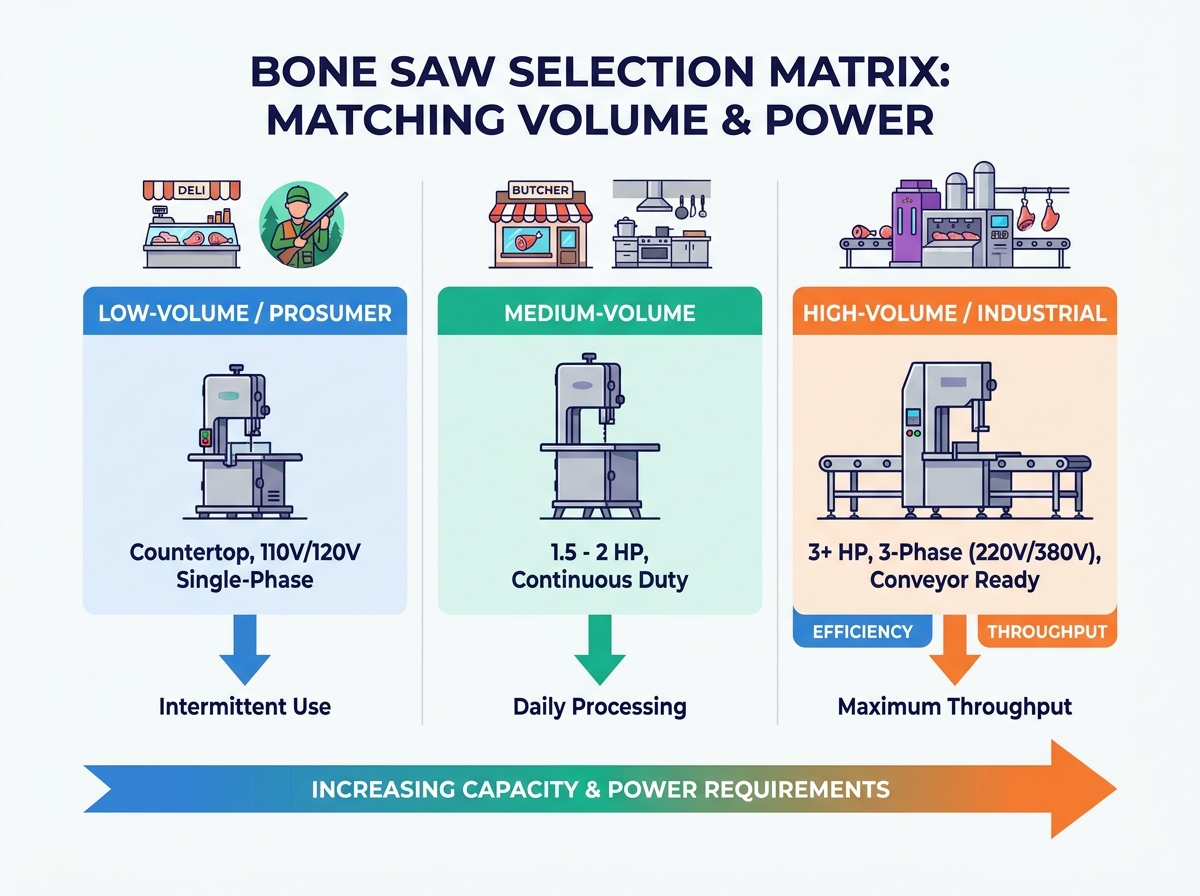
Low-Volume / Prosumer (Hunters, Small Delis)
Small butcher shops, delis, and serious hunters require compact solutions. These operators typically process a few carcasses or bulk cuts a week.
- Criteria: Look for a countertop footprint. These units usually run on standard 110V/120V single-phase power. They offer excellent portability. You can easily plug them into standard wall outlets without requiring expensive electrical upgrades.
- Limitations: You cannot run these machines continuously for multi-hour shifts. The motors will overheat. They also feature smaller cutting clearances. You will struggle to process large, unbroken carcasses. They work best for portioning smaller, pre-cut segments.
Medium-Volume (Butcher Shops, Commercial Kitchens)
Busy butcher shops and restaurant kitchens process meat daily. They need reliable, consistent performance without dedicating entire rooms to the equipment.
- Criteria: You will want heavy-duty countertop or mid-sized floor-standing models. Look for 1.5 to 2 HP motors. These machines support continuous duty cycles. They handle hours of uninterrupted work.
- Focus: You need a balance. The machine must fit your available floor space. At the same time, it must possess the torque necessary to cut dense, frozen beef or pork bones. Underpowered machines stall here, creating jagged cuts and ruining product presentation.
High-Volume (Meat Processing Plants, Industrial Facilities)
Industrial meat processing facilities demand maximum throughput. Downtime costs money, and safety is paramount.
- Criteria: Industrial operations strictly require large, floor-standing units. You need 3-phase power (220V/380V) and motors exceeding 3 HP. Many facilities also require conveyor integration capabilities for seamless processing lines.
- Focus: Throughput drives the decision. You must prioritize automated safety features. Furthermore, look for washdown-ready enclosures with high IP (Ingress Protection) ratings. These facilities use heavy-duty hoses for nightly sanitation. The machine must withstand this environment.
Processing Volume Guidelines
| Operation Scale | Typical Motor Size | Power Supply | Best Suited For |
| Low-Volume | 0.75 - 1 HP | 110V / 120V | Hunters, small delis, occasional portioning |
| Medium-Volume | 1.5 - 2 HP | 110V / 220V Single-Phase | Butcher shops, supermarkets, large kitchens |
| High-Volume | 3+ HP | 220V / 380V 3-Phase | Meat packing plants, industrial processors |
Core Specifications to Evaluate in a Machine for Sawing Bones
Once you establish your volume, you must evaluate technical specifications. These metrics separate poorly engineered equipment from reliable workhorses. Understanding these specs ensures your investment performs well under pressure.
Motor Power and Torque
Horsepower directly correlates to cutting efficiency. Cutting through frozen marrow bones demands immense rotational force. If you choose an underpowered machine, the blade will bind inside the meat. This binding stalls the motor. It also generates excessive bone dust. Bone dust smears across the meat surface, ruining its retail presentation. A robust motor maintains a steady RPM, ensuring clean, effortless slices every time.
Cutting Clearance (Height and Width)
Cutting clearance dictates the maximum product dimensions your saw can handle. You must define this before buying. Buyers need to measure their largest typical cuts. Think about whole beef femurs, massive pork loins, or frozen tuna blocks. Compare those measurements against the machine's throat capacity. If your typical frozen cut measures 12 inches tall, a saw with a 10-inch vertical clearance will completely bottleneck your operation.
Blade Speed and Length
Blade speed matters for product quality. Higher blade speeds yield cleaner cuts. They cause less tearing of the muscle tissue. Slower speeds tend to chew through the meat, leaving jagged edges.
Furthermore, pay close attention to blade length. Standardized blade lengths are highly preferable. Some manufacturers lock you into their ecosystem by using proprietary lengths. This forces you to buy expensive replacements directly from them. Using standard sizes (like 65-inch or 112-inch blades) allows you to source high-quality replacements from multiple vendors at competitive prices.
Tensioning Systems
Blade tension is critical. Proper tension prevents the blade from wandering or snapping mid-cut. Manual tension knobs require operator intuition. If tightened too much, you destroy the wheel bearings. If left too loose, the blade slips off the track. We recommend automatic or spring-loaded tensioners. These systems apply exact, calibrated pressure to the blade. They remove human error and ensure straight cuts.
Safety and Compliance Standards
Meat bandsaws are inherently dangerous. A fast-moving blade does not differentiate between bone and fingers. Therefore, modern Machine For Sawing Bones models incorporate advanced safety systems. Never compromise on these features.
Operator Protection Mechanisms
Physical barriers protect operators during the cutting process.
- Meat Pushers and Sliding Tables: These are absolutely essential. They keep human hands away from the blade, especially during the final inches of a cut. Sliding tables allow the operator to smoothly push the product through the blade using body weight rather than precarious hand placement.
- Brake Motors: Older saws coast for 10 to 15 seconds after you turn them off. That coasting period is highly dangerous. Modern brake motors ensure the blade stops within fractions of a second after you cut the power. This single feature prevents countless severe injuries.
Fail-Safes
Electronic fail-safes prevent accidental startups.
- Micro-Switches: These sensors detect open doors. If an operator opens the blade cover for cleaning, the micro-switch instantly cuts power. It prevents the machine from operating until everything is securely closed.
- Emergency Stop (E-Stop): The E-Stop button must be prominent. It should be easily accessible from the primary operating position. Furthermore, it must be moisture-sealed to prevent electrical shorts during cleaning.
Regulatory Certifications
Certifications prove the machine meets strict safety and hygiene standards. Look for NSF (National Sanitation Foundation), CE, or ETL marks. Using uncertified equipment carries heavy risks. It can lead to failed health inspections. Even worse, it might void your commercial liability insurance policies if an accident occurs.
Hygiene, Cleaning, and Maintenance Realities
Food processing environments breed bacteria quickly. Meat juices, fat, and bone dust accumulate in tiny crevices. If you cannot clean a machine thoroughly and quickly, it becomes a biological hazard.
Material Construction
Industry standards demand 304 stainless steel. This alloy offers exceptional corrosion resistance. It withstands blood, salt, and harsh chemical cleaners. Some cheaper units use anodized aluminum. We advise against aluminum for commercial operations. Aggressive cleaning chemicals, like quaternary ammonia, strip the anodized layer over time. This causes pitting. Pitted aluminum harbors bacteria and fails health inspections.
Washdown Capability
Evaluate the IP (Ingress Protection) rating of the motor and electrical components. Commercial meat rooms undergo intense daily cleaning. Can the machine withstand low-pressure hoses? Or does it require careful, dry wipe-downs? An IP65 rating or higher means the internal electronics are protected against water jets. This drastically reduces cleaning time and prevents costly electrical shorts.
Tool-Less Disassembly
Sanitation crews work on tight schedules. Machines that require wrenches or screwdrivers to remove blades, scrapers, and wheels rarely receive proper cleaning. Operators skip the hard-to-reach areas. Tool-less breakdown is a critical feature. By utilizing thumb screws and quick-release levers, operators can strip the machine down in minutes. This ensures daily sanitation compliance.
Scraper Systems
Fat and bone marrow stick to the internal drive wheels. If allowed to build up, this residue causes the blade to slip off the track. Evaluate the presence of upper and lower wheel scrapers. Good scrapers constantly shear away fat and bone dust during operation. They keep the wheels clean, maintain blade tension, and reduce manual maintenance needs.
Bone Saw vs. Regular Saw: Why Purpose-Built Matters
New business owners sometimes try to cut corners. They visit a local hardware store, buy a standard wood or metal bandsaw, and attempt to process meat. This decision is dangerous, illegal, and unsanitary.
The "Hardware Store" Fallacy
A standard wood bandsaw is engineered for dry environments. It handles sawdust, not wet, greasy animal fat. Using one for meat processing immediately introduces catastrophic contamination risks.
Sanitation Risks
Regular saws feature porous painted surfaces. They contain unsealed bearings and inaccessible crevices. When meat juices seep into these areas, bacteria flourish. Hardware store saws cannot withstand food-safe chemical washdowns. Their components will rust within weeks.
Blade Dynamics
Wood blades possess aggressive teeth meant to tear fibers. When applied to meat, they tear the muscle and shatter the bone, leaving dangerous bone splinters in your product. Meat blades are specifically tooled and pitched differently. They slice cleanly through varying densities of soft fat, tough muscle, and hard bone simultaneously.
Lubrication
Commercial bone saws use strict food-grade lubricants. They also feature sealed gearboxes. This prevents mechanical oils from leaking into the product zone. Standard saws use industrial greases. Any leakage directly contaminates the meat with toxic chemicals.
Commercial Bone Saw vs. Hardware Store Bandsaw Comparison
| Feature | Purpose-Built Bone Saw | Hardware Store Bandsaw |
| Material | 304 Stainless Steel (Rust-proof) | Painted Steel / Cast Iron (Rusts quickly) |
| Cleanability | Washdown-rated, tool-less breakdown | Not water resistant, requires tools |
| Blade Type | Scalloped or fine-tooth meat/bone pitch | Aggressive wood/metal tearing pitch |
| Safety Features | Meat pushers, sliding tables, brake motors | Basic blade guards, slow coast-down |
Conclusion
Choosing the right Machine For Sawing Bones requires careful evaluation of your daily operations. You must align equipment specifications with your facility's real-world demands. A strategic purchase minimizes downtime, maximizes yield, and keeps your operators safe.
Here are the final action-oriented next steps to finalize your decision:
- Apply Shortlisting Logic: Base your final decision on a matrix of your daily volume, available electrical infrastructure, and the strictness of local health codes.
- Analyze Ongoing Operational Expenses: Remind yourself to factor in the cost of replacement blades, daily cleaning labor, and potential maintenance downtime when setting your budget.
- Request a Spec Sheet: Before issuing a purchase order, ask the manufacturer for a detailed specification sheet. Confirm the IP ratings and motor horsepower.
- Verify Warranty Terms: Check whether the warranty covers both parts and labor. Understand how long the coverage lasts.
- Confirm Part Availability: Ensure replacement blades, wheel scrapers, and tension springs are readily available in your region to avoid supply chain delays.
FAQ
Q: Can a commercial bone saw cut through frozen meat?
A: Yes, absolutely. Provided the machine has sufficient horsepower (typically 1.5 HP or higher) and is equipped with a blade specifically designed for frozen products, it will handle frozen meat effortlessly. Using an underpowered machine on frozen blocks will stall the motor and damage the blade.
Q: How often do bone saw blades need to be replaced?
A: Replacement frequency depends heavily on your usage volume and material density. Commercial operations often change blades daily or weekly. Dull blades increase motor strain, create dangerous bone splinters, and elevate safety risks for the operator.
Q: What is the best way to clean a bone saw machine?
A: First, disconnect the power. Disassemble moving parts like doors, blades, and scrapers using the tool-less mechanisms. Wash the components with food-safe degreasers, rinse thoroughly, and apply sanitizer. Never spray high-pressure water directly into unsealed motor housings unless the unit carries a high IP washdown rating.
Q: What is the difference between a bone saw and a regular saw?
A: Bone saws feature 304 stainless steel construction, washdown-rated electrical components, tool-less cleaning access, and specialized meat blades. They use food-grade lubricants. Regular saws lack these sanitary features, rust quickly, and will actively contaminate food products with industrial grease and bacteria.


