A vacuum lyophilizer, also known as a freeze dryer, is a specialized machine designed to remove moisture from materials while keeping their structure, nutrients, and active ingredients intact. Unlike conventional drying methods that rely on heat, vacuum lyophilization freezes the product first, then uses low pressure and controlled heat to sublimate water directly from ice to vapor. This process preserves delicate flavors, colors, and textures, making it essential for pharmaceuticals, food, biotechnology, and research applications.
Whether it’s drying fruits, vaccines, enzymes, or research samples, vacuum lyophilizers improve shelf life, reduce weight and volume, and simplify storage and transport. Understanding the components, operation, and best practices of these machines helps operators achieve high-quality, consistent results every time.
Understanding Vacuum Lyophilizers
A vacuum lyophilizer, often called a freeze dryer, removes moisture from materials while keeping their structure, nutrients, and active ingredients intact. It works by freezing the material, reducing pressure, and gently applying heat. This makes the water sublimate—turn from ice to vapor—without melting. People use vacuum lyophilizers in pharmaceuticals, food, biotech, and research. They extend shelf life, reduce weight and volume, and make storage or transport easier.
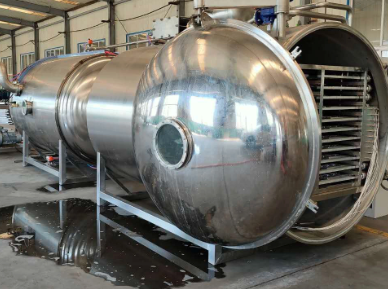
Key Components of a Vacuum Lyophilizer
| Component | Function |
| Drying Chamber | Holds product trays, maintains vacuum |
| Ice Condenser | Captures water vapor, protects vacuum pump |
| Vacuum Pump | Reduces and maintains pressure |
| Refrigeration System | Freezes shelves, cools condenser |
| Heating System | Supplies energy during sublimation |
| Control System | Monitors temperature, vacuum, drying cycles |
How Does a Vacuum Lyophilizer Work?
Vacuum lyophilization is a precise process that removes moisture from materials while keeping their structure, nutrients, and active components intact. It occurs in three main stages, each designed to protect the product’s quality and optimize drying speed. Understanding each stage helps operators achieve consistent, high-quality results.
Freezing Phase
The process begins by freezing the material below its triple point, the temperature at which water can sublimate instead of melting. This step is critical because it preserves the product’s shape and internal structure. Ice crystal size plays a major role here: slow freezing tends to produce large ice crystals, which can speed up drying but may damage delicate cell structures, especially in biological materials. Fast freezing, on the other hand, creates small ice crystals that protect the integrity of sensitive products. For certain materials, a technique called annealing is used. This involves initially freezing quickly, then slightly raising the temperature to allow ice crystals to grow in a controlled way, balancing drying efficiency and product quality.
Primary Drying (Sublimation) Phase
Once the product is fully frozen, the primary drying phase begins. The chamber is put under low pressure by the vacuum system, allowing the ice to sublimate directly into vapor. Heat is applied gradually and carefully, ensuring the product does not overheat or collapse. As the water vapor rises, it reaches the cold condenser, where it solidifies as ice. This phase removes roughly 95% of the water in the material and is typically the slowest stage of the process. Careful monitoring of temperature and vacuum levels is crucial, as excessive heat can compromise the structure, causing shrinkage or collapse.
Secondary Drying (Adsorption) Phase
After most water is removed, the secondary drying phase targets the remaining bound water molecules that are still attached to the product. In this stage, the temperature is increased higher than during primary drying, breaking the bonds between water and the material. The vacuum continues to assist in removing the vaporized water. By the end of this phase, the product’s residual moisture typically falls to 1–5%, depending on the material. To ensure long-term stability, the vacuum can be replaced with an inert gas such as nitrogen before the product is sealed, which helps maintain its quality during storage and transport.
Vacuum Lyophilizer Operation Steps
Preparing Materials
Before starting the freeze-drying process, it is essential to prepare the materials properly. This involves shredding or cutting the material into appropriate sizes to ensure uniform freezing and drying. The material is then analyzed to check moisture content, composition, and any other properties that might affect the drying process. Each batch is weighed and recorded carefully to track process consistency and ensure reproducibility. Once preparation is complete, the material is divided into bags or containers, which are then labeled clearly with batch number, weight, date, and other relevant information. Proper labeling and documentation prevent mix-ups and make post-process analysis easier.
Loading and Freezing
Once materials are prepared, they are placed on trays or shelves inside the vacuum lyophilizer. Bags must be welded, sealed, or properly closed to avoid contamination and maintain vacuum integrity. Freezing is the next critical step: the chamber cools the material below its triple point to ensure the water in the product solidifies into ice. This step preserves the structure and quality of the material and reduces condensation during drying. Operators must monitor temperature carefully, as improper freezing can affect ice crystal size and ultimately impact drying efficiency and product quality.
Vacuum Drying
After freezing, the vacuum drying stage begins. The vacuum pump is turned on to create a low-pressure environment, allowing ice to sublimate directly into water vapor. During this stage, temperature, vacuum level, and heating rate are adjusted based on the material type and batch requirements. Operators closely monitor the process to ensure uniform sublimation and prevent overheating or collapse of the product. This stage typically removes the majority of moisture from the material, and it can take several hours depending on the product’s size, composition, and packaging. Careful control here ensures a high-quality lyophilized product.
Sealing and Storage
Once the material is fully dried, the bags or containers are carefully removed from the chamber. They are sealed using welding, glue, or plugs to prevent moisture ingress. After sealing, each bag is labeled with batch information and storage instructions. Lyophilized products are highly durable but must be stored in airtight conditions to maintain quality. Proper labeling ensures easy identification and tracking for long-term storage or future use. At this stage, the material is ready for transport, packaging, or further processing, maintaining its structure, porosity, and active ingredients.
| Step | Key Actions | Purpose |
| Preparing Materials | Shred, analyze, weigh, bag, label | Ensure uniformity, track batches, prevent errors |
| Loading and Freezing | Place on trays, seal bags, freeze below triple point | Preserve structure, prepare for sublimation |
| Vacuum Drying | Turn on vacuum, adjust temp and pressure, monitor | Remove majority of moisture, prevent collapse |
| Sealing and Storage | Remove bags, seal, label, store airtight | Maintain quality, porosity, and active ingredients |
Applications of Vacuum Lyophilizers
Pharmaceuticals
Vacuum lyophilizers are widely used in pharmaceuticals to preserve vaccines, biologics, and injectable drugs. They remove moisture without damaging the chemical or biological activity of the product, ensuring safety and efficacy over long-term storage.
Food Industry
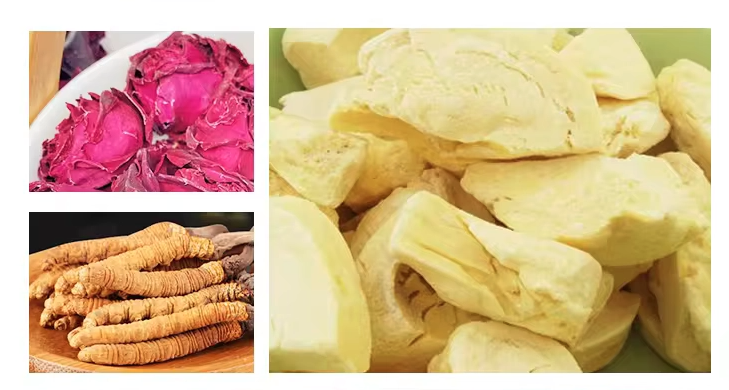
In the food sector, they are used for fruits, vegetables, instant coffee, and other perishable products. The process reduces weight and volume, extends shelf life, and keeps flavors, colors, and nutrients intact, making products easier to transport and store.
Biotechnology and Research
They are essential in biotech applications for drying enzymes, proteins, and other sensitive biological materials. In research labs, vacuum lyophilizers help preserve chemical or biological samples, allowing long-term storage without compromising structure or activity.
Benefits of a Vacuum Lyophilizer
Preserves nutrients, flavors, and active ingredients, making it ideal for delicate foods and pharmaceuticals. Using food dryer machines like vacuum lyophilizers ensures minimal loss during drying.
Reduces product weight and volume, which saves storage space and transportation costs. This is particularly useful for bulk food processing.
Extends shelf life, allowing products to be stored safely for months or even years without refrigeration.
Makes storage and transport easier. Sealed, lyophilized products can be shipped over long distances without spoilage.
Maintains a porous structure, so products rehydrate quickly and retain original texture and appearance, a key advantage over conventional drying methods.
Common Problems and How to Avoid Them
Overheating: Can cause melt-back or product collapse. Operators should carefully monitor temperature and heating rates in food dryer machines.
Condenser overload: Occurs when too much vapor hits the condenser. Regular cleaning and proper sizing prevent this.
Insufficient refrigeration: Slows freezing, which can reduce product quality. Ensure compressors and chillers are functioning correctly.
Vapor choking: Happens if vapor is produced faster than it can pass through the port. Adjust batch size or chamber design to fix this.
Large surface area: Can slow drying, especially for thin or spread-out products. Proper tray arrangement optimizes airflow and drying efficiency.
How to Choose the Right Vacuum Lyophilizer
Batch Size and Capacity
Choose based on production needs. Smaller units handle 10 kg per batch, while industrial machines can process up to 2000 kg. Capacity affects drying time and efficiency.
Condenser Type
Decide between internal or external condensers. Internal condensers are compact and easier to maintain, while external condensers provide larger cooling capacity for high-volume drying.
Heating, Refrigeration, and Control
Ensure heating and refrigeration match the product’s sensitivity. Delicate materials need precise temperature control. Advanced control systems like PLC or touchscreen interfaces allow monitoring of vacuum, temperature, and drying cycles, ensuring consistent, high-quality results.
FAQ
Q: How does a vacuum lyophilizer differ from a regular food dryer machine?
A: Unlike conventional food dryer machines that use heat to evaporate water, a vacuum lyophilizer freezes the product first and then removes moisture under vacuum, which preserves flavors, nutrients, and porous structure.
Q: What materials can be freeze-dried with a vacuum lyophilizer?
A: It can dry a wide range of materials, including pharmaceuticals like vaccines, food products such as fruits and coffee, biological materials like enzymes and proteins, and research samples that require long-term stability.
Q: How long does the vacuum lyophilization process take?
A: The drying time depends on the material size, moisture content, and batch volume, but primary drying can take several hours and secondary drying may add additional time to achieve 1–5% residual moisture.
Q: What are the main stages of freeze-drying in a vacuum lyophilizer?
A: The process consists of three stages: freezing the material below its triple point, primary drying where ice sublimates under vacuum, and secondary drying that removes bound water to reach low residual moisture.
Q: How do I prevent product collapse during vacuum lyophilization?
A: Avoid overheating, monitor temperature and vacuum levels carefully, use proper freezing methods, and ensure the condenser and chamber are appropriately sized for the material.
Conclusion
Vacuum lyophilizers offer unmatched advantages for drying sensitive materials, maintaining quality, and extending shelf life. From pharmaceuticals to food and biotech, they ensure products retain their nutrients, structure, and active ingredients while simplifying storage and transport.
Choosing the right lyophilizer involves considering batch size, condenser type, heating and refrigeration capabilities, and control system sophistication. For businesses looking for reliable, high-performance vacuum lyophilizers, Shandong Huiyilai International Trade Co., Ltd. provides a full range of solutions, combining advanced technology, precision engineering, and professional support to meet diverse industry needs.


