The preservation of food has been a fundamental aspect of human survival and development. With advancements in technology, methods like dehydration and freeze-drying have become prominent. But are these two processes the same? This article delves deep into the intricacies of food dehydrators and freeze dryers, exploring their mechanisms, applications, and implications in both household and industrial settings. By understanding the differences and similarities, we can make informed decisions on food preservation techniques suitable for various needs.
To start, it's essential to comprehend what a food dehydrator is and how it compares to freeze dryers. Both devices aim to extend the shelf life of food, but they operate on different principles and yield distinct results.
The Science Behind Food Dehydration
Food dehydration is one of the oldest methods of preservation. It involves removing moisture from food, which inhibits the growth of bacteria, yeast, and molds that cause spoilage. By reducing water activity, dehydrated foods become shelf-stable and lighter, making them ideal for storage and transport.
Mechanism of Dehydrators
Dehydrators work by circulating warm air across sliced or whole foods. The consistent heat evaporates moisture, and the airflow carries it away. Most dehydrators maintain temperatures between 95°F to 165°F (35°C to 74°C), suitable for drying a range of foods without cooking them.
Modern food dryer machines come equipped with adjustable thermostats and timers, allowing precise control over the drying process. They ensure even dehydration, preserving the nutritional content and flavor of foods.
Applications of Food Dehydrators
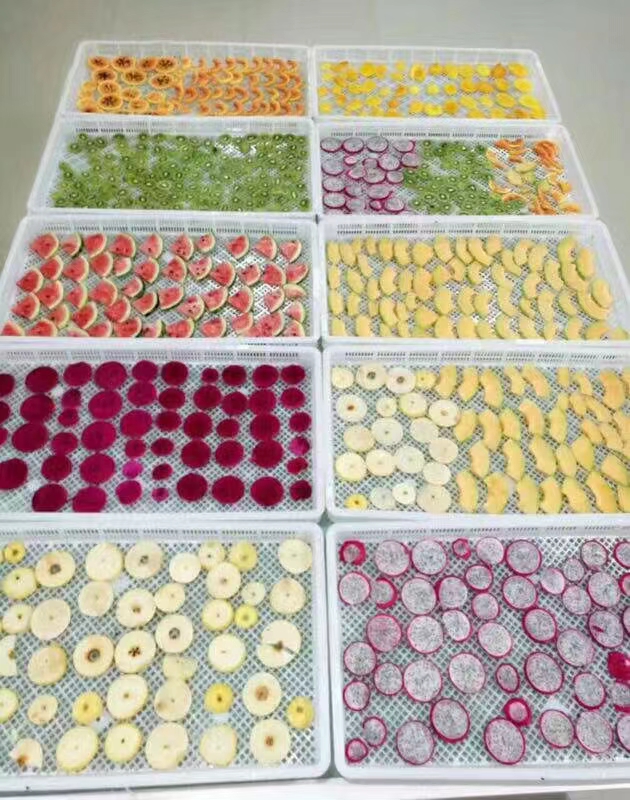
Food dehydrators are versatile. They are used for drying fruits, vegetables, herbs, meats (to make jerky), and even flowers. Dehydrated foods retain most of their nutritional value and are ideal for snacks, cooking, and long-term storage.
Industrially, devices like the industrial continuous mesh belt vegetable dryer process large quantities efficiently. These machines are crucial in food processing industries, ensuring high output and consistent quality.
Understanding Freeze Drying
Freeze drying, or lyophilization, is a preservation method that removes moisture by sublimation. It involves freezing the food and then reducing the surrounding pressure to allow the frozen water to transition directly from solid to gas.
Mechanism of Freeze Dryers
The freeze-drying process comprises three main stages: freezing, primary drying (sublimation), and secondary drying (desorption). Initially, food is frozen below its eutectic temperature. During primary drying, pressure is lowered, and heat is applied to encourage sublimation. Secondary drying removes unfrozen water molecules, reducing residual moisture to minimal levels.
Freeze dryers maintain the food's structure, flavor, and nutritional content exceptionally well. The result is lightweight, porous food that rehydrates quickly and has a long shelf life.
Applications of Freeze Dryers
Freeze drying is popular in the pharmaceutical and biotech industries for preserving perishable materials. In the food industry, it's used for products like coffee, fruits, vegetables, and prepared meals. The method is favored for preserving heat-sensitive substances and maintaining product integrity.
Comparative Analysis: Food Dehydrators vs. Freeze Dryers
Process and Technology
While both methods aim to remove moisture, the technologies differ significantly. Dehydrators use heat and airflow, whereas freeze dryers employ freezing and sublimation under vacuum conditions. Dehydration is faster and consumes less energy, but freeze drying preserves food more effectively.
Nutritional Preservation
Freeze drying retains up to 97% of the food's nutritional value, whereas dehydration can result in a slight loss due to heat exposure. Vitamins sensitive to heat may degrade during dehydration but remain intact with freeze drying.
Texture and Taste
Dehydrated foods are chewy and dense, while freeze-dried foods are light and crispy. The rehydration process is quicker with freeze-dried foods, restoring them to near-original texture and taste. Dehydrated foods may not regain their original state upon rehydration.
Shelf Life
Freeze-dried foods have a longer shelf life, often up to 25 years when properly stored. Dehydrated foods typically last between 1 to 5 years, depending on storage conditions. The ultra-low moisture content in freeze-dried items prevents microbial growth more effectively.
Cost and Accessibility
Freeze dryers are expensive and consume more energy, making them less accessible for home use. Dehydrators are affordable and widely available, catering to both home enthusiasts and industrial needs. Equipment like the food dryer machine offers scalable solutions for various applications.
Industrial Applications and Considerations
Mass Production Needs
Industries require efficient and cost-effective preservation methods. Dehydration is preferred for bulk processing due to lower operational costs. Machines like the industrial continuous mesh belt vegetable dryer facilitate high-volume drying with consistent results.
Product Quality and Marketing
Freeze-dried products are considered premium due to their superior quality and long shelf life. They command higher market prices and cater to niche markets like space food, gourmet products, and emergency supplies. Dehydrated foods are mainstream, found in everyday snacks and ingredients.
Energy Consumption and Sustainability
Sustainability is a growing concern. Dehydrators consume less energy compared to freeze dryers, making them more environmentally friendly. Industries are adopting energy-efficient technologies in dehydration to reduce carbon footprints.
Household Use and Practicality
For home users, dehydrators are practical and easy to operate. They are perfect for gardeners wanting to preserve surplus harvest or families aiming for healthy snacks. Freeze dryers, due to their cost and complexity, are less common in households.
Pros and Cons in Home Settings
Dehydrators are affordable, simple, and suitable for everyday use.
Freeze dryers offer superior preservation but at a higher cost.
Space and energy requirements make freeze dryers less suitable for home kitchens.
Making the Right Choice
Deciding between a dehydrator and a freeze dryer depends on individual needs. If the goal is to preserve food for extended periods without compromising quality, and budget is not a constraint, a freeze dryer is ideal. For everyday preservation and snacking, a dehydrator suffices.
Technological Innovations in Food Preservation
Advancements continue to improve both dehydration and freeze-drying technologies. Innovations aim to enhance efficiency, reduce energy consumption, and improve product quality.
Energy-Efficient Dehydrators
Modern dehydrators incorporate smart technologies like programmable settings, solar power integration, and improved insulation. These features optimize drying times and energy use.
Advancements in Freeze Drying
In freeze drying, innovations focus on scaling down equipment for home use and improving automation. Research into alternative energy sources and materials aims to make freeze dryers more accessible and sustainable.
Health Implications and Nutritional Perspectives
Preservation methods impact the nutritional profile of foods. Understanding these effects helps make healthier choices.
Vitamins and Minerals Retention
Freeze drying preserves heat-sensitive nutrients better than dehydration. Vitamin C and B vitamins remain largely intact. Dehydration may lead to partial loss, but overall, both methods retain substantial nutritional value.
Additives and Preservatives
Commercially dehydrated foods sometimes include additives like sulfur dioxide to preserve color and extend shelf life. Freeze-dried foods typically have fewer additives due to the effectiveness of the preservation method.
While food dehydrators and freeze dryers share the common goal of preserving food by removing moisture, they are not the same. Each method has unique mechanisms, advantages, and applications. Dehydrators offer a practical, cost-effective solution for both home and industrial use, especially with equipment like the food dryer machine and the industrial continuous mesh belt vegetable dryer. Freeze dryers provide superior preservation at a higher cost, suitable for specialized needs.
Understanding these differences empowers us to choose the right preservation method, considering factors like nutritional retention, shelf life, cost, and practicality. Both technologies play significant roles in food sustainability, waste reduction, and accessibility to preserved foods worldwide.
FAQs
Q1: Can I use a food dehydrator to achieve the same results as a freeze dryer?
A1: No, a food dehydrator cannot replicate the results of a freeze dryer. Dehydrators remove moisture through heat and airflow, resulting in chewy, dense food, while freeze dryers use sublimation to produce light, porous food that rehydrates to its original state more effectively.
Q2: Is freeze-dried food healthier than dehydrated food?
A2: Freeze-dried food retains more heat-sensitive nutrients compared to dehydrated food. However, both methods preserve a significant portion of the food's nutritional value, making them healthy options for food preservation.
Q3: Why are freeze dryers more expensive than food dehydrators?
A3: Freeze dryers involve complex technology, including vacuum systems and precise temperature controls to facilitate sublimation. These components increase manufacturing costs, making freeze dryers more expensive than the simpler technology of food dehydrators.
Q4: What types of foods are best suited for dehydration?
A4: Fruits, vegetables, herbs, and meats are well-suited for dehydration. Dehydrators efficiently remove moisture while preserving flavor, making them ideal for creating snacks like dried fruits, vegetable chips, and jerky.
Q5: How does the industrial continuous mesh belt vegetable dryer enhance the dehydration process?
A5: The industrial continuous mesh belt vegetable dryer streamlines mass dehydration by continuously moving products through controlled heat zones. This ensures uniform drying, higher efficiency, and increased production capacity, benefiting industrial applications.
Q6: Are there any foods that cannot be freeze-dried?
A6: Yes, foods with high fat content or sugar levels, like pure chocolate or peanut butter, do not freeze-dry well due to low water content. They may not undergo sublimation effectively, resulting in inadequate preservation.
Q7: Where can I find reliable food dryer machines for industrial use?
A7: Reliable food dryer machines can be found at specialized suppliers like Shandong Huiyilai International Trade Co., Ltd., offering a range of options suitable for various industrial applications.


