Investing in commercial meat processing equipment carries exceptionally high stakes for your facility. A poor purchasing choice introduces severe liability and daily operational friction. You need reliable tools to keep production moving efficiently. The modern meat processing environment demands high throughput. Competition remains fierce across the industry. Your facility simply cannot afford frequent equipment breakdowns or unsafe working conditions. Subpar equipment inevitably leads to heavy product loss through excessive bone dust and jagged cuts. It also triggers critical hygiene compliance failures and exposes your operators to unacceptable safety risks. These issues quickly erode your operational margins and damage your reputation among wholesale clients.
This guide breaks down the essential technical specifications and safety non-negotiables required to evaluate a commercial Machine For Sawing Bones objectively. You will learn exactly how to match motor capacity, blade dynamics, and sanitation features to your specific production needs. We outline exactly what matters most when equipping your busy processing floor.
Key Takeaways
- Motor Capacity Drives Yield: Match horsepower (HP) and duty cycle to your exact processing volume to prevent motor burnout and meat tearing.
- Safety is a Hard Requirement: Never compromise on interlocked doors, emergency stops, and integrated pusher plates.
- Sanitation Equals Uptime: Prioritize 304 or 316 stainless steel builds with toolless disassembly and high IP washdown ratings.
- TCO > Upfront Cost: Factor in blade replacement frequency, cleaning downtime, and energy consumption before making a final purchasing decision.
Evaluating Motor Power and Throughput Capabilities
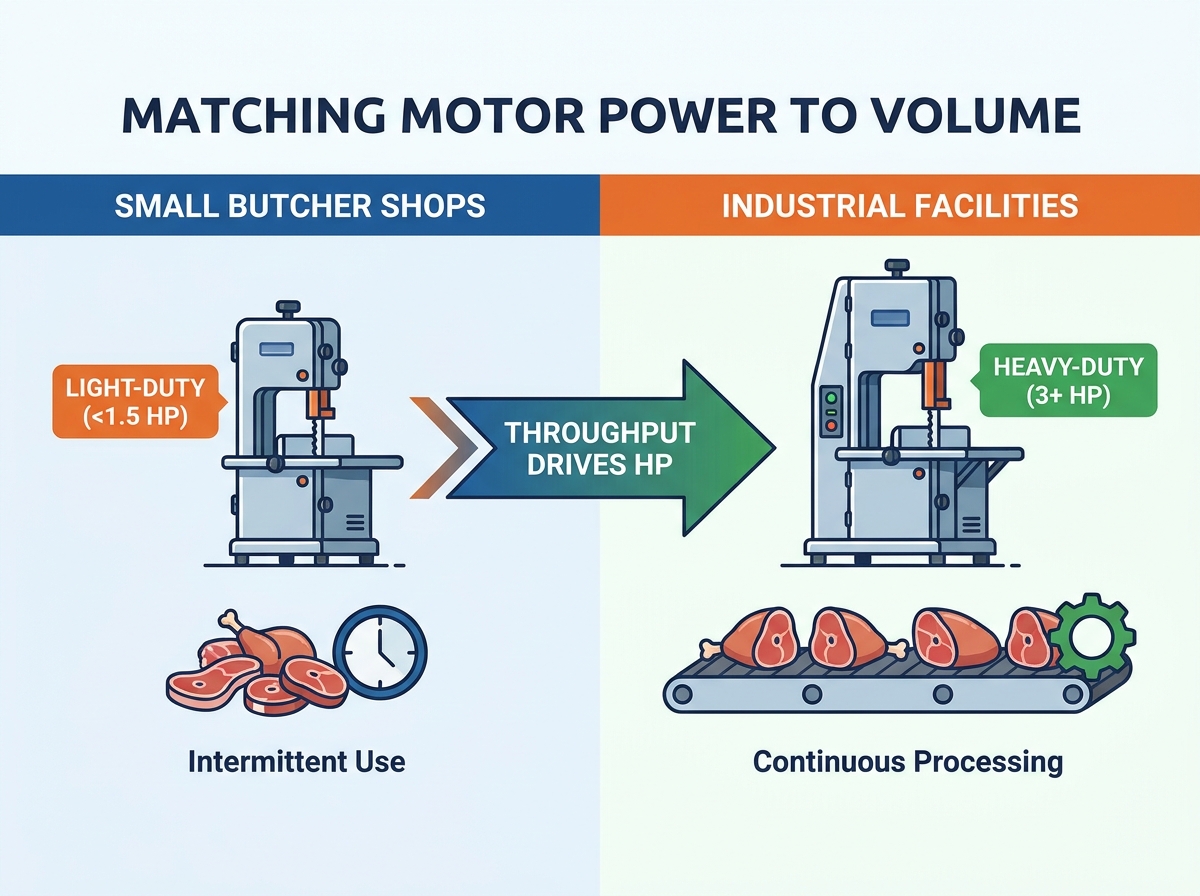
You must match your expected processing volume directly to the motor's horsepower (HP). Small butcher shops often handle intermittent daily tasks. For these environments, a light-duty motor under 1.5 HP works perfectly well. However, continuous facility processing demands much more power. Heavy-duty industrial environments require motors rated at 3 HP or higher. Let us examine motor stalls closely. When a weak motor hits a frozen beef joint, the blade slows down dramatically. The operator instinctively pushes harder. This friction burns the meat surface. It creates an unappealing gray appearance. Upgrading to a 3 HP motor solves this completely. The blade glides through dense material without dropping RPMs. Your staff expends less physical effort. They finish processing batches much faster.
Duty cycles represent another critical specification. You should always prioritize continuous runtime ratings over peak power numbers. Peak power only tells you what the motor handles for a few brief seconds. Continuous runtime defines how the machine performs over an intense eight-hour shift. Look for built-in thermal overload protection. This safety feature automatically shuts down the motor before it overheats. Thermal protection prevents catastrophic mid-shift failures. It ultimately protects your capital investment from premature burnout.
You must also evaluate the internal drive system. Manufacturers generally offer direct-drive or belt-driven configurations. Direct-drive systems provide superior torque transfer directly to the cutting wheel. They eliminate slipping under heavy loads entirely. However, they require more specialized maintenance if internal components fail. Belt-driven systems serve as the reliable industry standard. They are highly dependable and much easier to repair on-site. They do require regular tension checks. Belts stretch over time. Operators must monitor belt tension to maintain consistent cutting power.
Blade Dynamics, Tensioning, and Cut Precision
The physical dimensions of the internal wheels dictate your operational capacity. The upper and lower wheel sizes determine the compatible blade length. More importantly, they define the maximum vertical cutting clearance. This clearance controls the height and width of the product you can process. Consider the mechanics of the cutting clearance. If you process whole tuna, you need massive vertical clearance. Processing pork ribs requires much less vertical height. You cannot force large beef femurs through a machine designed strictly for poultry. Always measure your largest typical meat cuts before shopping. Compare those measurements against the machine's stated clearance capacity.
Proper blade tensioning remains vital for clean cuts. We see two main types of tensioning mechanisms available today. Older or budget models use manual tensioning knobs. Manual tensioning relies entirely on operator feel. This often leads to inconsistent results day to day. Advanced models feature automatic or spring-loaded tensioning mechanisms. Spring-loaded systems apply the exact required pressure every single time. Improper tension creates major operational hazards. Loose blades snap easily under sudden pressure. They also deflect during cuts, creating uneven portions.
Let us discuss blade guides briefly. High-quality machines use carbide-tipped blade guides. These guides hold the blade perfectly straight. They prevent twisting when operators apply heavy lateral pressure. Straight blades create perfectly uniform steaks. Uniform steaks cook evenly and look much better in retail display cases. Precision cutting directly minimizes product waste. You need to understand blade kerf and teeth-per-inch (TPI). Kerf refers to the physical thickness of the blade. A thicker kerf generates significantly more bone dust. It tears more meat cells during the cutting pass. Bone dust ruins the visual appeal of premium retail cuts. It also accelerates bacterial growth, reducing overall shelf life. Select blades featuring the thinnest possible kerf for your product density. High-quality cuts translate directly to higher retail yields. You retain more sellable weight per carcass. This efficiency dramatically improves your overall processing margins.
Critical Safety Mechanisms and Operator Protection
Operator safety represents a hard, non-negotiable requirement. You must prioritize machines equipped with comprehensive physical guards. Integrated thickness gauge plates are absolutely essential. They allow operators to set uniform cut sizes without exposing their fingers to the blade. Meat pushers are equally critical. Pushers keep operator hands completely isolated from the active cutting zone. Your staff should never manually push small cuts through the blade. We highly recommend implementing strict training protocols alongside these physical guards. Even the best mechanical guards cannot replace proper operator awareness.
Failsafe electronics form the next vital layer of protection. Industry standards mandate micro-switches on all exterior wheel covers. The Machine For Sawing Bones simply will not run if a door remains slightly open. Look for prominent, easily accessible emergency stop buttons. These red buttons must sit within immediate reach of the operator's standard stance. Magnetic starters serve as another vital electronic safeguard. Power outages happen unexpectedly in industrial zones. A magnetic starter prevents the machine from automatically restarting when power returns suddenly. This specific feature prevents devastating surprise amputations.
Finally, you must evaluate the braking system. Commercial saws carry immense kinetic momentum. When an operator cuts the power, the blade cannot keep spinning freely. Electronic braking systems actively reverse motor polarity to halt the heavy wheels. Mechanical brakes physically clamp the internal drive mechanism. Let us look at electronic braking testing. When you test a machine, turn it on without product. Hit the stop button immediately. Count the seconds until the blade stops completely. A genuinely safe machine stops the blade's momentum within two to three seconds of power-off. If you count past three seconds, reject the machine. Freewheeling blades cause some of the most common processing floor injuries. Never accept a machine lacking a rapid braking mechanism.
Sanitation, Compliance, and Material Build
Sanitation directly impacts your daily uptime and regulatory compliance status. The grade of construction materials dictates the machine's overall longevity. Some light-duty saws utilize anodized aluminum frames. Aluminum remains acceptable for occasional, light use in dry environments. However, commercial-grade 304 or 316 stainless steel is mandatory for continuous industrial use. High-moisture and high-salt processing environments rapidly corrode inferior metals. Stainless steel resists harsh chemical sanitizers beautifully. It prevents microscopic bacterial pitting over years of heavy use.
You must also check the official washdown ratings. Manufacturers measure these using the global Ingress Protection (IP) scale. Look for IP65 ratings or higher for all internal electronic components. An IP65 rating ensures the controls can withstand direct daily hosing. Processing floors rely on aggressive water pressure and strong chemical foamers. Lower IP ratings lead to rapid electrical shorts and extended facility downtime.
Bacterial harborage points represent a hidden daily danger. Poorly designed machines feature exposed screw threads and deep metal crevices. Meat fat packs tightly into these tiny spaces during a busy shift. Standard hosing cannot remove this trapped fat effectively. Bacteria multiply rapidly overnight. The next morning, the machine contaminates fresh product immediately. Toolless disassembly drastically improves operational efficiency and hygiene. Smooth, welded stainless steel surfaces wipe down flawlessly. Operators must break down the saw completely at the end of every shift. Machines requiring wrenches or screwdrivers discourage thorough daily cleaning. Choose designs allowing operators to quickly remove doors, wheels, and scrap pans entirely by hand. This brilliant innovation drastically reduces daily cleaning labor. It also encourages far better sanitation habits among your tired staff.
Always verify the presence of recognized sanitation and safety marks. Do not underestimate the value of third-party certifications. Local health inspectors will scrutinize your equipment closely. They actively look for NSF, CE, ETL, or UL badges. These badges prove the machine meets strict public health and electrical safety standards. Insurance underwriters also demand these certifications before covering processing facilities.
Material and Washdown Suitability Comparison | Operational Environment | Recommended Material | Minimum IP Rating | Best Application |
| Dry / Occasional Use | Anodized Aluminum | IP54 | Small boutique butcher shops |
| High Moisture / Daily Washdown | 304 Stainless Steel | IP65 | Standard commercial meat processing |
| High Salt / Harsh Chemicals | 316 Stainless Steel | IP67+ | Industrial seafood and heavy brining facilities |
Facility and Implementation Realities
You must address your facility's specific electrical realities before purchasing new equipment. High-yield commercial saws typically require 220V or 3-phase power connections. Standard 110V wall outlets simply cannot deliver the necessary operational amperage. Let us explore electrical upgrades further. Standard commercial units draw significant startup amperage. Running a powerful saw on an overloaded circuit trips breakers constantly. You lose valuable production time resetting electrical panels. You must audit your current electrical infrastructure thoroughly. Upgrading a facility from standard single-phase to robust 3-phase power requires specialized electrical contractors. Hiring a qualified electrician prevents these frustrating daily disruptions. You need to factor this facility upgrade into your initial implementation timeline.
Next, consider the lifecycle of standard mechanical consumables. Blades and bearings represent ongoing operational considerations. You must track blade replacement frequency carefully. Heavy facilities might replace blades twice a week to maintain cutting speed. Consider your bearing maintenance schedule as well. High-pressure washing forces water past cheap rubber seals. Water sitting inside bearings causes rapid internal rusting. You must grease basic bearings regularly to displace trapped moisture. Premium machines feature sealed, greased-for-life bearing units. These premium components reduce your weekly maintenance burden significantly. Proper lubrication extends the life of the drive wheels over a typical three-to-five-year horizon. Ignoring these crucial maintenance intervals guarantees sudden mechanical failures.
Vendor support and reliable parts availability remain absolutely crucial. Many buyers severely underestimate the risk of importing generic "white-label" machinery. These generic machines often lack a dependable domestic parts network. You might save money initially on the raw purchase price. However, downtime waiting weeks for a proprietary drive belt erases those savings entirely. Always partner with established manufacturers offering rapid domestic support. You need immediate overnight access to replacement wheels, blade guides, and electronic relays. Reliable vendor support keeps your processing line moving smoothly during busy holiday peak seasons.
Conclusion
Purchasing a commercial meat saw requires diligent technical evaluation. You must always balance your raw throughput requirements against daily sanitation efficiency and operator safety. High horsepower means absolutely nothing if the machine creates a massive daily sanitation bottleneck. Evaluating a commercial Machine For Sawing Bones requires looking past the spec sheet and understanding real-world processing floor dynamics.
Here are your immediate actionable next steps:
- Audit Your Electrical Infrastructure: Verify whether your processing floor supports 220V or true 3-phase power before finalizing any major equipment choices.
- Quantify Daily Cut Volume: Track your exact weekly tonnage carefully to determine if you need a light-duty or heavy-duty industrial motor.
- Demand Live Demonstrations: Always request unedited run-test videos from shortlisted manufacturers cutting your specific raw product type.
- Verify Certifications: Confirm the presence of NSF or UL badges immediately to ensure seamless local health department inspections.
Making a highly informed decision ensures your facility operates safely, cleanly, and profitably for many years to come.
FAQ
Q: How often do blades need to be replaced on a commercial bone saw?
A: Replacement frequency depends heavily on your usage volume and bone density. Cutting dense beef femurs dulls blades much faster than processing poultry. Cutting frozen products also accelerates physical wear. You should replace the blade immediately when you notice drifting cuts or excessive bone dust. Many commercial facilities change blades weekly to maintain peak yield.
Q: Can a machine for sawing bones also cut frozen blocks of meat?
A: Yes, they easily handle frozen blocks, but you need specific machine configurations. You must use scallop-toothed blades designed specifically for frozen products. You also need a higher horsepower motor. Using standard fresh-meat blades on frozen blocks causes rapid dulling. It also severely increases the risk of the blade snapping during operation.
Q: What is the difference between a meat band saw and a bone cutting machine?
A: Commercially, people often use these terms interchangeably for the exact same equipment. However, machines strictly rated for dense bones feature heavier-gauge stainless steel. They utilize high-torque motors to power aggressively through thick marrow. They also incorporate reinforced blade guides to prevent deflection under extreme operator pressure.
Q: Does my facility need 3-phase power for a commercial bone saw?
A: It is not universally required for all machines. Small butcher shops operate perfectly fine on single-phase 220V power. However, experts highly recommend 3-phase power for 2.5 HP+ industrial machines. Three-phase power ensures beautifully consistent torque under heavy loads. It also significantly increases the overall operational lifespan of the motor.


