You see how frozen french fries are made in 2025 through an advanced production process. The process utilizes new machines and smart tools. First, potatoes are sorted and cleaned. Then, they are peeled and cut into even strips. Next, the potatoes go through blanching, a crucial step in the production process that preserves their flavor and color. Drying removes excess water before par-frying, which is essential for giving fries their crispy texture. Quick freezing ensures they remain fresh and tasty. Automated packaging completes the production process. Now, frozen french fries are ready for you. Technology like automation and AI enhances every step of the production process, ensuring that frozen french fries are consistently high-quality and meet rigorous standards.
New tools like robots, improved frying techniques, and eco-friendly methods contribute to making frozen french fries quickly and with high quality.
Cleaning and peeling
Cutting
Blanching
Drying
Par-frying
Freezing
Packaging
Key Takeaways
Frozen french fries go through many steps. These steps are cleaning, peeling, cutting, blanching, drying, par-frying, quick freezing, and packaging.
Blanching is very important. It makes the fries have a better texture and color. It also helps fries last longer and take in less oil. This keeps fries tasting fresh and crispy.
Cutting potato strips the same way is important. It helps fries cook evenly and stay good. Machines help make all the strips the same size and shape.
Quick freezing keeps the fries moist and tasty. It stops big ice crystals from forming. Big ice crystals can hurt the fries and make them worse.
Machines pack the fries and check their quality. This makes sure frozen fries are safe, good, and always the same for people to eat.
Potato Preparation in the Production Process
Cleaning and Peeling
You begin by picking the best potatoes. You look for potatoes with good starch, moisture, and shape. These things help fries taste good and look nice. Here is a table that shows what you check when choosing potatoes for fries:
Criteria | Ideal Range | Impact on Frying Quality |
Starch content | 18-22% | Forms crispy outside when fried |
Moisture level | 75-80% | Changes oil soaking and texture |
Sugar composition | Low levels preferred | Stops fries from browning too soon |
Specific Gravity | Above 1.080-1.090 | More starch, less water, less oil soaking |
Shape and Size | Long and oblong | Makes fries look better and gives more fries |
You use machines to clean and peel potatoes. Washing and peeling machines or spiral type peeling machines do this fast. These machines use brushes to take off dirt and skin. The spiral type pushes potatoes forward for the next step. Here is a table that shows the main machines you use:
Equipment Type | Function |
Washing and Peeling Machine | Washes, peels, and moves potatoes using brushes. |
Spiral Type Peeling Machine | Pushes potatoes forward onto belts, works for many root vegetables. |
You use automatic cleaning and peeling to save time. This technology takes away dirt and keeps potatoes clean. It also gets potatoes ready for the next step. Washing and peeling happen in one machine, so you work faster. You protect potatoes from damage and keep them high quality.
You follow rules for cleaning and peeling potatoes. You use water flumes and strong water jets to wash potatoes. You can pick abrasive peeling, which is quick but wastes some potato, or steam peeling, which is gentle and saves more potato. You make sure every potato is clean and peeled before moving on.
Cutting Fries
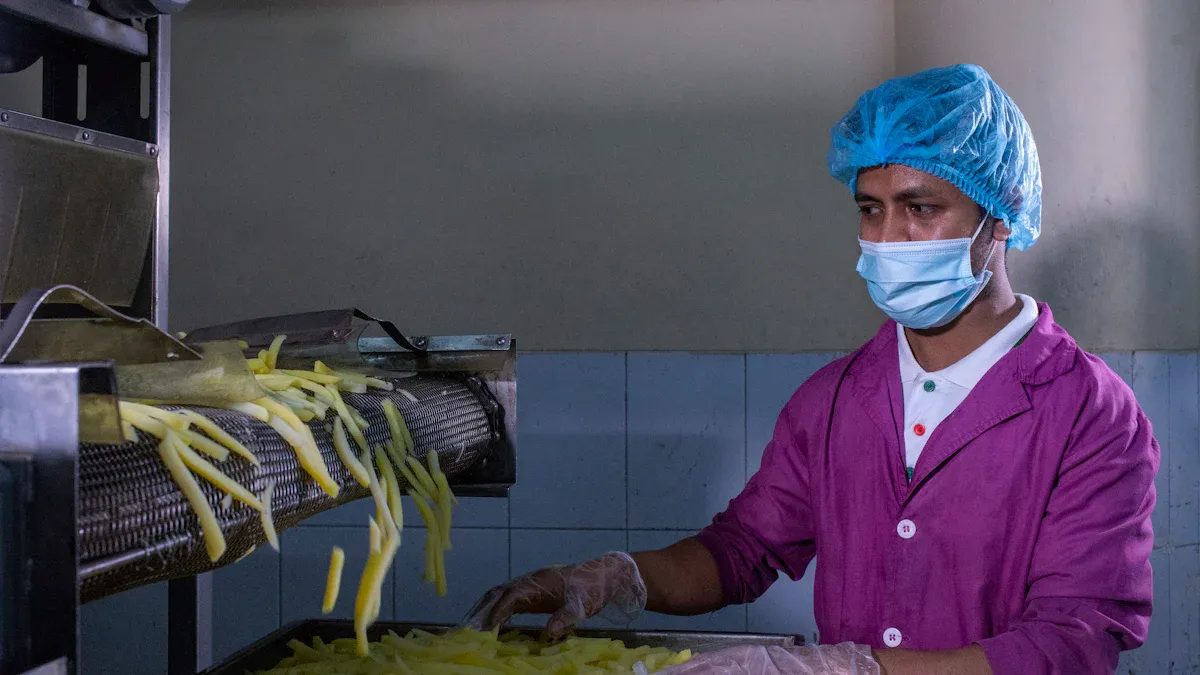
After cleaning and peeling, you cut the potatoes. You use machines with spinning blades to cut strips. These machines make strips all the same size. You do not cut by hand because it makes uneven fries. You pick strip thickness based on potato moisture. The best thickness is between 1.6 and 2.0 mm. You check how fresh and stored the potatoes are to choose the right thickness.
It is important to cut fries the same size. When strips are even, fries cook well and look good. Here are reasons why you want fries to be uniform:
You also think about the kind of potato you use. Some potatoes soak up more oil, others stay firm after frying. For example, Jalane takes in more oil, Belete takes in less. You can soak strips in salt water to lower oil soaking. You also use blanching to make fries look and taste better before frying.
Cutting strips the right way is very important. You make sure every strip is ready for the next steps. This helps you get high-quality frozen french fries every time. You use machines and careful checks to keep things running well. This lets you make frozen potatoes that meet top standards.
Blanching and Drying Frozen Fries
Blanching Process
You move the potatoes to the blanching stage after cutting. Blanching uses hot water or steam to treat the potato strips. This step helps you get fries with a better texture and color. You notice that blanching makes the raw potato sticks look transparent. You also stop enzymes from changing the color or taste of the fries. Here are some important reasons why you use blanching:
You inhibit enzymatic activity in potatoes.
You improve the texture of fries.
You stabilize the color.
You reduce oil absorption because starch gelatinizes.
You clean the surface of the potatoes.
You extend the shelf life of fries.
You minimize sugars in the potato strips.
You limit fat absorption by gelatinizing the top layer of starch.
You shorten frying time.
You see that blanching and freezing work together to keep fries fresh and tasty. You use precise temperature and timing controls to make sure every batch of potatoes gets the same treatment. This step helps you prepare fries for drying and later stages.
Drying Techniques
You dry the potato strips after blanching. Drying removes extra moisture and gets fries ready for frying and freezing. You use hot air drying most often. This method blows warm air over the fries to take away water. Sometimes, you use partial deep fat frying to help with drying. Both methods help you get fries with a crispy texture.
You can look at the main steps in the process:
Step | Description |
1 | Potato peeling |
2 | Washing |
3 | Cutting |
4 | Washing again |
5 | Removing impurities |
6 | Rinsing |
7 | Blanching |
8 | Cooling |
9 | Drying |
10 | Quick freezing |
11 | Packaging |
12 | Finished product |
You use drying to make sure fries do not soak up too much oil. You also keep the fries from sticking together during freezing. Drying helps you get the right texture and taste in the final product. You check the moisture level to make sure every batch meets your standards. You prepare the fries for the next step, which is par-frying and freezing.
Par-Frying and Freezing
Par-Frying Frozen French Fries
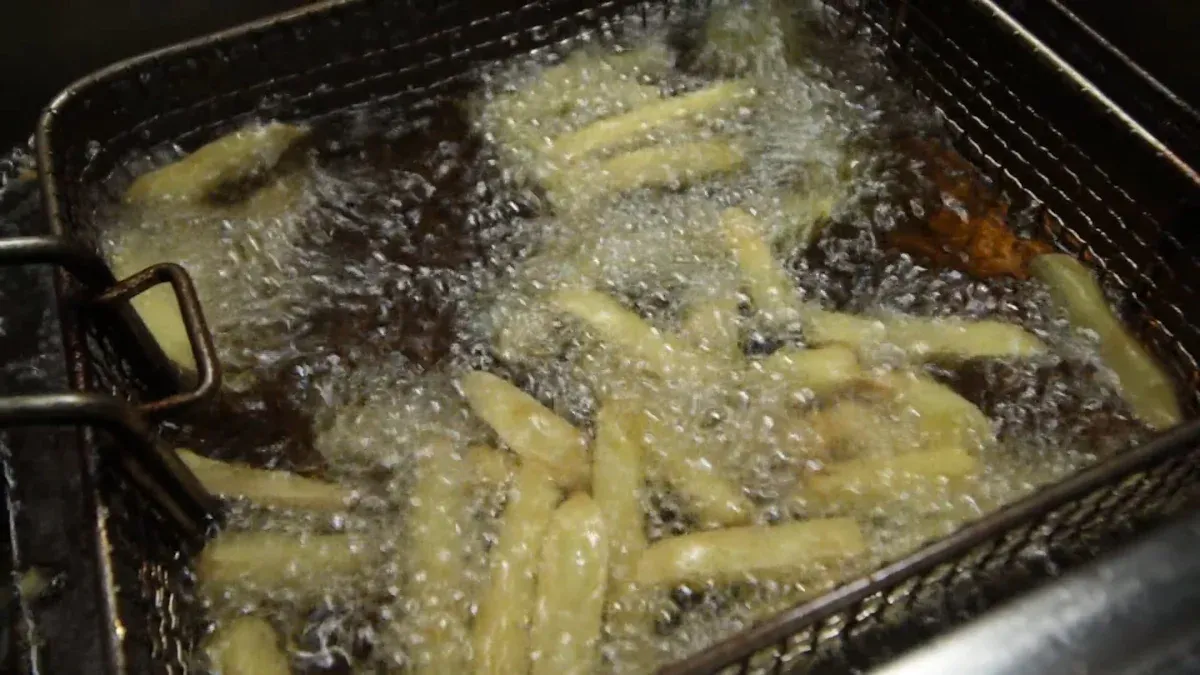
You start the par-frying step after drying the fries. Par-frying is a short deep-fat frying process that uses hot oil to cook the outer layer of the fries. This step removes moisture from the crust region. You do this to keep the fries from breaking during the final cooking at home or in restaurants. Par-frying gives the fries a golden color and a crisp texture. It also helps the fries keep their shape during freezing and later cooking.
You choose the oil for par-frying based on flavor and health. Many factories use refined peanut oil because it has a high smoke point and a neutral taste. This oil gives frozen french fries a classic flavor. In different regions, you may use sunflower oil, olive oil, rapeseed oil, palm oil, or soybean oil. The type and amount of oil you use can change the nutrition of the fries.
Here is a table that shows how temperature affects the texture and quality of fries during par-frying:
Temperature Range (°F) | Effects on Texture and Quality |
325 to 375 | Develops golden color, crisp texture, and good flavor; absorbs 8 to 25% oil. |
375 to 400 | Cooks rapidly; may lead to thinner crusts and less oil absorption. |
Lower Temperatures | Longer frying time; lighter color, less flavor, and increased oil absorption. |
Higher Temperatures | Crusts cook faster than the interior; may require over-frying for proper cooking. |
You control the temperature and time to get the best results. You want the fries to have a crispy outside and a soft inside. Par-frying prepares the fries for the next step—quick freezing.
Quick Freezing
You move the fries to the quick freezing stage right after par-frying. Quick freezing locks in moisture and flavor. You use special machines that freeze each fry very fast. This keeps the fries from sticking together and helps them keep their shape and texture. You call this method individual quick frozen, or IQF.
Studies show that the freezing process, especially after blanching, changes the texture and look of frozen french fries. Fries with the right freezing rate have a better crunch and appearance. The outer strips of fries can look balloon-like because of starch swelling, while the inside stays smooth.
You want to freeze the fries quickly to stop large ice crystals from forming. Large crystals can damage the fries and make them lose quality. Quick frozen fries stay crisp and tasty after you finish cooking them at home. You keep the fries in a frozen condition until you package them. This step makes sure the fries are safe and ready for you to enjoy.
Packaging and Quality Control
Automated Packaging
You get to the last step when you package the fries. Automated packaging machines help you work faster and keep fries safe. These machines fill, seal, and label each bag or box. Using machines means people touch the fries less, so there is less chance of germs.
You pick packaging that keeps fries safe during shipping and storage. Here are the main materials you use:
Polyethylene films: These protect fries from freezer burn and damage.
LDPE and HDPE: These are flexible and keep fries insulated.
PET: This works well when fries face temperature changes.
Cardboard: This is cheap, but it does not last long.
Tin cans: These are old-fashioned and cost more, so you use them less.
You choose packaging that keeps fries cold, dry, and clean. The packaging must handle fries getting bigger when they freeze. Automated systems use quick-freezing machines to stop germs from growing. You use a controlled line to keep things clean and lower the risk of germs. Inline inspection tools help you find bad things before fries leave the factory.
Final Quality Checks
You do final checks to make sure fries are good. You test fries after frying for moisture and in the lab before packing. You take samples to check length, defects, color, solids, and texture. You use a metal detector to find metal. If you find metal, you take out that bag and check it.
You look for problems like freezer burn, ice crystals, leaks, bad smell, and wrong labels. You also check for temperature problems, taste issues, weight changes, and packaging mistakes. You fix thawing or freezing problems, germs, texture issues, and things that do not belong. You remove fries that look odd and check if the taste is the same.
You know that good quality checks make fries safe and high quality. People want fries to taste and look the same every time. Good checks help your brand and keep customers happy. You use new freezing and energy-saving machines to make fries better and waste less.
You use many steps to make frozen french fries. Each step helps change how fries taste and feel. The table below shows why each step is important:
Stage | Contribution to Taste and Texture |
Selecting the Best Potatoes | Potatoes with lots of starch make fries crispy and golden. |
Washing, Peeling, and Preparing Potatoes | Cleaning keeps potatoes safe and whole, which helps quality. |
Cutting and Blanching for Optimal Texture | Cutting and blanching remove extra starch and keep color. |
Flash-Freezing to Seal in Flavor | Freezing keeps flavor and texture, and stops fries from sticking. |
Sorting and Packaging for Consistency | Sorting and packaging make sure fries are the same size and shape. |
Stringent Quality Control Measures | Quality checks keep fries safe and high quality at every step. |
You use smart machines to help make fries the same every time. You follow strict rules to keep fries good. More people want frozen french fries now. Quick-service restaurants are growing fast. People’s eating habits are changing. New technology and worldwide trends change how frozen french fries are made and eaten.
FAQ
How do you keep frozen french fries crispy after cooking?
You should bake or air fry the fries in a single layer. This helps hot air reach every fry. You can also shake the basket or pan halfway through cooking. This gives you a crispier texture.
Are frozen french fries healthy to eat?
You get some nutrients from potatoes. Most frozen fries have added oil and salt. You can choose brands with less fat or bake instead of fry. Always check the nutrition label for details.
What makes frozen french fries taste fresh?
You get fresh taste from quick freezing. This process locks in flavor and texture. You should store fries at the right temperature. This keeps them from getting freezer burn.
Can you cook frozen french fries without oil?
You can bake or air fry frozen fries without extra oil. Spread fries on a baking sheet or in an air fryer basket. This method gives you a crispy result with less fat.