
Views: 0 Author: Site Editor Publish Time: 2026-07-26 Origin: Site


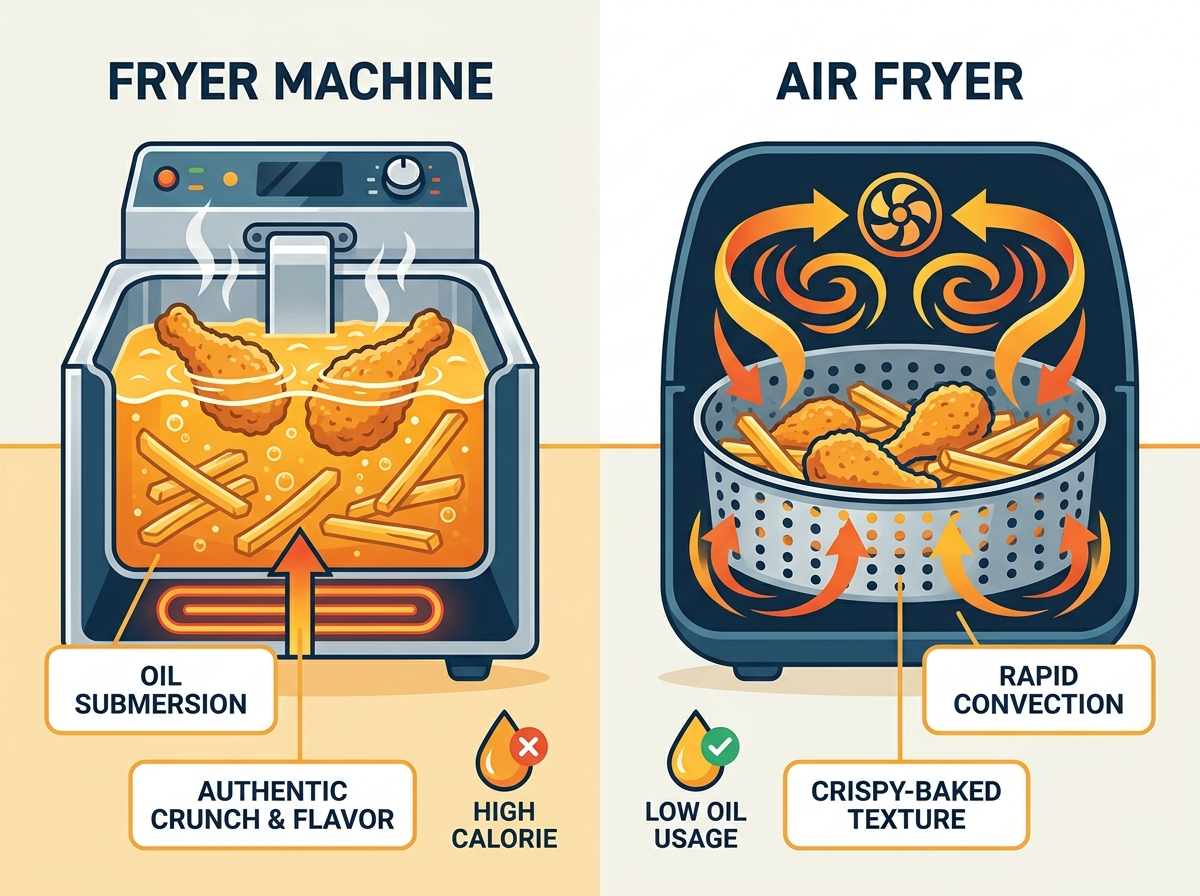
Navigating the crowded appliance market is tough. You want authentic deep-fried results but also crave modern cooking convenience. Many buyers get overwhelmed by conflicting marketing claims. Let us clarify a basic reality right now: "air frying" is fundamentally convection baking. A traditional fryer machine uses complete oil submersion. This mechanical difference drastically changes what you can cook.
Our goal is straightforward. We provide an unbiased, evidence-based breakdown of performance, maintenance, and safety to finalize your purchasing decision. You will understand exactly how these devices operate. We explore their true culinary limits and highlight critical safety factors. By the end, you will confidently choose the right tool for your kitchen.
Understanding the fundamental engineering behind these appliances reveals why they produce completely different culinary results. Both devices apply intense heat to food. However, they use entirely different mediums to transfer this heat.
This traditional appliance relies on liquid fat to conduct heat. Hot oil surrounds the food completely. It utilizes rapid thermal heat transfer. Water inside the food boils almost instantly upon contact. This creates outward steam pressure. The steam pushes outward, preventing oil from soaking deeply into the interior.
This process instantly seals the exterior of food. It locks in moisture while creating a uniform crust. Professional chefs rely on this exact thermodynamic reaction. The uniform heat distribution guarantees an even cook. This method remains essential for wet batters. Tempura, beer-battered fish, and classic buttermilk fried chicken require liquid submersion. The batter sets in seconds when it hits the hot oil.
These modern devices skip the liquid fat entirely. An air fryer utilizes a high-speed mechanical fan to circulate superheated air. A strong heating element sits directly above the food basket. The fan forces hot air down and around the ingredients at high velocity.
This rapid air movement triggers the Maillard reaction without submersion. It relies on the food's natural fats or a light oil spray to create a crust. The environment mimics a miniature, highly efficient oven. This appliance is best suited for dry-rubbed proteins, vegetables, and pre-breaded frozen goods. You get a rapid, intensely hot environment. The intense air currents dry out the surface of the food quickly.
Your ultimate satisfaction depends entirely on your texture expectations. Both appliances promise a "crispy" finish. However, culinary science dictates a clear difference in the final bite.
A deep fryer machine guarantees an even, golden-brown crunch. The interior remains exceptionally tender. The hot oil cooks every microscopic crevice of the food's surface simultaneously. This creates a shattering crust. It delivers the nostalgic, rich mouthfeel associated with restaurant-quality comfort food.
Air fryers produce a "crispy-baked" texture. This result is highly enjoyable but distinct from actual frying. The circulating air removes surface moisture effectively. However, it lacks the fat required to enrich the crust. This aggressive air circulation can dry out leaner cuts of meat if overcooked. Chicken breasts or pork chops require careful monitoring. They turn chalky quickly in a convection environment.
You must understand the strict limitations of rapid convection. Air fryers possess an absolute inability to handle wet batters. The powerful fan blows the wet batter off before it ever sets. You will ruin your meal. You will also create a disastrous mess inside the heating chamber.
The traditional method shows clear superiority here. A standard frying appliance handles liquid coatings flawlessly. We must also highlight its superiority for large-batch, uniform cooking. Liquid heat envelops everything equally. You get perfectly cooked batches without needing to shake or flip the food mid-cycle. Convection heating requires manual intervention. You must toss the basket halfway through to expose all sides to the heating element.
Performance Comparison
| Culinary Aspect | Traditional Submersion Method | Rapid Convection Method |
|---|---|---|
| Crust Quality | Shattering, uniform, rich flavor | Crispy-baked, localized browning |
| Interior Moisture | Excellent retention via steam barrier | Good, but risks drying out lean cuts |
| Mid-Cycle Action | None required | Requires shaking or flipping |
| Wet Batters | Perfect for tempura and beer batter | Fails completely; causes heavy mess |
Bringing high heat into your home requires careful consideration. You must evaluate the nutritional outcomes alongside physical safety requirements. These two devices demand very different kitchen environments.
We must contrast the caloric density of submerged oil cooking versus convection methods. Deep frying naturally introduces additional fat calories into your meal. The food absorbs a small percentage of the cooking medium. This absorption increases the overall energy density of the dish.
Rapid convection offers a 70 to 90 percent fat reduction. You achieve a satisfying texture using merely a tablespoon of oil. Sometimes you use no added fat at all. This dramatic reduction appeals strongly to health-conscious individuals. You can enjoy potato wedges or chicken wings regularly. The caloric penalty remains minimal compared to traditional methods.
Safety protocols vary wildly between these two systems.
Fryer Machine: You face a high risk of oil splatters. Severe burns happen quickly if you drop food carelessly into the vat. Fire hazards remain a serious concern. Liquid fat can ignite if heated past its flash point. The appliance requires continuous monitoring. You must secure a safe placement away from water sources. Even a few drops of water in hot oil cause violent explosions.
Air Fryer: These devices prioritize user safety. They feature enclosed heating elements. You never interact directly with the heat source. They include essential auto-shutoff features. The machine stops immediately if you pull the basket out. These mechanisms make it highly safe. It is generally kid-friendly for teenagers learning to cook.
Consider the physical space and airflow in your kitchen. A traditional setup creates a lingering odor of hot oil. You must discuss the necessity for proper range hood ventilation. Cooking pungent foods requires strong exhaust fans to pull the aerosolized grease out of your home. Without proper ventilation, a fine layer of grease coats your nearby cabinets.
Convection devices require minimal clearance. They feature relatively contained exhaust. You might smell the food cooking, but you avoid the heavy, greasy airborne particles. You can operate them safely on an island or away from your primary stove hood. Just ensure the back exhaust vent has a few inches of clearance from the wall.
Daily usability often dictates how much you truly love an appliance. You must evaluate the labor required before and after your meal. The effort involved in maintenance is a major deciding factor.
Operating a submersion setup involves intensive ongoing labor. You must manage the oil factor constantly. This involves purchasing, filtering, storing, and safely disposing of large quantities of cooking oil. Pouring used oil down the drain ruins your plumbing. You must strain the cooled liquid through cheesecloth to remove food particles. You then store it in a cool, dark place.
Degreasing is another major hurdle. This is a labor-intensive process. You must break down the heating elements carefully. You spend time scrubbing the oil vat to prevent rancidity. Any leftover, polymerized grease affects the flavor of your next meal. You cannot simply throw the main electrical components into a dishwasher. You need specialized degreasing soaps and dedicated scrub brushes.
Convection devices win heavily in the daily maintenance category. Daily cleanup takes merely minutes. Non-stick baskets are typically dishwasher-safe. Most users find they only require a simple wipe-down. Hot water and a soft sponge remove almost all residue instantly.
However, you must monitor long-term wear. The internal components rely heavily on non-stick coatings. These coatings can peel over time. If scratched or washed with abrasive materials, the basket loses its slick properties. Food begins sticking stubbornly. You must use silicone or wooden utensils exclusively. Metal forks will destroy the finish. Once the coating degrades, you usually need to replace the entire basket assembly.
Choosing the perfect tool requires an honest assessment of your lifestyle. You must evaluate your cooking habits objectively. Review these specific user profiles to find your match.
Perhaps you fit somewhere in the middle. We briefly mention hybrid multi-cookers as an excellent middle-ground. Air fryer ovens look like large toaster ovens. They offer the rapid convection fans of a basket model. They provide much larger capacity. You can roast a whole chicken or bake a 12-inch pizza. They serve users needing larger cooking space without the intense oil management of traditional setups. They take up more counter space but replace multiple distinct appliances.
The "best" appliance is strictly dictated by your primary menu and tolerance for cleanup. No single device perfectly satisfies every kitchen requirement. A traditional submersion setup provides elite flavor and flawless batter execution. A rapid convection device delivers unmatched speed, easy maintenance, and healthier daily meals.
We prompt you to audit your most frequently cooked meals over the last 30 days. Did you mostly heat up frozen convenience foods and roast vegetables? Or did you attempt complex, batter-dipped recipes for weekend gatherings? This simple audit makes the final choice obvious.
Now is the time to upgrade your kitchen arsenal. Direct your attention to specific product review roundups or buying guides for your chosen category. Compare capacities, wattage, and warranty terms to find the exact model tailored perfectly to your home.
A: No. You should never put liquid batter inside convection devices. The high-speed fan blows the wet batter off the food before it sets. This creates a massive mess inside the heating chamber. It also ruins the texture of your meal. Use a traditional submersion method for wet batters instead.
A: Convection devices generally use less electricity due to shorter preheat and cooking times. Additionally, they eliminate the ongoing requirement of purchasing large jugs of cooking oil. Traditional setups require you to replace multiple liters of oil frequently, making them more resource-intensive to operate regularly.
A: You can typically reuse oil three to four times if filtered properly. You must strain out all food particles using a fine mesh or cheesecloth after each use. Store the cooled oil in a dark, airtight container. Discard it immediately if it smells rancid or smokes at low temperatures.
A: It tastes excellent, but it mimics convection baking, not true deep frying. You will enjoy a highly satisfying, crunchy exterior. However, it lacks the rich, fatty mouthfeel and shattering crust achieved through full liquid submersion. It is a delicious alternative, but culinary purists will easily notice the difference.


