Unplanned downtime during peak harvest seasons doesn't just halt production. It directly causes raw material spoilage. Yield loss and missed delivery agreements quickly follow. When a breakdown occurs, operators must act fast. They need to determine if the issue is a simple mechanical fault. Sometimes, the problem stems from a sanitation failure. In other cases, it reveals systemic equipment obsolescence. Time is always against you when fresh produce waits on the floor. This guide provides a systematic framework for diagnostics. It helps you address common faults across any fruits processing line. Plant managers can use these steps to resolve immediate issues safely. You will learn how to isolate root causes efficiently. Finally, you will discover how to evaluate long-term repair versus replacement strategies to keep your facility running at peak performance.
Key Takeaways
- Downtime is Cumulative: Minor misalignments or sensor faults in sorting and washing stages compound into significant yield losses and quality degradation downstream.
- Hygiene Equals Compliance: Filtration clogs and poor drainage are not just operational nuisances; they are critical food safety and compliance risks.
- Data-Driven Diagnostics: Effective troubleshooting relies on isolating electrical, mechanical, and software faults before replacing expensive components.
- Strategic Upgrades: Frequent, recurring breakdowns in legacy systems often signal that the financial burden for maintenance has surpassed the cost of integrating modern, scalable equipment.
The Business Cost of Processing Bottlenecks
Equipment inefficiencies directly damage your bottom line. You might notice bruised fruit from rough handling. Lower juice extraction yields also signal a major problem. Increased energy consumption points to motors working too hard. Every minute of reduced throughput translates into lost revenue. Spoiled raw materials increase waste disposal costs. Inefficient machines require more labor hours for supervision. Over time, these small losses compound dramatically. Plant managers cannot afford to ignore minor bottlenecks. Resolving them quickly preserves your profit margins.
A successful intervention must accomplish two distinct goals. First, it must restore throughput to expected baseline levels. Second, it must maintain strict food safety standards. You must ensure continuous FDA and HACCP compliance during any repair. You cannot sacrifice product integrity for speed. Quick fixes often introduce cross-contamination risks. Proper troubleshooting balances immediate operational needs against strict hygiene protocols. Your solutions must remain documented, repeatable, and safe. Operators must verify product safety before restarting the main systems.
Identifying the true root cause remains your most important task. You must separate human errors from mechanical failures. We categorize root causes into three primary areas:
- Operator Error: Improper loading sequences or incorrect batch size inputs.
- Environmental Factors: Variable fruit sizes, unexpected density changes, or seasonal temperature fluctuations.
- Mechanical Degradation: Worn bearings, stretched belts, or dull cutting blades.
Understanding these categories helps you apply the correct solution. You avoid replacing parts when operators simply need better training. Accurate diagnostics save time, money, and unnecessary frustration.
Diagnosing Mechanical and Electrical Failures in Your Fruits Processing Line
Conveyor Belt Misalignment and Wear
Conveyor belts endure constant stress during daily operations. You will often notice fraying along the belt edges. Uneven product distribution across the belt signals tracking issues. You might also hear unusual motor strain. These symptoms indicate belt misalignment or severe material degradation. Ignoring these signs leads to complete belt snaps. Product blockages quickly follow, causing massive downstream delays. You must act as soon as edge fraying appears.
Fixing belt issues requires a methodical approach. First, check the tensioners and realign the tracking guides. Next, inspect the rollers closely. Sticky residue buildup frequently forces belts off their tracks. Clean all contact surfaces thoroughly. Finally, verify the belt material itself. Highly acidic citrus fruits degrade standard rubber quickly. You must ensure the belt rating matches the specific acidity of the processed fruits. Upgrading to acid-resistant materials prevents recurring wear.
Motor and Drive System Overloads
Drive systems serve as the heart of your machinery. Symptoms of failure include frequently tripped breakers. You might also detect excessive heat radiating from motor housings. Sudden system halts during peak loads indicate severe overloads. These issues threaten the entire production schedule. Motors draw excess current when mechanical resistance increases. Unchecked resistance eventually burns out expensive drive components. We must address the load conditions before replacing electrical parts.
Start by auditing the initial feed rate. Operators often overload systems to meet daily targets. Lowering the feed rate slightly prevents continuous tripping. Next, inspect the gearboxes for lubrication breakdown. Metal-on-metal friction causes severe thermal spikes. Drain and replace degraded lubricants immediately. Finally, test the electrical contacts. You should look for voltage drops across the terminals. Corroded contacts increase resistance, forcing the motor to work harder. Clean or replace faulty wiring harnesses.
Sensor and Calibration Errors in Sorting
Optical sorting relies on precise data collection. High false-reject rates waste perfectly good produce. Conversely, off-spec fruit passing through compromises your final product quality. These symptoms usually point to sensor blindness or calibration drift. Sorting software makes decisions based on real-time inputs. Bad inputs guarantee bad sorting outcomes. Modern facilities lose thousands of dollars daily to poorly calibrated sensors.
Cleaning optical lenses safely is your first step. Use approved, non-abrasive materials to remove dust and juice splatter. Next, recalibrate the weight and color sensors. Always use a known, physical baseline object for this process. Do not guess the baseline values. After calibration, check the main control panel. Software update requirements often resolve underlying logic glitches. You must also check for external signal interference. Heavy motor vibrations nearby can disrupt sensitive optical equipment.
Addressing Hygiene, Filtration, and Quality Control Issues
Clogs in Washing and Filtration Stations
Water management is critical for a smooth operation. Water pooling around washing stations indicates immediate drainage problems. You may notice reduced spray pressure from the overhead nozzles. Cross-contamination between separate batches also highlights filtration failures. Dirty water spreads pathogens across otherwise clean produce. These clogs create massive food safety compliance liabilities. You cannot process food safely if the wash water remains contaminated.
To resolve these issues, start at the filtration source. Inspect the rotary screens and filter sheets. Organic buildup, such as leaves and pulp, blocks water flow rapidly. Remove this debris manually. Next, verify the main pump pressure. A failing pump cannot push water through partially blocked screens. Finally, evaluate your sanitation schedule. Implement a more aggressive Clean-in-Place (CIP) routine. High-pulp fruits require more frequent flushing cycles than standard produce.
Chart: Hygiene and Filtration Troubleshooting Summary
| Observed Symptom | Probable Root Cause | Recommended Action |
| Water pooling at station base | Blocked rotary screens / drains | Clear organic debris; inspect filter sheets. |
| Reduced overhead spray pressure | Failing pump or clogged nozzles | Verify pump voltage; descale spray nozzles. |
| Cross-contamination of batches | Recirculation of dirty water | Increase CIP frequency; change filter media. |
Inconsistent Peeling, Coring, or Extraction
Quality control often fails at the peeling and coring stages. You will see excessive waste when machinery leaves too much flesh on the peels. Incomplete coring leaves hard centers in the final product. Extraction modules might produce less juice than expected. These inconsistencies destroy your yield metrics. They also force manual rework, which drives up labor costs. Precision is mandatory for these automated steps.
Begin by checking blade sharpness. Dull blades crush fruit rather than cutting it cleanly. Measure the alignment tolerances to ensure perfect centering. Next, assess the pneumatic pressure in your automated corers. Low pressure causes the coring tubes to stall mid-cycle. Finally, evaluate the incoming fruit batch. You must match the machine settings to the specific maturity and firmness of the fruit. Soft, overripe fruits require lower pressure settings than hard, early-harvest produce.
Repair vs. Replace: Evaluating Your Fruits Processing Line
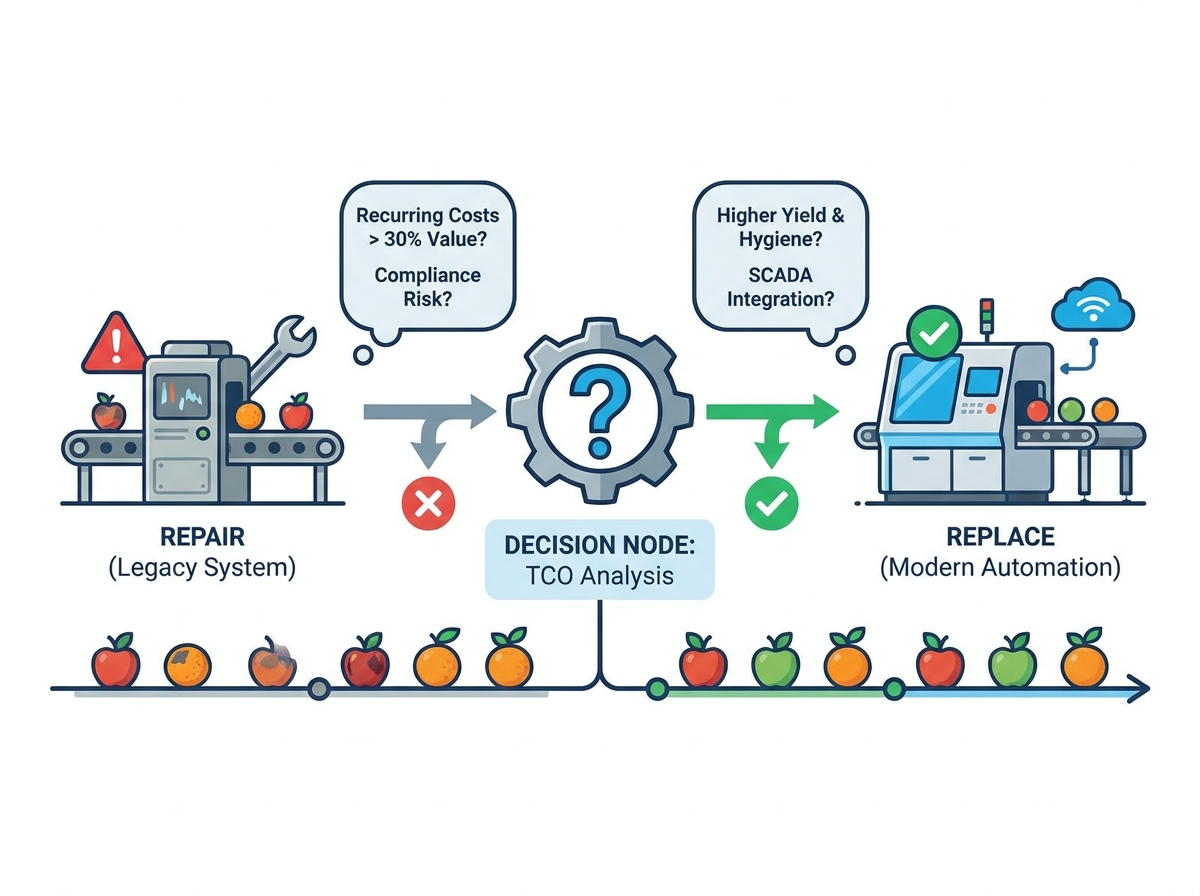
Facility managers constantly face the repair-versus-replace dilemma. You must evaluate this choice through a features-to-outcomes lens. Does patching an old machine achieve your necessary outcomes? You need reliable hygiene, high speed, and maximum yield. Old equipment often requires constant manual intervention. Modern equipment offers automated features that guarantee consistency. If your patched machine still cannot meet HACCP standards easily, repairing it wastes capital. You must prioritize long-term performance over short-term savings.
Scalability and integration represent another crucial factor. Analyze your current equipment closely. Can it communicate with your central SCADA systems? Legacy machines often operate in complete silos. This isolation hinders line-wide automation and data collection. When a machine cannot report its own fault codes, troubleshooting takes hours instead of minutes. Upgrading a single bottleneck module can instantly improve the throughput of your entire fruits processing line. Integration allows for real-time adjustments and predictive maintenance alerts.
You need a logical framework for making these capital decisions. We recommend a strict shortlisting logic. Look at your annualized maintenance records. Suppose a specific module requires maintenance exceeding 30% of its replacement value annually. In that case, it becomes a prime candidate for immediate replacement. Furthermore, any machine posing a persistent compliance or safety risk demands replacement. You cannot put a price on preventing a massive product recall. Strategic upgrades ultimately protect your brand reputation.
Implementing a Preventive Maintenance Framework
Implementing maintenance routines sounds easy in theory. The realities of peak harvest season make it incredibly difficult. You cannot afford to shut down the entire facility for a day. We recommend adopting staggered maintenance strategies instead. Service one specific module during shift changes. Rotate the maintenance focus daily. This approach keeps the majority of the facility operational. It also prevents catastrophic, line-wide failures. Consistency matters more than the duration of the maintenance window.
Your spare parts inventory requires strict management. Waiting for shipped parts causes devastating downtime. You must identify all critical, long-lead-time components immediately.
- Audit all custom cutting blades and order backups.
- Stock up on specific sanitary seals for pumps and valves.
- Keep replacement optical lenses and basic sensors on site.
- Maintain a supply of acid-resistant conveyor belt sections.
Keeping these items readily available minimizes downtime. Your technicians can swap components in minutes rather than waiting weeks for overseas freight.
Finally, focus on operator training and Standard Operating Procedures (SOPs). The floor operator serves as your first line of defense. They hear the strange noises first. They see the initial alignment shifts. You must standardize daily inspection checklists for these workers. When operators know exactly what to look for, they catch problems early. Detail the exact steps for reporting anomalies. Structured communication reduces the frequency of catastrophic equipment failures. Empower your team to stop the line when they spot a critical hygiene risk.
Conclusion
Effective troubleshooting moves far beyond reactive, temporary fixes. It requires a holistic view of your entire facility. You must understand how mechanical, electrical, and hygiene systems interact constantly. A failure in one area cascades into the others. By applying systematic diagnostics, you isolate root causes quickly. This approach minimizes downtime and protects your yield. Moving forward, plant managers should audit their current downtime logs thoroughly. Calculate your true, cumulative maintenance expenses. Consult with process engineering specialists to evaluate potential system upgrades. Proactive strategies will always outperform reactive scrambling during the harvest rush.
FAQ
Q: How often should optical sorting sensors be calibrated on a fruits processing line?
A: Calibration depends heavily on daily volume and environmental conditions like dust and moisture. However, best practice dictates a quick baseline check at the start of every shift. You should also perform a deep, comprehensive calibration during your weekly scheduled maintenance window to ensure absolute accuracy.
Q: What is the most common cause of sudden motor failure in extraction equipment?
A: Moisture ingress and prolonged overloading are the primary culprits. Aggressive washdowns force water into unsealed motor housings. Additionally, feeding fruit faster than the specified throughput overworks the motor, leading to severe thermal breakdown and eventual failure.
Q: How can we reduce water usage in our fruit washing station without compromising food safety?
A: You can implement multi-stage filtration systems. These systems allow for the safe recirculation of wash water. They separate heavy organic solids and sanitize the water using UV or chemical treatments before reuse, keeping your water consumption low while maintaining strict hygiene compliance.
Q: When does it make financial sense to replace rather than troubleshoot a specific processing module?
A: You should replace the module when recurring repair costs exceed 30% of a new machine's price annually. You must also factor in the financial penalty of lost yield and downtime. When these combined expenses exceed the annualized cost of a new, efficient machine, replacement is necessary.


