Do you want to make beef jerky that tastes great and stays fresh? Start with lean meat. Cut it into thin slices. Marinate the meat well. Follow the steps for your food dryer machine or food dehydrator. Put the strips in the dehydrator with space between them. Making beef jerky at home is easy and fun. It gives you a healthy snack. You can choose the flavor and texture. Homemade beef jerky from a food dryer machine is better than store-bought. Try making beef jerky at home for the best results.
Choose lean cuts of beef like eye of round or top round for the best jerky texture and longer shelf life.Trim all fat and slice meat thinly, cutting against the grain for tender jerky or with the grain for chewier jerky.Marinate meat for 12 to 24 hours using salt, acid, and flavorings to add taste and tenderize the jerky.Arrange meat strips with space in a clean food dryer machine set between 155°F and 160°F, drying for 4 to 6 hours.Check jerky texture by bending strips until they crack but don’t snap, and store cooled jerky in airtight containers to keep it fresh.
Choose Meat
Best Cuts
Picking the right meat is the first step in any great jerky recipe. You want to start with lean cuts of beef. Fat can spoil your jerky and make it greasy. When you use lean meat, your jerky will last longer and taste better. The best cuts for jerky come from the round section of the cow. You can try eye of round, top round, bottom round, or sirloin tip. These cuts have little fat and a nice texture. Eye of round is a favorite for many people because it is easy to slice and has a mild flavor. Top round is also popular for its shape and price. If you want to try something different, flank steak or pectoral cuts work too, but they may be a bit tougher or have more fat.
When you buy meat for your jerky recipe, look for a bright red color and a firm feel. The meat should not have much marbling or connective tissue. This helps your jerky dry evenly and gives you the best results. Always check that your supplier uses safe handling and food-grade stainless steel equipment, like those found at Shandong Huiyilai International Trade Co., Ltd. This keeps your jerky safe and fresh.
Trim and Slice
Now, let’s talk about how to slice the meat. First, trim off all visible fat, silver skin, and any tough bits. This step is important for every jerky recipe because fat can go rancid during drying. Next, pay attention to the grain of the meat. The grain is the direction the muscle fibers run. If you want tender jerky, cut against the grain. This shortens the fibers and makes each bite easier to chew. If you like a chewier jerky, slice with the grain.
Use a sharp knife for clean cuts. Dull knives can tear the meat and make uneven pieces. For most recipes, slice the meat about 1/4 inch thick. Thin slices dry faster and soak up more flavor from your marinade. If you are not sure how to slice the meat, try freezing it for 30 minutes first. This makes it firmer and easier to cut. Always use safe hand positions, like the claw grip, to protect your fingers.
Tip: Cutting against the grain not only makes your jerky more tender, but it also helps the marinade soak in better. This means more flavor in every bite!
Once you finish trimming and slicing, you are ready to move on to the next step in your jerky recipe. Remember, the way you prepare your meat will make a big difference in the final taste and texture. If you want to learn more about food dryer machines or meat processing equipment, check out the latest products at hylequip.com.
Marinate Meat
Marinade Basics
You want your beef jerky recipe to stand out with bold, delicious flavors. The secret starts with a good marinade. A marinade does more than just add taste. It helps tenderize the meat and keeps it juicy during drying. When you make your own recipe, remember the SAF rule: Salt, Acid, and Flavoring.
Salt is the most important part. It goes deep into the meat, making every bite tasty. Salt also helps the meat hold onto moisture, so your jerky does not dry out too much.
Acid comes next. You can use vinegar, lemon juice, or even buttermilk. Acid brightens the flavor and helps break down tough fibers. Use just a little, or your jerky might get mushy.
Flavorings are where you get creative. Try soy sauce for umami, honey or brown sugar for sweetness, and garlic or ginger for a kick. Spices like black pepper, chili flakes, or smoked paprika add depth. Sugar also helps your jerky brown nicely in the food dryer machine.
A great beef jerky recipe often uses a mix of these ingredients. For example, a Korean BBQ jerky recipe might blend soy sauce, gochujang, honey, sesame oil, garlic, and ginger. This mix gives you a sweet, spicy, and savory flavor that soaks deep into the meat.
Tip: Always use food-grade stainless steel bowls and utensils, like those from hylequip.com, to keep your marinade safe and fresh.
Marinating Time
How long should you marinate your meat? The answer can change your whole recipe. Studies show that marinating for at least 12 hours gives the best flavor and tenderness. If you use a dry marinade or red wine, 12 hours can make your jerky taste even better. Some recipes suggest up to 24 hours, but going longer does not always help. In fact, marinating for more than 24 hours can make the meat too soft and may not add extra flavor.
Here’s a quick look at marinating times and their effects:
Marinating Time | Marinade Type | Flavor Score | Best Use |
2 hours | All types | Good | Quick recipes |
12 hours | Red wine/Dry | Excellent | Most recipes |
24 hours | Dry | Best | Deep flavor |
48 hours | Any | No extra gain | Not needed |
For your beef jerky recipe, aim for 12 to 24 hours. This gives you the best mix of flavor and texture. Always marinate in the fridge, not on the counter, to keep your meat safe.
Note: If you want to try new flavors, split your batch and use different marinades. You can compare which recipe you like best!
How to Make Beef Jerky with a Food Dryer Machine
Making jerky at home is simple when you follow the right instructions. You just need to know how to make beef jerky step by step. Let’s walk through the process using your food dryer machine or food dehydrator.
Arrange in Food Dryer Machine
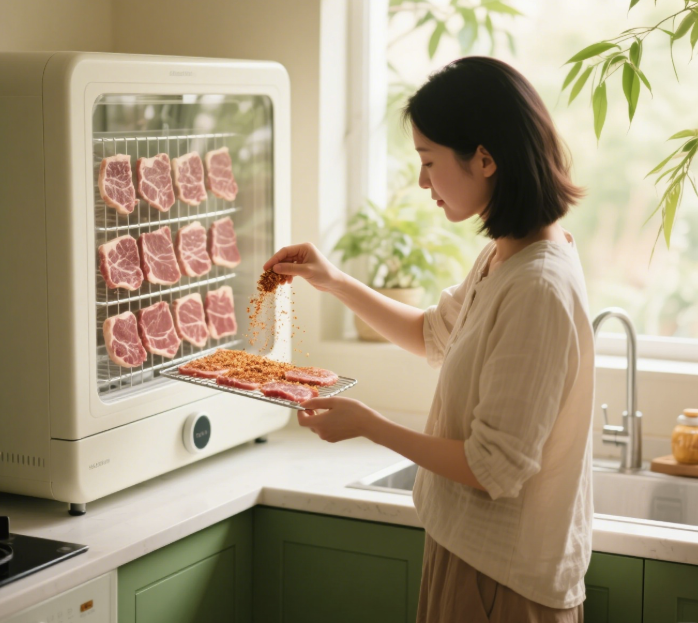
Start by taking your marinated meat out of the fridge. Pat each strip dry with a paper towel. This helps remove extra marinade and fat, which keeps your jerky from getting greasy. Lay the strips flat on the trays of your food dryer machine. Make sure you leave space between each piece. Good air flow is key for drying the jerky evenly.
If you use a food dryer machine made of food-grade stainless steel (SS304), like the ones from hylequip.com, you get extra safety and hygiene. Stainless steel trays are easy to clean and do not react with your food. Always check that your food dehydrator is clean before you start.
Tip: Don’t let the strips touch or overlap. Air needs to move around each piece for the best results.
Here are some quick instructions to help you arrange the meat:
Remove excess marinade and fat from each strip.
Place strips in a single layer on the dehydrator trays.
Leave at least 1/4 inch between each strip for air circulation.
Use all trays if you have a large batch, but don’t overload the machine.
Set Temperature and Time
Now it’s time to set your food dryer machine. The best temperature for dehydrating jerky is between 155°F and 160°F. This range keeps your jerky safe and helps it dry fast. Most food dehydrators have a temperature dial or digital control. Set it to 155°F if you want a classic texture. If you want to be extra safe, you can go up to 160°F.
How long does beef jerky take to dry? Usually, it takes 4 to 6 hours. Thicker slices may need more time. Thinner slices dry faster. Always check your dehydrator’s manual for specific instructions.
Here’s a table to help you set the right temperature and time:
Temperature (°F) | Time (hours) | Notes |
155 | 4-6 | Standard for most recipes |
160 | 4-5 | Extra safety, faster drying |
145 | 6-8 | Use only if slices are thin |
If you want to know how to make beef jerky that is safe, always use a food dryer machine that can hold a steady temperature. Studies show that keeping the temperature steady and not opening the door too often helps kill germs and keeps your jerky safe to eat.
Note: If your food dehydrator has a fan, use it. Fans help move air and dry the jerky evenly.
Monitor Drying
While the jerky dries, you need to check it from time to time. Open the food dehydrator after about 2 hours. Blot any fat that appears on the surface with a clean paper towel. This step keeps your jerky from getting oily.
You can use a thermometer to check the temperature inside your food dryer machine. Some advanced dehydrators have built-in sensors. These sensors help you track the temperature and make sure your jerky stays in the safe zone. If you want to get fancy, some machines use wireless temperature monitors or even acoustic sensors to check the drying process without touching the food.
Here are some ways to monitor drying the jerky:
Check the color and texture every hour after the first 3 hours.
Use a thermometer to make sure the temperature stays at 155°F to 160°F.
Blot off any fat that collects on the strips.
Rotate trays if your dehydrator does not have a fan.
Tip: Write down the time you started and check your jerky at regular intervals. This helps you learn how to make beef jerky perfectly every time.
If you follow these instructions, you will get tasty, safe, and chewy jerky. Using a food dryer machine from hylequip.com, made with food-grade stainless steel, gives you peace of mind about safety and hygiene. Now you know how to make beef jerky at home with a food dehydrator. Enjoy your homemade snack!
Check Doneness
Texture Test
You might wonder how to tell when it's finished drying. The answer is all about texture. When you pick up a piece of jerky, it should feel dry but still bend a little before it breaks. If it snaps right away, it might be too dry. If it feels soft or sticky, it needs more time in the food dryer machine.
Culinary research shows that experts use special tools to check jerky texture. They cut jerky into small cubes and press them with a stainless steel probe to measure hardness and chewiness. You do not need fancy machines at home, but you can use your hands and mouth. Try this simple test:
Take a strip and bend it at a 90-degree angle.
If it cracks but does not snap in half, your jerky is ready.
Chew a piece. It should be chewy, not tough or mushy.
You can also ask friends or family to taste test. If everyone agrees the jerky is chewy and flavorful, you know how to tell when it's finished drying.
Tip: Always use clean hands and food-grade stainless steel trays from hylequip.com for the best results and safety.
Food Safety
Knowing how to make jerky safely is just as important as getting the right texture. You want to keep your jerky free from germs and safe to eat. The best way is to follow temperature and humidity rules. Here is a quick table to help you remember the main points:
Criterion / Test Method | Description / Requirement |
Internal Temperature | Heat jerky to 160°F (71°C) during the first stage with 90% humidity to kill harmful bacteria. |
Relative Humidity | Keep about 90% humidity during heating to stop surface drying and bacteria growth. |
Water Activity (aw) | Dry jerky until water activity drops below 0.75 aw to prevent germs from growing. |
Moisture Content | Aim for about 20% moisture. Jerky should feel dry, not wet. |
Measurement Instruments | Use water activity meters for the most accurate safety check. |
Drying Temperature | After heating, dry at 130-140°F (55-60°C) to finish the process. |
Food safety standards from the Nebraska Department of Agriculture say you should always use a calibrated thermometer. This helps you check the temperature and make sure your jerky is safe. Clean your equipment before and after use. Stainless steel machines from hylequip.com make cleaning easy and help you meet safety rules.
If you follow these steps, you will know how to make jerky safely and keep your snacks fresh. Always check the texture and temperature. That is the best way to make sure your jerky is safe and delicious.
Store Homemade Beef Jerky
Cool and Pack
After you finish drying your homemade beef jerky, let it cool completely before packing. Spread the jerky out on a clean tray or rack. Make sure air can move around each piece. Cooling at room temperature with gentle airflow helps keep the jerky safe and stops moisture from building up. If you pack jerky while it’s still warm, you might trap steam inside the bag. This can cause mold or spoilage.
Once your jerky feels cool and dry, you can start packing. Use airtight containers, zip lock bags, or vacuum packing machines for the best results. Vacuum sealing removes almost all the air, which keeps your homemade beef jerky fresh for up to six months. You can find vacuum packing machines and other food processing equipment at hylequip.com. If you don’t have a vacuum sealer, use freezer-grade plastic bags and squeeze out as much air as possible.
Tip: Add a food-grade desiccant or oxygen absorber to your packaging. This helps control moisture and keeps your jerky safe.
Storage Tips
Storing homemade beef jerky the right way keeps it tasty and safe. Here are some simple tips:
Store jerky in a cool, dark place, like a pantry or cupboard. Avoid sunlight and heat, which can cause condensation and mold.
Use airtight, vapor-proof containers to protect against air, moisture, and pests.
Resealable freezer bags work well for up to 60 days. Mason jars or plastic containers also work, but jerky may dry out faster.
Vacuum-sealed bags can keep homemade beef jerky fresh for up to six months or even longer.
Don’t freeze jerky. Freezing can change the taste and make it too dry.
Here’s a quick table to help you choose the best storage method:
Storage Method | Shelf Life | Notes |
Vacuum-sealed bag | Up to 6 months | Best for long-term storage |
Freezer bag | 1-2 months | Good for short-term, easy to use |
Mason jar | 1-2 months | Airtight, but jerky may dry out faster |
Pantry (cool, dark) | 3-4 weeks | Use with airtight packaging |
If you follow these steps, your homemade beef jerky will stay fresh, flavorful, and safe to eat. Always check for signs of spoilage before eating. For more tips and equipment, visit hylequip.com.
You have learned how to make beef jerky at home. First, pick a recipe you like. Cut your meat into thin pieces. Use a dehydrator so the meat dries evenly. Homemade beef jerky tastes great and you control the process. You can try new flavors or use a vacuum packing machine from hylequip.com to keep it fresh. If you want more ideas, look for extra tips and recipes about dehydrators. Get your dehydrator ready and make your own beef jerky today!
FAQ
How do you know when jerky is fully dried?
You can bend a strip. If it cracks but does not snap, it is ready. The jerky should feel dry but still chewy. Always check a few pieces from different trays for best results.
Can you use a food dryer machine for other foods?
Yes! You can dry fruits, vegetables, and even herbs in a food dryer machine. Many people use it for apple chips, banana slices, or dried tomatoes. Check out hylequip.com for more ideas and equipment.
What is the best way to store homemade jerky?
Let your jerky cool first. Then pack it in airtight containers or vacuum-sealed bags. Store it in a cool, dark place. Vacuum packing machines from hylequip.com help keep jerky fresh for months.
Do you need to cook beef before drying it?
You do not need to cook the beef first if you dry it at the right temperature. Set your food dryer machine to 155°F to 160°F. This kills harmful bacteria and keeps your jerky safe to eat.


