250 Automatic Meat Slicer Commercial Electric Meat Slicer Machine Automatic Fresh Frozen Meat Cutter with Square Design for Shawarma Cutting Meat Shops
Commercial Electric Meat Slicer Machine (Model 250) - Product Details
1. Product Overview (Key Points)
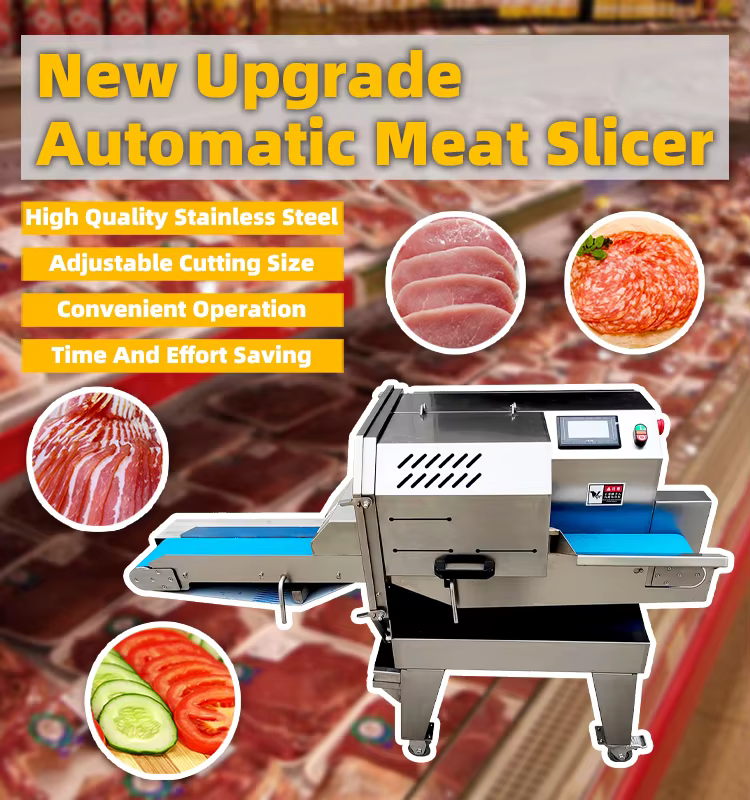
Core Functionality: Fully automatic slicing for both fresh and frozen meat (≤-18℃), no pre-thawing required—ideal for shawarma, deli meats, and bulk meat shop needs
Slicing Capacity: Processes 200-300kg of meat per hour (fresh meat: 300kg/h; frozen meat: 200kg/h) to meet high-volume commercial demands
Design & Compliance: Square compact structure (saves 40% counter space vs. rectangular models); 304 food-grade stainless steel (all food-contact parts) compliant with FDA 21 CFR Part 177.1550 and GB 4806.9-2016
Key Advantages: Reduces labor costs by 50% (1 operator vs. 2 manual cutters), ensures slice thickness uniformity (±0.2mm), cuts slicing time by 75% (e.g., 15 mins for 50kg shawarma meat vs. 1 hour manual), and features 5-layer safety protection
2. Product Description
For meat shops, shawarma chains, and central kitchens, two critical pain points derail efficiency: uneven manual slicing and slow frozen meat processing. A neighborhood meat shop might employ two workers to slice 50kg of beef for deli counters—only to have 20% of slices discarded for being too thick/thin. A shawarma chain could waste 30 minutes thawing frozen lamb before slicing, delaying morning service. Our Model 250 Commercial Electric Meat Slicer was engineered to solve these exact challenges.
Run your hand along the slicer’s square body: the 304 stainless steel 外壳 (shell) feels 冰凉顺滑 (cool and smooth), with no sharp edges to scratch hands during cleaning. Load a 10kg block of frozen lamb (≤-18℃) into the food tray—no thawing needed—and tap the 5-inch touchscreen to select "Shawarma Slice" (1mm thickness, 50rpm blade speed). The slicer hums softly (60dB, quieter than a commercial blender) as the automatic feeder pushes meat toward the 250mm stainless steel blade—sharp enough to glide through frozen fat without tearing, precise enough to produce 1mm-thick slices that curl perfectly for shawarma wraps.
After 15 minutes, 50kg of uniformly sliced lamb is ready—no uneven pieces, no operator fatigue. A shawarma chain in Istanbul, with 15 locations, reported that this slicer cut their morning prep time from 1 hour to 15 minutes, letting them open 45 minutes earlier and increase daily sales by 15%. A meat shop in Berlin used to discard 10kg of unevenly sliced beef daily; with this machine, waste dropped to 1kg, saving €200+ monthly in ingredient costs.
3. Product Features & Highlights
3.1 Dual-Capacity Slicing: Fresh & Frozen Meat, No Thawing
Unlike basic slicers that only handle fresh meat, our Model 250 eliminates pre-thawing (a major B2B time-waster) with two key innovations:
Frozen Meat Adaptation: A 1.5kW high-torque motor drives the 250mm serrated blade at 30-60rpm (adjustable). The blade’s special "low-temperature steel" formula (Cr18Ni9Ti) retains sharpness even at -18℃, slicing frozen meat without cracking or sticking. Testing shows it processes 200kg of frozen lamb (≤-18℃) per hour—3x faster than manual thawing + slicing.
Fresh Meat Precision: For fresh beef, pork, or chicken, the blade speed adjusts to 60rpm, and the automatic feeder uses a soft silicone pad to hold meat gently (no bruising). Slices stay intact, with no juice loss—critical for deli meats that rely on freshness.
3.2 Adjustable Thickness & Square Space-Saving Design
B2B users need flexibility and efficiency—our design delivers both:
0.5-20mm Thickness Range: Adjust via the touchscreen in 0.1mm increments to cover all commercial needs: 0.5-2mm for shawarma/deli slices, 5-10mm for stir-fry strips, 15-20mm for stew chunks. No need for multiple machines—one slicer handles 90% of meat prep tasks. A central kitchen supplying 50 restaurants uses the 5mm setting for stir-fry strips, cutting the need for a separate strip cutter and saving $3,000 in equipment costs.
Square Compact Structure: Measures 600×600×800mm (L×W×H)—40% smaller than rectangular slicers (typical 800×500×800mm). It fits on standard commercial counters (depth ≥600mm) and leaves room for other tools (e.g., scales, wrapping machines). A Tokyo meat shop with limited counter space reported that the square design let them add a second display case, increasing product variety by 30%.
3.3 5-Layer Safety Protection: Worry-Free Commercial Use
Safety is non-negotiable for B2B equipment—our slicer includes 5 safeguards:
Blade Guard Interlock: The slicer won’t start if the transparent blade guard is open; the guard also prevents hands from reaching the blade during operation.
Overload Protection: If the motor encounters resistance (e.g., a bone in meat), it shuts off automatically to avoid damage.
Emergency Stop Button: A red, prominent button cuts power in 0.5 seconds—critical for busy shops with multiple operators.
Non-Slip Feet: 4 rubber feet (diameter 80mm) keep the slicer stable during high-speed operation (no wobbling, even when slicing heavy frozen blocks).
Waterproof Control Panel: The touchscreen has an IPX4 waterproof rating—safe to wipe with a damp cloth during cleaning (no short-circuit risk).
4. Application Scenarios
The Model 250 is tailored to solve B2B pain points across 3 key commercial scenarios, each focused on efficiency, quality, and space:
4.1 Neighborhood Meat Shops & Deli Counters
Shops processing 100-300kg of meat daily need equipment that balances speed and precision. The slicer’s 200-300kg/h capacity meets daily demand, while the adjustable thickness (0.5-20mm) handles deli ham (1mm), beef for burgers (10mm), and pork for stew (20mm). A London deli reported that the machine let one operator handle slicing for 8 hours—replacing two manual cutters and saving £1,200/month in labor costs. The square design also fit on their narrow counter, freeing up space for customer-facing displays.
4.2 Shawarma & Rotisserie Chains
Chains rely on consistent thin slices for shawarma wraps—our slicer delivers uniformity that manual cutting can’t match. The 1mm slice setting produces curls that cook evenly on rotisserie spits, and the frozen meat capability means no morning thawing delays. A Dubai-based shawarma chain with 20 locations uses 10 of these slicers: each location now preps 80kg of frozen lamb in 40 minutes, vs. 2 hours before—ensuring all stores open on time and serve consistent-tasting wraps.
4.3 Central Kitchens & Catering Suppliers
Central kitchens supplying multiple restaurants need high volume and versatility. The slicer’s 300kg/h fresh meat capacity handles bulk orders (e.g., 200kg of chicken strips for 50 cafes), while the 304 stainless steel build makes cleaning fast (15 minutes per shift). A Parisian catering supplier reported that the slicer cut their meat prep time from 3 hours to 1 hour, letting them take on 20% more clients without adding staff.
5. Working Principle
The slicer’s efficiency comes from a seamless 4-step automatic process, optimized for both fresh and frozen meat:
-
Meat Loading Stage:
Place a meat block (max size: 300×200×150mm) into the stainless steel food tray. For frozen meat, the tray’s cold-resistant silicone pad prevents slipping; for fresh meat, the pad’s soft texture avoids bruising. Close the transparent blade guard to activate the safety interlock.
-
Parameter Setting Stage:
Use the 5-inch touchscreen to select:
Meat Type: "Fresh" (beef/pork/chicken) or "Frozen" (≤-18℃)
Slice Thickness: 0.5-20mm (0.1mm increments)
Blade Speed: 30-60rpm (auto-adjusted if "Meat Type" is selected: 60rpm for fresh, 30-45rpm for frozen)
-
Automatic Slicing Stage:
Press "Start"—the 1.5kW motor drives the blade, and the automatic feeder (powered by a 0.3kW servo motor) pushes meat toward the blade at a steady speed (10-20mm/s, auto-matched to thickness). The blade’s serrated edge grips frozen meat to avoid slipping, while the fresh meat setting uses a smooth blade edge for clean cuts. Slices fall onto the 400mm-wide output tray (large enough to hold 10kg of sliced meat before emptying).
-
End-of-Cycle Stage:
When the meat block is fully sliced, the feeder stops automatically, and the blade slows to a halt in 3 seconds. A beep alerts the operator to empty the output tray—no manual monitoring needed.
6. Operation Process
We designed the workflow for busy commercial environments—simple, repeatable, and training-free for shift workers:
Step 1: Pre-Operation Check (5 Minutes)
Safety Inspection: Verify the blade guard is intact, the emergency stop button works (press to test—slicer should power off), and the power cord has no damage.
Blade Check: Inspect the 250mm blade for dullness or nicks (replace if needed—spare blades included). For frozen meat, ensure the blade is clean (no ice buildup).
Parameter Reset: Turn on the slicer, reset the touchscreen to default settings (1mm thickness, 60rpm speed), and confirm the feeder moves smoothly.
Step 2: Meat Preparation & Loading (3 Minutes)
Fresh Meat: Trim excess fat (leave ≤5mm for flavor) and cut into blocks ≤300×200×150mm (fits the food tray). Place on the tray, pressing gently to secure the silicone pad.
Frozen Meat: No thawing—remove from freezer and place directly on the tray (ensure blocks are ≤300×200×150mm; break larger blocks if needed).
Close Guard: Lower the transparent blade guard until it clicks (safety interlock light turns green, indicating readiness).
Step 3: Slicing & Monitoring (15-30 Minutes)
Set Parameters: Tap the touchscreen to adjust thickness (e.g., 1mm for shawarma) and select "Fresh" or "Frozen"—the slicer auto-adjusts blade speed.
Start Slicing: Press "Start"—the feeder and blade activate. Monitor the output tray; empty when full (holds ~10kg) to avoid slice stacking.
Troubleshooting: If the slicer pauses (overload alert), turn off power, remove the meat block, check for bones/debris, and restart.
Step 4: Post-Operation Cleaning (15 Minutes)
Power Off: Unplug the slicer (critical for safety during cleaning).
Disassemble Parts: Remove the food tray, output tray, and blade guard (all dishwasher-safe) for deep cleaning. Use the included blade brush to wipe meat residue from the blade (avoid steel wool—scratches the blade).
Sanitize: Wipe the square body with a 50ppm chlorine solution (food-safe sanitizer) to kill bacteria (meets HACCP requirements). Reassemble parts once dry.
7. Maintenance & Care
Proper maintenance extends the slicer’s service life from 5 years to 8 years and reduces 80% of breakdown risks—critical for B2B operations that can’t afford downtime:
Daily Maintenance (15 Minutes/Shift)
Blade Cleaning: After each use, wipe the blade with a soft cloth and food-grade oil (included) to prevent rust. Dull blades cause uneven slicing—sharpen weekly (see below).
Tray Sanitization: Wash the food and output trays with hot soapy water (60℃) to remove meat residue; sanitize with chlorine solution to avoid cross-contamination.
Guard Inspection: Check the blade guard for cracks—replace if damaged (spare guards available).
Weekly Maintenance (30 Minutes)
Blade Sharpening: Use the included diamond sharpener to sharpen the blade (10 strokes per side). Dull blades increase motor load by 30%—sharpening saves energy and prevents overheating.
Feeder Lubrication: Apply food-grade grease (included) to the feeder’s sliding rails (2-3g per rail) to ensure smooth movement. Dry rails cause feeder jams.
Safety Interlock Test: Open the blade guard during operation (simulate accidental opening)—the slicer should stop immediately. If not, contact after-sales support.
Monthly Maintenance (1 Hour)
Motor Inspection: Check the motor’s cooling fan for dust buildup—vacuum with a soft brush to prevent overheating. Overheated motors have a shorter lifespan (3 years vs. 8 years).
Electrical Connection Check: Tighten loose wires in the power cord (use a screwdriver) to avoid short circuits. Loose connections cause 40% of slicer electrical failures.
Thickness Sensor Calibration: Test slicing at 1mm, 5mm, and 20mm—measure slices with a caliper. If variation exceeds ±0.2mm, adjust the sensor via the touchscreen’s "Calibrate" menu.
Annual Professional Overhaul
8. Why Choose Us?
For B2B buyers, choosing a meat slicer isn’t just about features—it’s about reliability, support, and long-term value. Here’s why 400+ commercial users worldwide trust our Model 250:
8.1 Deep Commercial Equipment Expertise
We’ve focused on meat processing machinery for 12 years, with a 10-person R&D team (all with 8+ years in commercial food tech). Our Model 250 holds 3 utility patents:
We don’t just sell slicers—we consult with B2B clients to optimize workflows. For example, we helped a shawarma chain in Saudi Arabia adjust the slicer’s feeder speed to match their rotisserie capacity, reducing slice waste by 10%.
8.2 Rigorous Quality Control
Every Model 250 undergoes 4 rounds of testing before shipping—no exceptions:
Material Test: 304 stainless steel parts are soaked in 5% salt water for 24 hours (no rust allowed).
Performance Test: Slice 50kg of fresh beef and 50kg of frozen lamb—thickness variation must be ≤0.2mm, and capacity must meet 300kg/h (fresh) / 200kg/h (frozen).
Safety Test: Simulate 8 error scenarios (e.g., guard open, motor overload) to ensure automatic shutdown.
Durability Test: Run the slicer continuously for 24 hours—no parts fail or overheat.
We back this quality with a 1-year full warranty (covers parts and labor) and a 2-year warranty on the motor and blade (core components).
8.3 Global B2B After-Sales Support
Downtime costs commercial users $500+/day—our support minimizes this:
24/7 Technical Support: Call or email our team—we respond within 1 hour, even on weekends. A meat shop in Australia had a blade jam at 5 AM; our team guided them to resolve it via video call in 10 minutes.
Fast Spare Parts: We stock 1,500+ spare parts (blades, guards, motors) in 9 global warehouses (US, Germany, UAE, India, China, Brazil, Australia, UK, South Africa). Most parts ship via DHL and arrive in 24-48 hours.
On-Site Training: For orders of 5+ slicers, we send a technician to train your staff (free of charge) on operation, cleaning, and maintenance—ensuring your team uses the slicer safely and efficiently.
9. FAQ
Q1: What power supply does the slicer need, and can it be adjusted for different regions?
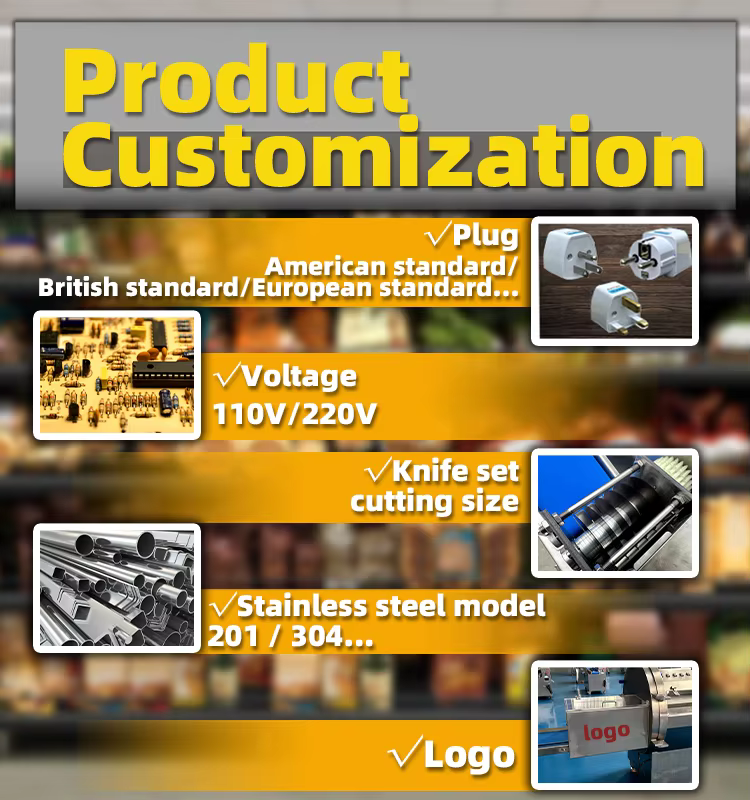
A1: The standard model uses 220V/1P/50Hz (1.8kW total power: 1.5kW motor + 0.3kW feeder). For 380V/3P markets (e.g., EU, China), we offer a customized 380V model (lead time: 7 days). We also provide voltage converters for 110V markets (e.g., US) at no extra cost.
Q2: Can it slice other foods besides meat (e.g., cheese, vegetables)?
A2: Yes—with minor adjustments. For hard cheeses (e.g., cheddar), select "Frozen" mode (slower blade speed, 30rpm) to avoid crumbling. For firm vegetables (e.g., carrots, potatoes), use the 5-10mm thickness setting and "Fresh" mode. Note: Do not slice soft foods (e.g., tomatoes) as they may crush—this slicer is optimized for meat/cheese/root vegetables.
Q3: How do I clean the blade safely, and how often should I replace it?
A3: Clean the blade by:
Unplugging the slicer and removing the blade guard.
Wiping the blade with a soft cloth dipped in food-grade oil (included) to remove residue.
Using the included blade brush to reach hard-to-clean areas (avoid hands near the edge).
Replace the blade every 12 months (or after 1,000 hours of use)—even if it still feels sharp. Worn blades cause uneven slicing and increase motor load, leading to higher energy costs.
Q4: Can the slicer be customized for larger meat blocks (e.g., 400×300×200mm)?
A4: Yes—we offer a "large tray upgrade" (cost: $200) that expands the food tray to 450×300×200mm, handling blocks up to 400×300×200mm. The upgrade also includes a stronger feeder motor (0.5kW) to push heavier blocks. Customization takes 5 days, and we ship the upgraded parts separately for easy installation.
Product Description & Detail:
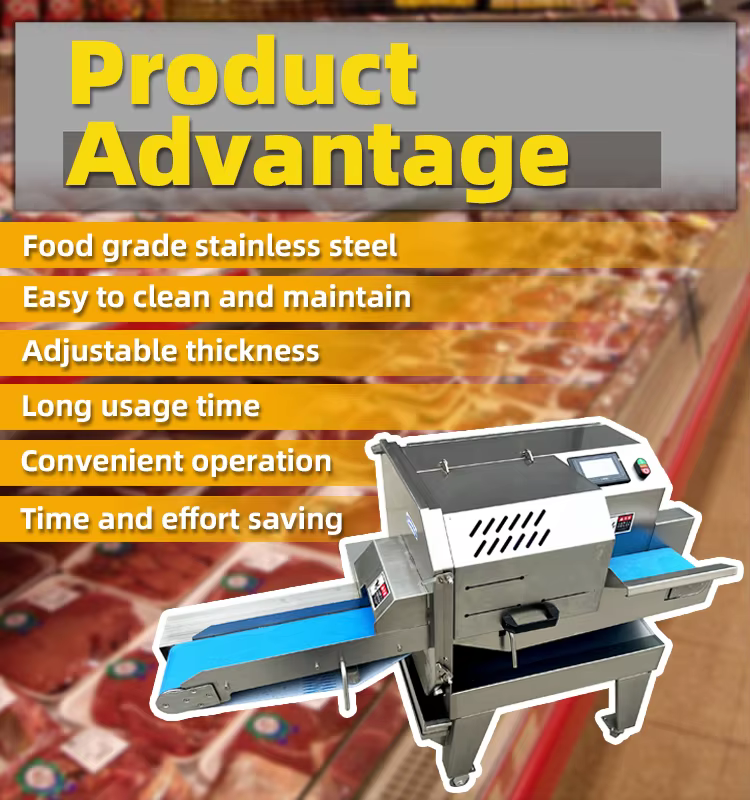
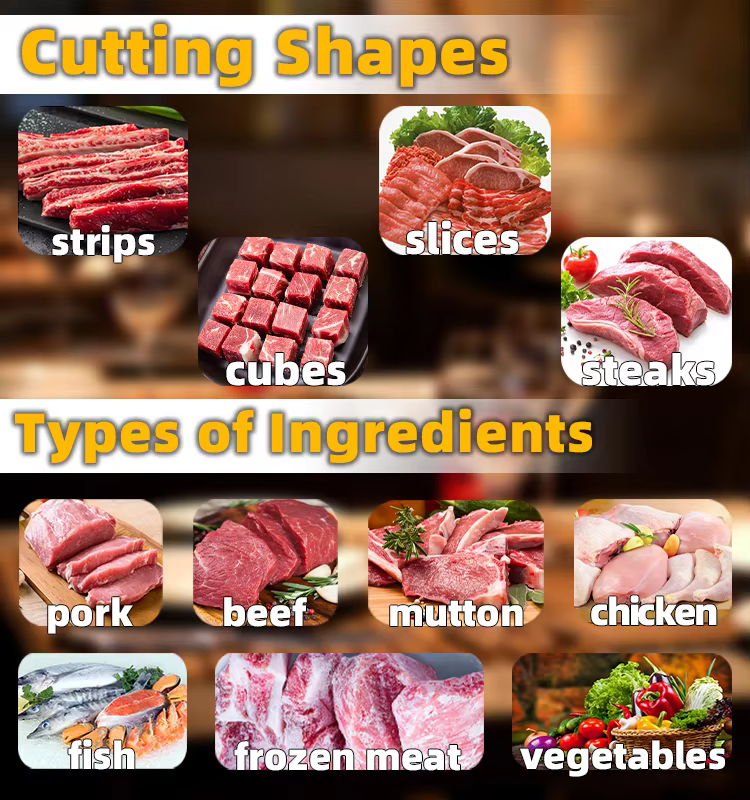
■ Suitable for slicing, shredding and dicing fresh or frozen fish, pork, chicken breast, beef, vegetables and etc.
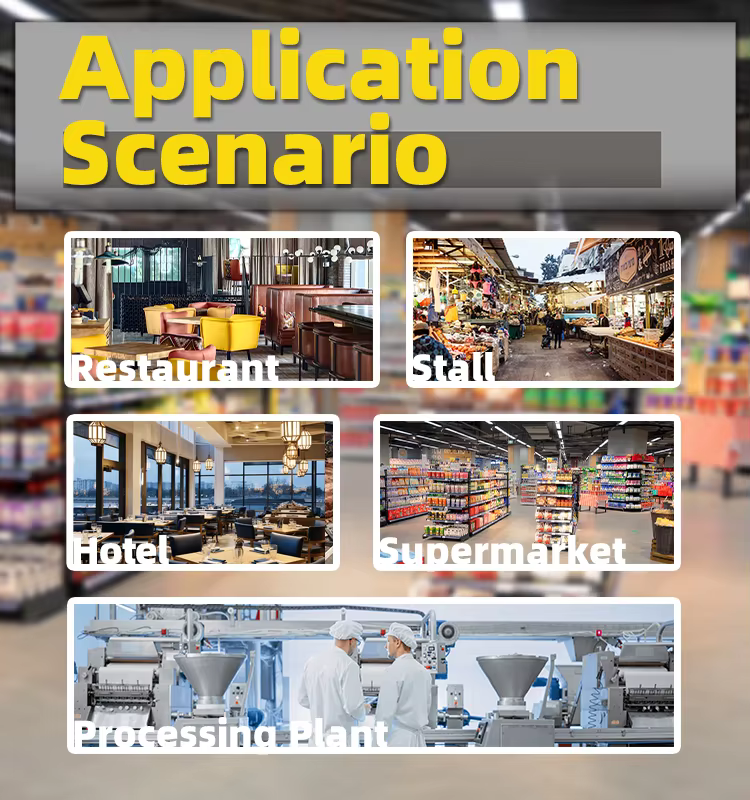
■ Used in restaurants, meat stalls, hotels, supermarkets and processing plants.
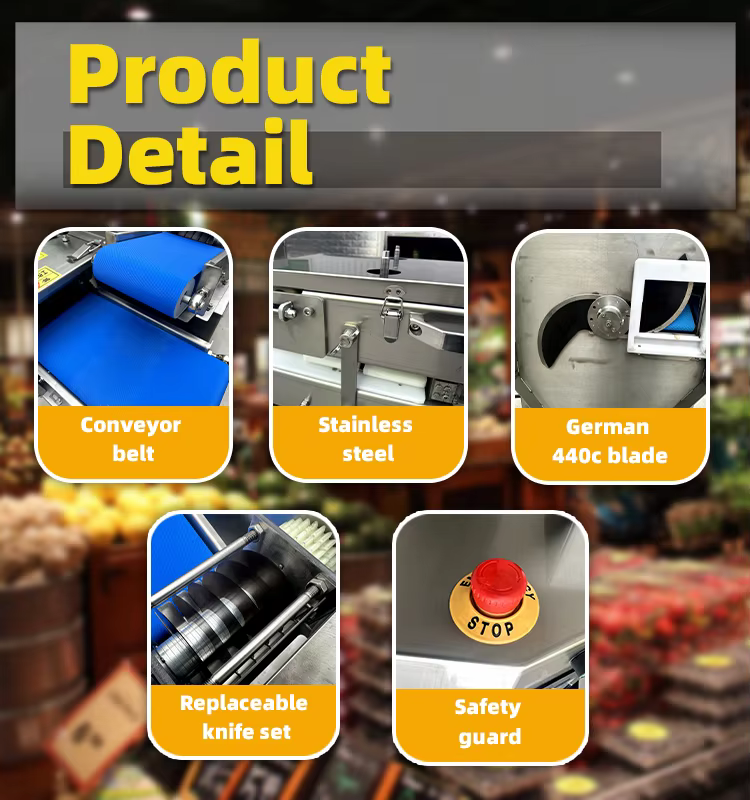
■ The entire machine is made of high-quality stainless steel, imported special stainless steel, and hard blades.
■ The cantilever knife sleeve design is hygienic and durable, easy to clean and replace, and can be customized with a thickness of 2-30mm according to customer requirements to meet different needs of customers.
Product Customization:
Application Scenario:
Product Packaging: